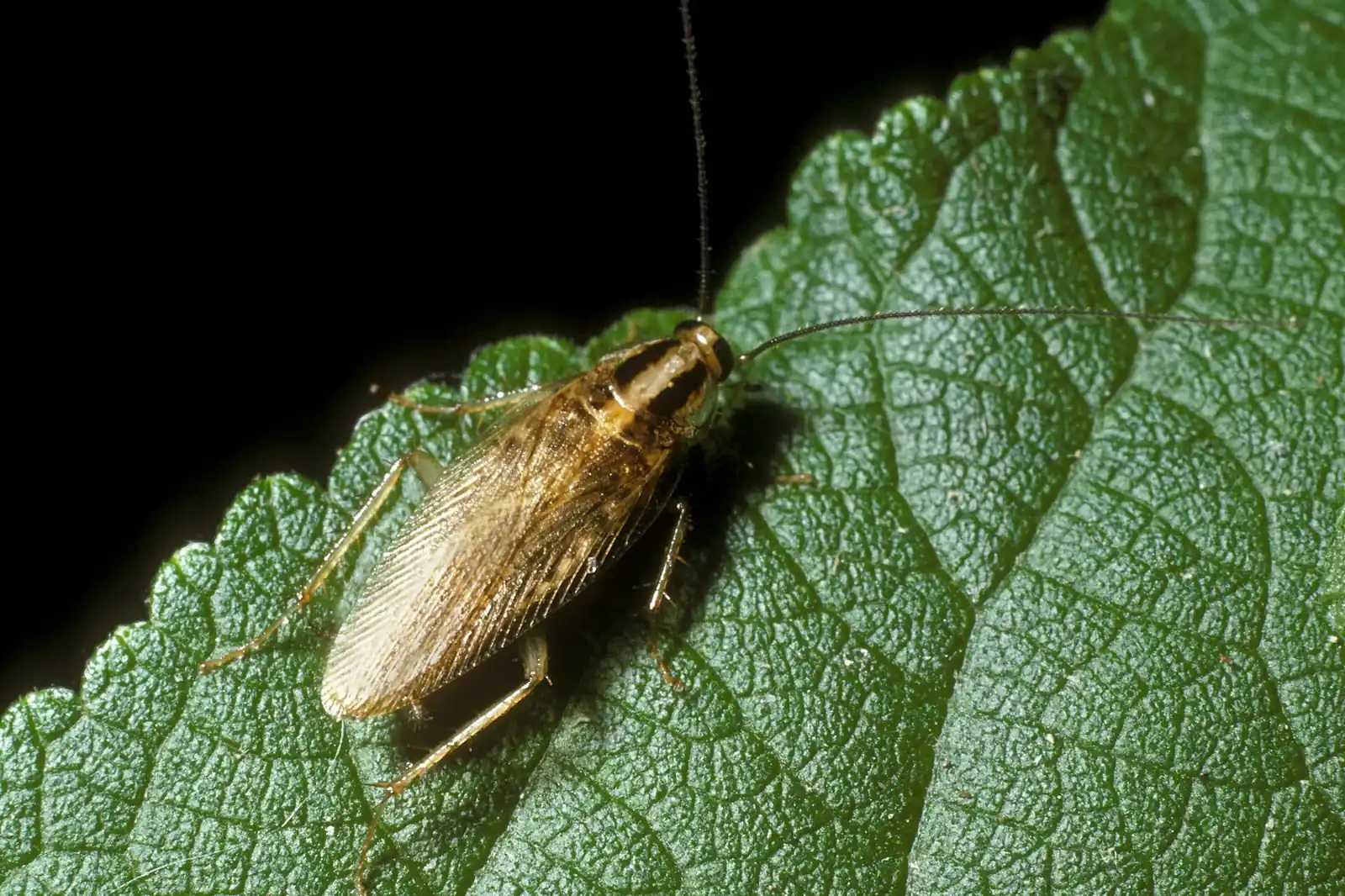
If small, tan cockroaches are flying at your porch light or landing on the TV screen on fall evenings in Lakeland, you’re probably looking at the Asian cockroach, not the German cockroach. The two look almost identical, but they live very different lives, and treating one like the other wastes time and money. Lakeland has a special history with this insect: the Asian cockroach was first identified in the United States in 1986 from specimens collected in the Lakeland area. Here’s how to tell the two apart and what actually works on each.
Why the confusion happens
The Asian cockroach (Blattella asahinai) and the German cockroach (Blattella germanica) are close relatives. Both are about half an inch to five-eighths of an inch long, light brown to tan, and have two dark stripes running lengthwise on the shield behind the head. Even pest professionals sometimes need a close look to separate them, and the first Florida specimens in 1986 were initially called German cockroaches by the person who collected them. What gave them away was their behavior: they flew readily and were common outdoors.
How to tell them apart
Where you find them
- Asian cockroaches live outdoors in leaf litter, mulch beds, ground cover, shady lawns and pine straw. You’ll often see a lot of them at once when you walk through the grass at dusk or water the beds.
- German cockroaches live indoors almost exclusively, in kitchens and bathrooms, behind appliances, inside cabinet hinges and around plumbing. They’re rarely found living outside.
Flying
- Asian cockroaches are strong fliers and are attracted to light. They fly in the evening toward porch lights, lit windows, light-colored walls and screens, and often come in when a door opens.
- German cockroaches have wings but almost never fly. They run and hide.
Timing
- Asian cockroaches are most active around sunset and shortly after.
- German cockroaches are mostly active at night indoors. Seeing them during the day usually means a heavy infestation.
Appearance, if you look closely
The Asian cockroach’s wings are a bit longer and narrower relative to its body, and the body looks slightly more slender. Under magnification there are small differences on the abdomen, but for most homeowners, location and flying behavior are the practical giveaways.
Small roaches flying in every evening?
Call to get connected with a licensed local pest pro who covers your Polk County address. The call and the match cost nothing. The pro inspects and gives the quote.
Why fall is when people notice them
Asian cockroach populations in Central Florida build up through the warm, wet summer. By late summer and fall, there are a lot of adults in mulch and lawns, and the earlier sunsets mean their evening flights line up with when families are home with the lights on. Homes backing up to wooded lots, citrus edges, retention ponds or heavily mulched landscaping in neighborhoods around Lake Gibson, Lakeland Highlands and South Lakeland often see the most.
Why German cockroach methods don’t work on Asian cockroaches
German cockroaches are controlled indoors, mainly with gel baits placed in cracks near where they live, plus sanitation. Asian cockroaches are a yard problem. They breed and feed outside, so indoor baits and kitchen sprays barely touch the population. Spraying the inside of the house can even be a waste of product, because new ones keep flying in from the lawn every evening. On the other hand, if you treat an indoor German cockroach problem as an outdoor one, it will get worse.
What helps with Asian cockroaches
- Change the lighting. Switch porch and patio lights to yellow bug lights, put them on motion sensors, and close blinds in the evening so lit windows don’t draw them in.
- Thin the habitat. Rake out thick leaf litter, pull back mulch and pine straw a bit from the foundation, and trim ground cover near doors.
- Tighten the house. Door sweeps, weatherstripping and screen repairs keep most of the evening flyers out.
- Treat the yard, not the kitchen. Licensed operators typically use outdoor granular baits and targeted treatments in mulch beds and shady turf where the roaches live. Results improve over a few weeks as the outdoor population drops.
When you have both, or aren’t sure
It’s possible to have Asian cockroaches flying in from outside and a German cockroach problem in the kitchen at the same time. If you’re seeing small roaches indoors during the day, in cabinets or around the dishwasher, or finding egg cases and droppings, assume it may be German cockroaches and treat that seriously. The German cockroach guide for Lakeland covers indoor infestations, and if store-bought bait has stopped working, read about glucose bait aversion. For the big roaches people call palmetto bugs, see German roach vs. palmetto bug.
A licensed pest pro can confirm which species you have, sometimes from a single specimen, and set up the right indoor or outdoor plan. Saving a couple of the roaches in a sealed bag makes that easier.
Frequently asked questions
How can I tell an Asian cockroach from a German cockroach?
They look almost identical, but Asian cockroaches live outdoors in mulch, leaf litter and lawns, fly readily and are attracted to lights at dusk. German cockroaches live indoors in kitchens and bathrooms and rarely fly.
Where did the Asian cockroach come from in Florida?
The Asian cockroach was first identified in the United States in 1986 from specimens collected in the Lakeland area. It is native to Asia and is believed to have arrived through trade.
Why are small cockroaches flying at my lights?
Small tan roaches flying toward porch lights, lit windows or TV screens in the evening are usually Asian cockroaches. They breed outdoors and are attracted to light around sunset.
Do German cockroach baits work on Asian cockroaches?
Not well. Asian cockroaches breed and feed outdoors, so indoor gel baits and kitchen sprays barely affect them. Outdoor treatment of mulch and turf, lighting changes and sealing gaps work better.
Does it cost anything to call the dispatch line?
No. The call and the match cost nothing. You get connected with a licensed local pest pro, who inspects and gives you their own quote.
Not sure if it’s Asian or German cockroaches?
One call reaches a licensed local pro who serves Lakeland, Winter Haven, Bartow, Auburndale, Mulberry and the rest of Polk County. A real person answers, 24/7.
Before you go
Lakeland Exterminators is a dispatch service. We connect Polk County homeowners with licensed local pest control operators. We are not a pest control company and we don’t perform treatments ourselves.