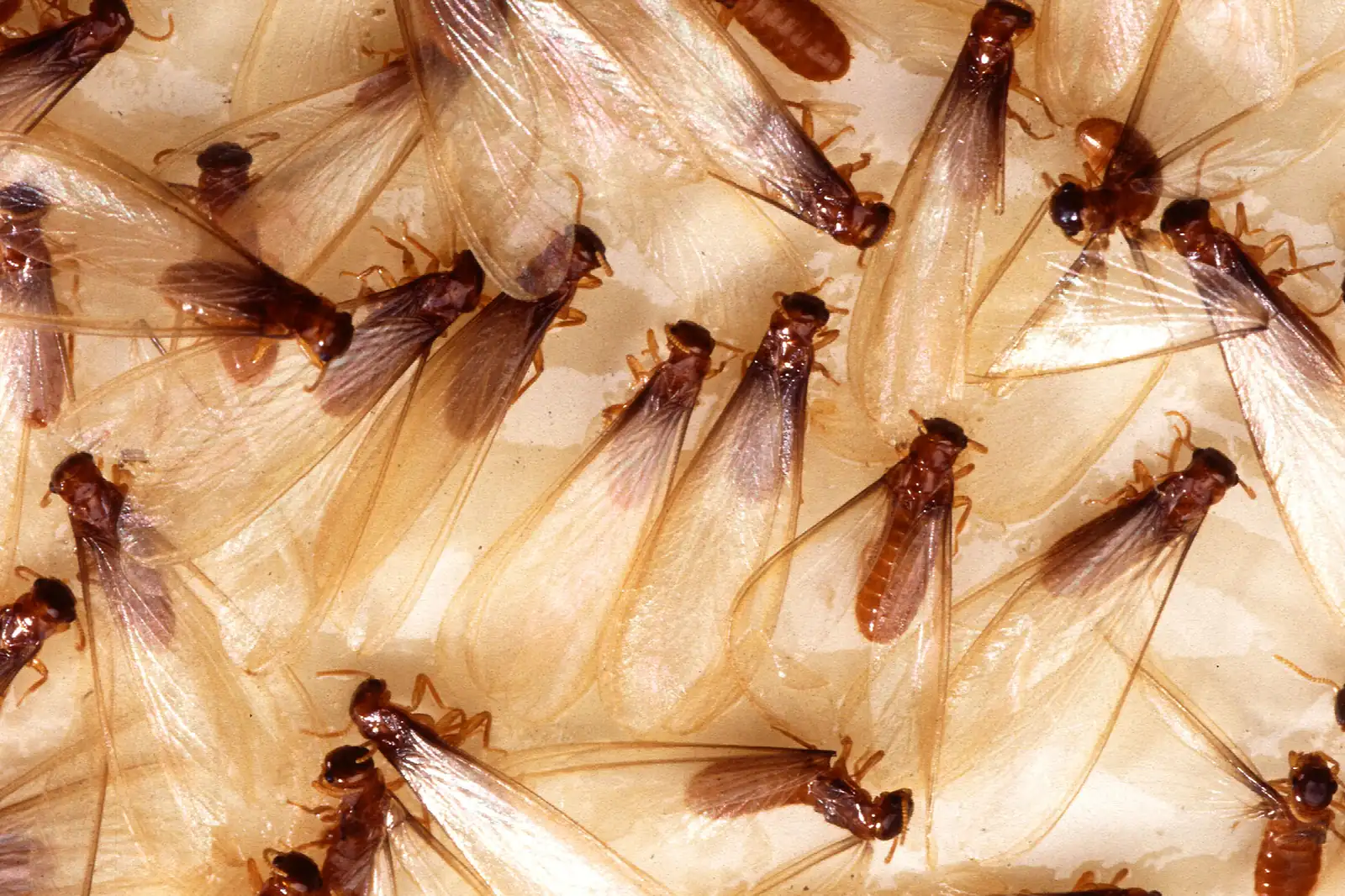
In Florida, termite season isn’t a season. It’s a schedule.
Somewhere in Polk County, some termite species is swarming in almost every month of the year — natives in spring, Formosans on humid May evenings, drywoods through the summer. A swarm is the one moment a hidden colony announces itself. This calendar tells you which species you just saw, what it means, and how urgent the call is.
Talk to a licensed exterminator now
Call and we’ll connect you with a licensed, local exterminator who covers your address. It takes about two minutes, and a real person answers.
Free to get matched. The licensed operator inspects and gives the quote.
24/7 line · A real person answers · Availability of same-day and emergency service depends on the provider.
The Polk County swarm calendar
Swarming is triggered by temperature, humidity, and rain — which is why Florida’s calendar runs longer and denser than anywhere else in the country. Read the timing and the time of day together and you can usually name the species before the inspector arrives.
| When | Who’s swarming | The tell |
|---|---|---|
| February – May | Eastern subterranean (native) | Daytime swarms, often the morning after a warm rain. Dark swarmers on windowsills and around door frames. The most common Polk County swarm by far — see the species guide. |
| Late April – June | Formosan subterranean | Dusk swarms on warm, humid evenings, mobbing porch lights and streetlamps by the hundreds. Yellow-brown swarmers. Established in Lakeland — the Formosan guide covers why this ID changes everything. |
| May – August | Florida drywood | Small evening swarms drifting toward interior lights; six-sided frass pellets under attic framing and window sills in the weeks after. No soil contact needed — see the drywood guide. |
| Any month | Indoor stragglers | A few winged insects inside, out of season, plus shed wings — colonies under stress release swarmers off-schedule. An indoor swarm at any time of year earns an inspection. |
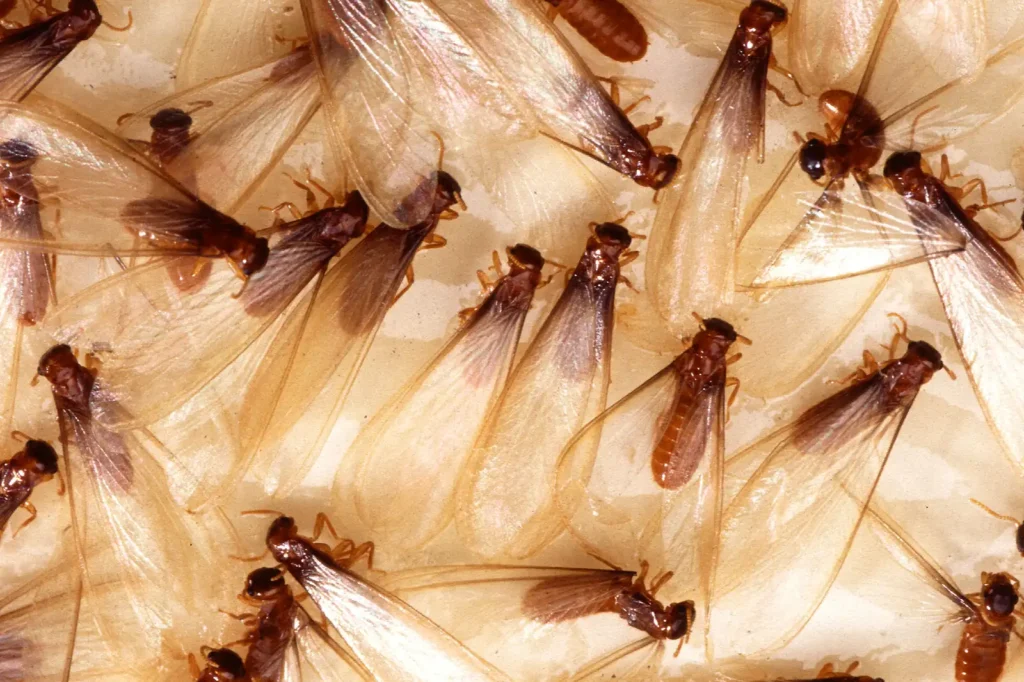
Termite or flying ant? Sixty seconds with your phone camera
Termite swarmer
Straight antennae. Thick waist. Four equal wings, twice the body length, that shed almost immediately — which is why piles of identical wings with no insects attached is a termite signature, not an ant one.
Flying ant
Elbowed antennae. Pinched waist. Unequal wings — front pair noticeably longer than the back pair — that stay attached. Polk County’s carpenter ants swarm in the same months, so the mix-up is common in both directions.
Photograph a few insects and the wings, bag a sample with a piece of tape, and leave the rest where it fell. The physical evidence is how the licensed inspector confirms species — vacuuming it up before the inspection erases the answer.
Swarm happening right now?
Turn off the lights they’re mobbing, don’t spray, and get matched with a licensed operator tonight. Dispatch runs 24/7.
Talk to a licensed exterminator now
Free to get matched. The licensed operator gives the quote.
What a swarm actually means — and what it doesn’t
A swarm is a mature colony reproducing, not a new one arriving. Colonies don’t produce winged reproductives until they’re roughly three to five years established — so the swarm you watched tonight is a press release from a colony that has been feeding quietly for years, either in your structure or close enough to reach it.
- Swarmers indoors = inspection this week. Swarmers emerge close to the nest and fly badly. Coming out of your baseboards, window frames, or bathroom, the colony is in or against the house.
- Swarmers outside only = still worth a look. A yard swarm means a mature colony within foraging range — exactly the finding that justifies an inspection before it becomes a structure problem, especially in Formosan territory where colonies forage across an acre.
- The swarmers themselves are harmless. They don’t bite or eat wood — the workers back at the nest do the damage. Killing the swarmers changes nothing; finding the nest changes everything.
- Don’t spray before the inspection. Repellent retail sprays scatter evidence and can push activity deeper into the structure, making the licensed operator’s job — and your outcome — worse.
Verify before you hire — any Florida termite company’s license status, categories and discipline history is public at the FDACS license search. Check the operator you are matched with; the good ones expect it.
Termite swarming season — common questions
When do termites swarm in Florida?
Does a swarm mean my house is infested?
What should I do during an active swarm?
Why are the wings all the same size — does that matter?
I saw a swarm in October — isn’t that the wrong season?
Is this site the company that does the inspection?
Related termite pages
Disclosure
Lakeland Exterminators is a dispatch and matching service. We connect Polk County callers with FDACS-licensed structural pest control operators. We are not a licensed pest control operator. We do not perform termite treatment, set prices, issue warranties, hold retreatment bonds, or carry pest control trade insurance. All pricing, scheduling, treatment plans, warranties, bonds and service terms are determined by the FDACS-licensed operator dispatched to your address under Chapter 482, Florida Statutes.
Same-day and 24/7 emergency services are subject to provider participation, location, technician availability, and demand. Availability is not guaranteed and may vary by market and appointment capacity.
License status of any operator you connect with is publicly verifiable at the FDACS license search.