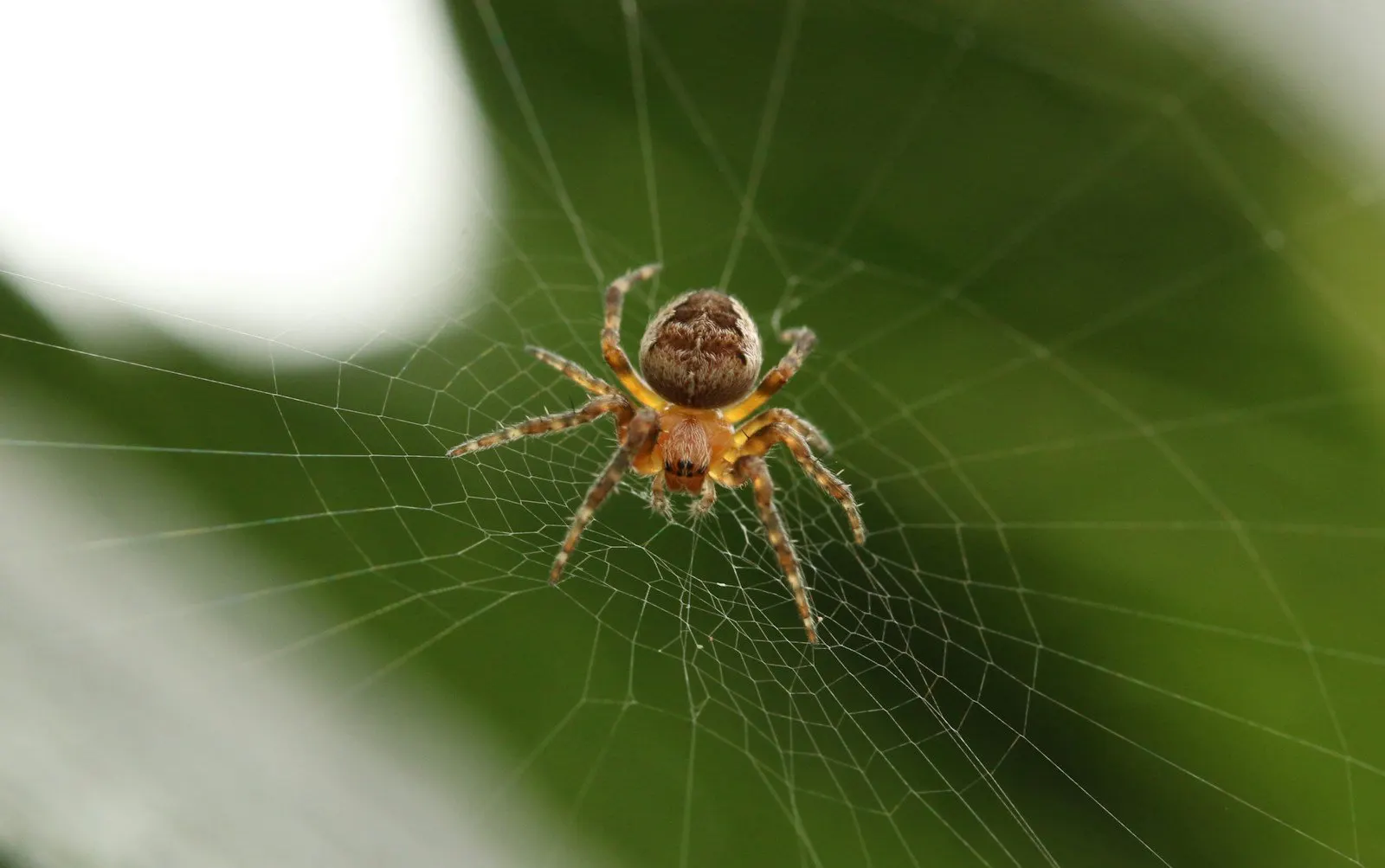
Brown widow vs. black widow identification matters for Polk County, FL homeowners because the two species share the same neighborhoods around Lakeland but differ meaningfully in venom strength, behavior, and where they tend to live around a home. Both are Latrodectus spiders. Both can deliver a medically relevant bite. But the brown widow (Latrodectus geometricus) is the species you’re statistically much more likely to encounter on a typical Lakeland-area property, and its risk profile is lower than the black widow’s. This guide walks through how to tell them apart, where each tends to live, and when to call an FDACS-licensed pest control technician.
Dealing with a pest problem right now?
📞 Call now — get matched with a licensed local exterminator: (888) 295-0220When you call, stay on the line for a few seconds while we match you with the licensed local exterminator for your area. Have your address and a quick description of the problem ready.
Licensed local pros · Fast response, subject to availability · No obligation
Why the Distinction Matters in Polk County
Polk County has both species established. The brown widow has displaced the southern black widow (Latrodectus mactans) across much of the urban and suburban landscape in central Florida over the last two decades — when a Lakeland homeowner finds “a widow,” it’s nearly always a brown widow. The southern black widow is still present, especially in less-disturbed habitats, rural Polk County properties, outbuildings, and undisturbed wood piles.
For full background on each species, see our brown widow spider page and our general spider control page.
Side-by-Side: Body and Color
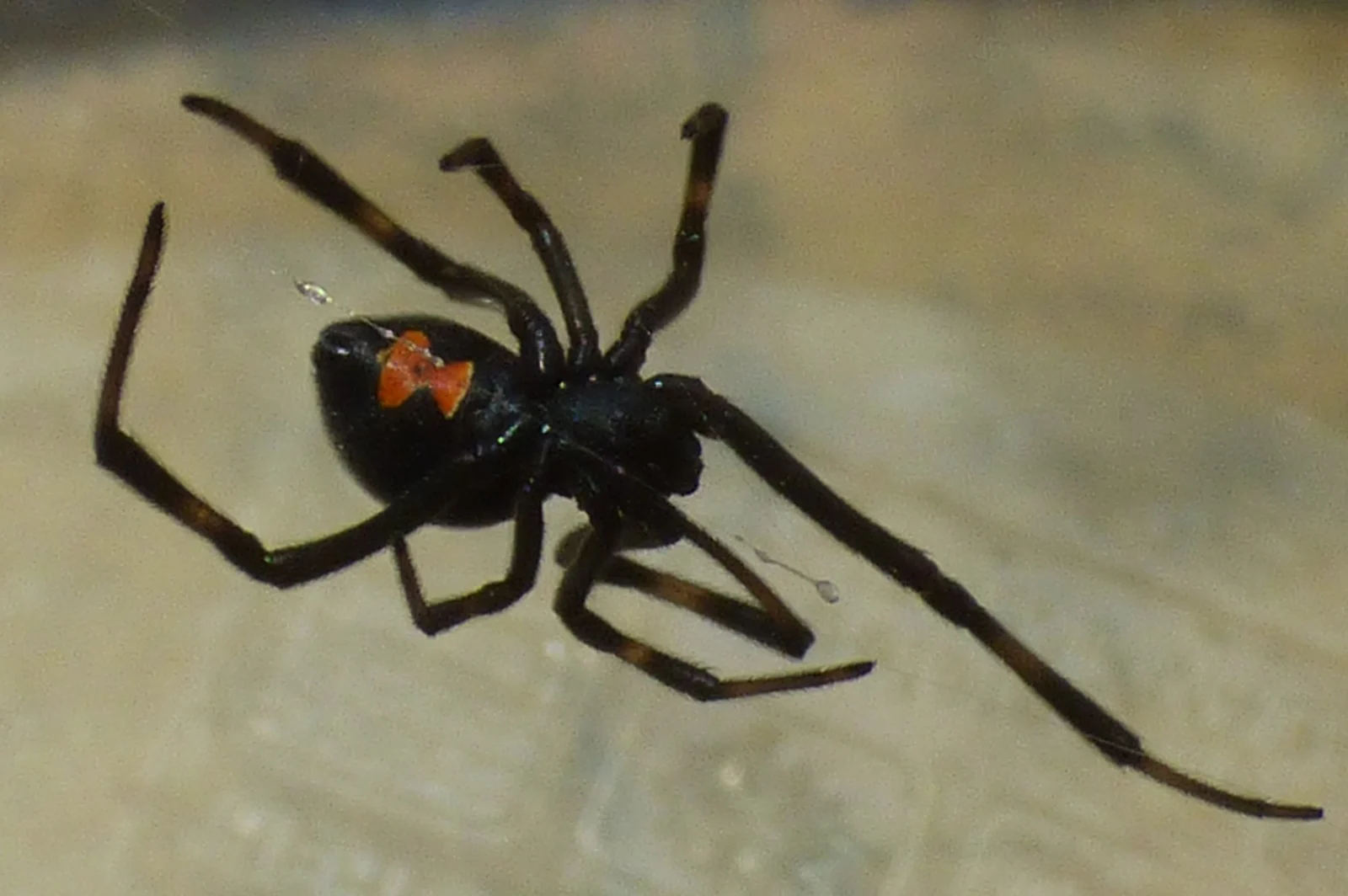
- Black widow: shiny jet-black body, body length 8 to 13 mm (legspan up to 1.5 inches). Abdomen smooth, glossy.
- Brown widow: tan-to-medium-brown body with cream, gray, and dark mottling — never glossy. Same general size, but appearance is “patterned” rather than uniform.
Side-by-Side: The Hourglass
Both species have the famous ventral hourglass on the underside of the abdomen, but the color tells you the species:
- Black widow hourglass: bright red, often vivid and unmistakable.
- Brown widow hourglass: orange to yellowish — distinctly more muted than the black widow’s red.
If you can safely see the underside (a flashlight from below a known location is usually enough), the hourglass color is one of the quickest single-feature IDs.
Side-by-Side: The Egg Sac
The egg sac is the most diagnostic single feature when adults aren’t immediately visible:
- Black widow egg sac: smooth, off-white to tan, papery sphere about 12 mm across.
- Brown widow egg sac: distinctive spiky, almost sea-urchin appearance with many small projections. Unique among Lakeland-area spiders.
If you find a spiky egg sac in patio furniture, mailbox, grill, or under outdoor lighting — that is essentially diagnostic for brown widow.
Where Each Species Lives Around a Lakeland Home
- Brown widow: exterior structures, patio furniture (especially under chair lips and table aprons), outdoor light fixtures, mailbox interiors, grills, screen-enclosure frames, vehicle wheel wells, garage door tracks. Tolerant of human activity and bright light.
- Black widow: undisturbed areas — woodpiles, sheds, crawl spaces, deep landscaping, lawn equipment storage, rural outbuildings. Tends to avoid frequent human disturbance.
Habitat alone is suggestive — a widow living on a frequently-used patio chair is almost certainly a brown widow.
Bite Risk and Medical Response
Both species deliver neurotoxic venom (alpha-latrotoxin family), but the two differ practically:
- Black widow bite: the more medically serious bite — typically painful within 30 minutes, can progress to muscle cramping, abdominal pain, hypertension, and (rarely, especially in children, elderly, or immunocompromised individuals) systemic complications. Seek medical evaluation.
- Brown widow bite: typically milder — localized pain, redness, sometimes a small lesion. Brown widows are also less defensive than black widows; bites occur far less often even where the spiders are abundant.
This is informational; if you or a household member is bitten by a confirmed widow, seek prompt medical evaluation regardless of species.
What an FDACS-Licensed Spider Treatment Covers
A Lakeland-area spider treatment typically includes:
- Inspection: patio furniture, screen enclosures, eaves, exterior light fixtures, garages, and outdoor storage
- Mechanical removal: web and egg-sac removal in identified locations
- Targeted residual treatment: EPA-registered products applied to harborage points (under chair lips, eaves, light fixtures) — not broadcast surface treatment
- Exclusion recommendations: sealing exterior gaps, reducing exterior lighting that draws prey insects, decluttering storage
For homes with kids, pets, or chemical sensitivities, see our pet-safe product line for the lower-residue options used in those settings.
Get Matched
One call reaches a licensed, local exterminator who covers your address — and a real person answers, 24/7.
Frequently Asked Questions
How do I safely move a piece of patio furniture I think has a brown widow on it?
Wear gloves, use a long-handled brush or stick to invert the piece, and brush down any visible webbing and egg sacs into a bucket of soapy water. Then schedule a treatment to address harborage points on the structure.
Are brown widow bites usually serious?
Bites are typically milder than black widow bites — localized pain and a small lesion. Seek medical evaluation if pain progresses or systemic symptoms appear.
Do widow spiders enter the house, or are they mostly outdoor?
Brown widows are overwhelmingly exterior in Lakeland. Black widows occasionally enter garages, sheds, and crawl spaces, especially after exterior disturbance.
How long does spider treatment last?
Residual products typically hold 30 to 60 days against widows in protected harborage locations. Adding routine web removal between treatments materially extends the interval between population rebuilds.
Is there a season when widows are worse in Polk County?
Adult brown widows peak in late summer and fall, with egg sacs visible from May into November. Treatment is most effective when started in spring before populations build.
Disclaimer: Lakeland Exterminators is a local dispatch and referral service, not a licensed pest-control operator. We connect Polk County, Florida homeowners with independent, FDACS-licensed and insured pest-control companies. All inspections and treatments are performed by those independent providers, who set their own pricing, scheduling, and service terms.
Any reference to same-day, emergency, or 24/7 service describes the typical scheduling of matched independent providers and is not guaranteed; actual response times vary by provider, season, location, and demand.