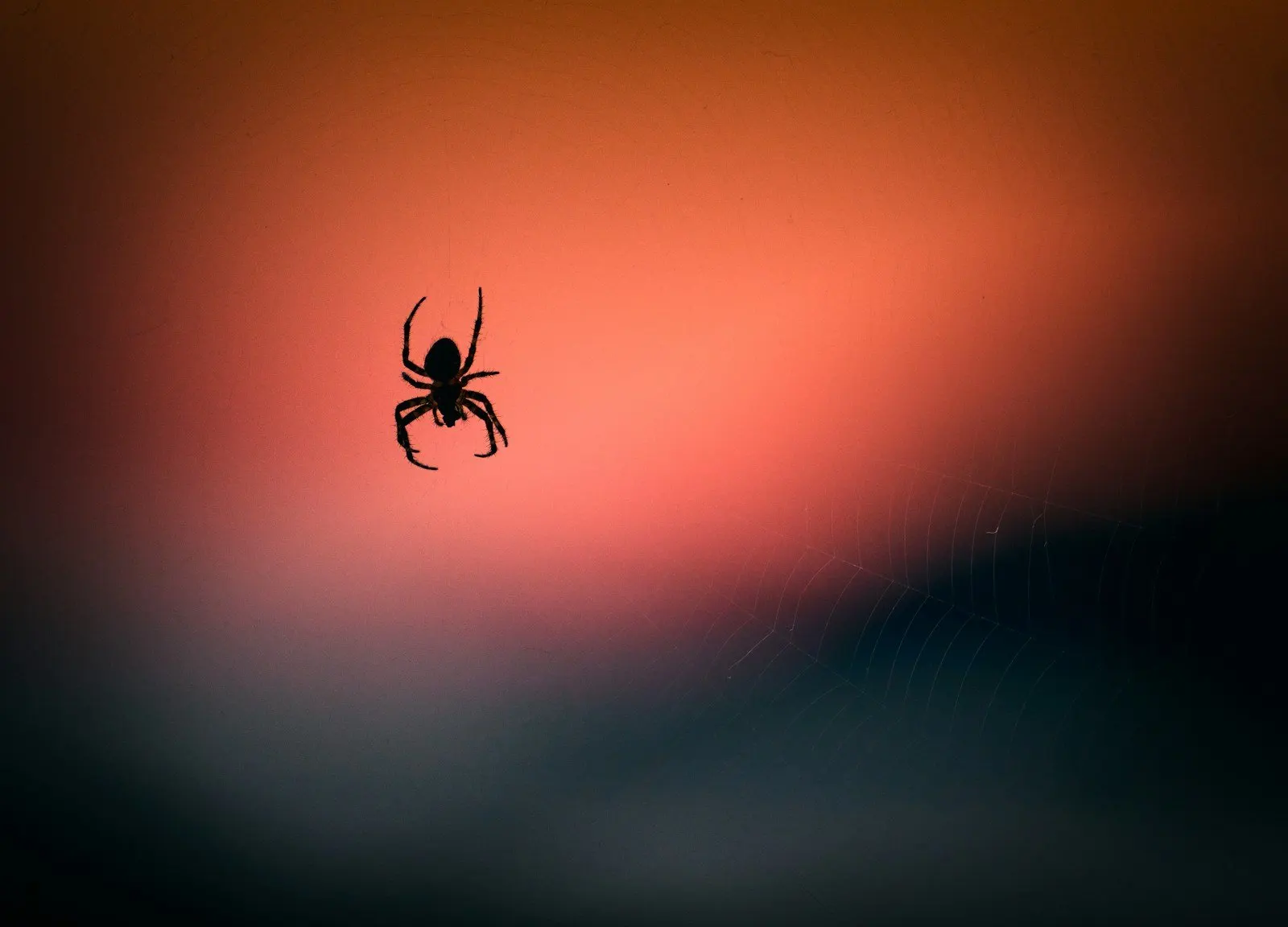
You reach into the garage for a rake and walk face-first into a web, or you spot a big brown spider parked in the corner of the lanai, and the question that jumps to mind is always the same: is that thing dangerous? If you live in Lakeland or anywhere across Polk County, spiders are simply part of the landscape — Florida’s warmth and humidity support a lot of them — and the honest answer is that the overwhelming majority you will encounter are harmless and, in their own way, working for you.
Dealing with a pest problem right now?
📞 Call now — get matched with a licensed local exterminator: (888) 295-0220When you call, stay on the line for a few seconds while we match you with the licensed local exterminator for your area. Have your address and a quick description of the problem ready.
Licensed local pros · Fast response, subject to availability · No obligation
That said, a couple of Florida spiders genuinely deserve respect, and it pays to know the difference rather than treating every eight-legged visitor like a threat. This guide walks through the harmless majority, the two groups worth handling carefully, where spiders tend to cluster around Polk County homes, and the insight that surprises most homeowners — that a spider problem is usually a different-bug problem in disguise — along with the reduction steps that work and when to bring in a licensed pro.
The Harmless Majority — and Why Most Spiders Help
Most of the spiders in and around a Lakeland home are harmless to people and are, in practical terms, natural pest control. Spiders are predators that eat insects — flies, mosquitoes, roaches, gnats, and the other bugs you would rather not share a house with — so a modest spider presence is often a sign your spiders are doing their job.
The common harmless residents include jumping spiders, small, compact, often fuzzy spiders that hunt by sight and pounce on prey rather than building webs; they are curious and may watch you, but they are not a threat. Orb-weavers spin the large, classic wheel-shaped webs across porches, eaves, and garden gaps, and while a big orb-weaver and its web can look alarming, the spider is harmless and is busy catching flying insects. Cellar spiders — the long-legged, delicate spiders that hang in loose webs in garage corners and ceilings, sometimes known as daddy longlegs — are harmless. Wolf spiders are the large, fast, ground-hunting brown spiders that startle people most, especially when one races across a garage floor or a wall; they look fearsome and are often mistaken for something worse, but a wolf spider is not medically dangerous. It does not build a web to catch prey — it chases prey down — which is why you see it out in the open.
The practical point: seeing spiders, even big ones, is normal in Florida and usually harmless. The two exceptions below are the ones worth learning to recognize.
The Two to Respect
Two groups of spiders in Florida are medically significant, meaning a bite can warrant real caution and, in some cases, medical attention. Both are reclusive and avoid people; bites are uncommon and usually happen when a spider is trapped against skin. Knowing them lets you give them a wide berth without fearing every spider.
Widow spiders
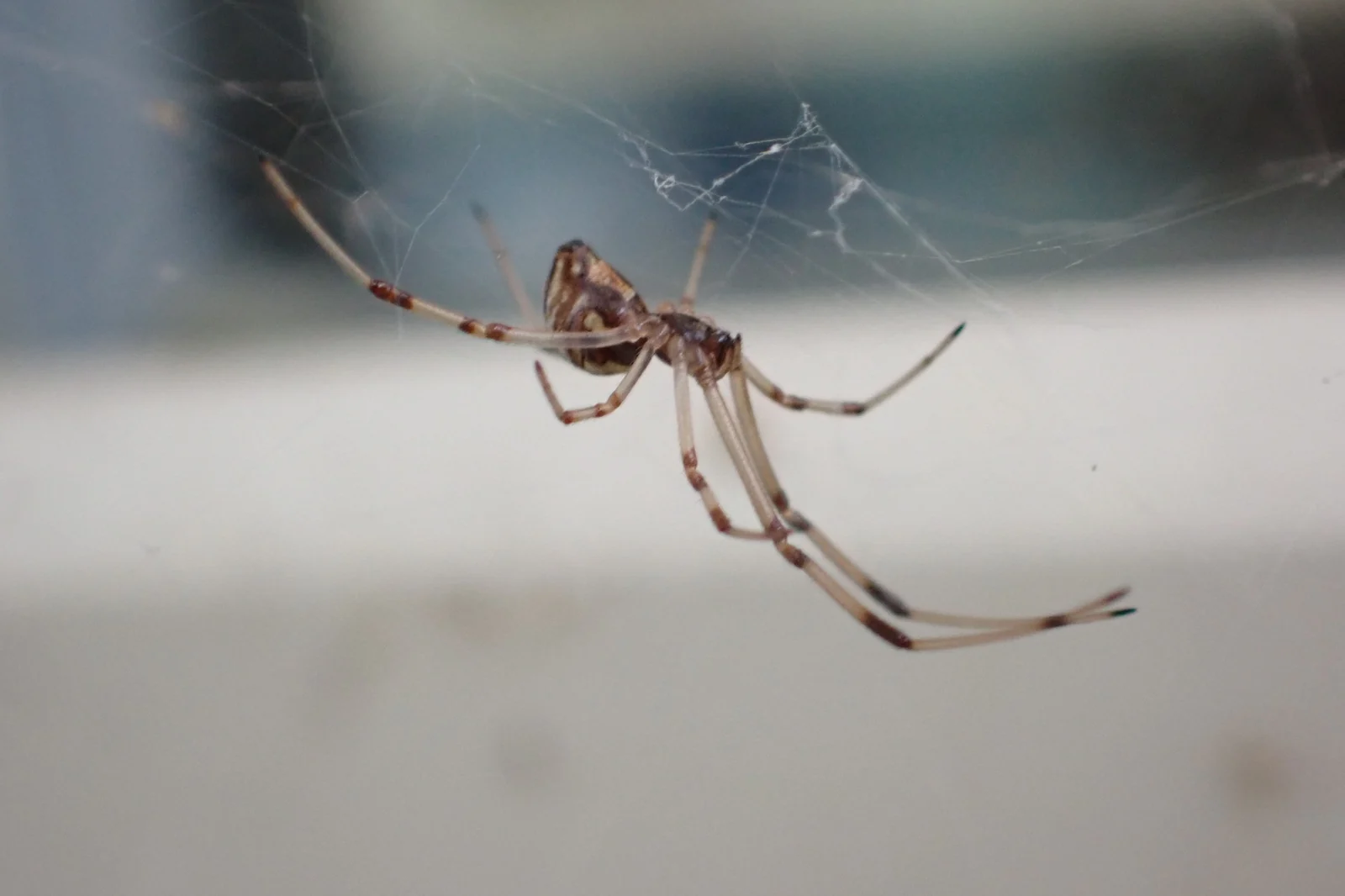
The widow group is the one to know in Polk County. The southern black widow is glossy black with the classic red hourglass marking on the underside of the abdomen, and the brown widow — now very common across Florida — is mottled tan-to-brown with an orange-to-yellow hourglass and a distinctive spiky, ball-shaped egg sac. Widows are shy and build messy, irregular webs in undisturbed, sheltered spots: under patio furniture and grills, in the corners of garages and sheds, inside meter boxes and irrigation valve covers, under the lip of the lanai, and in piles of stored items. Most bites happen when someone unknowingly puts a hand or foot against a hidden widow. Brown widow venom is generally milder than black widow venom, but both are worth respecting. The smart habit is simply to wear gloves and look before reaching into the dark, sheltered places widows favor.
About “recluse” claims
The brown recluse causes a lot of fear, so it is worth being accurate rather than alarmist: the brown recluse is not native to Florida and is rarely encountered here. Many “brown recluse” sightings in the state turn out to be harmless look-alikes — wolf spiders, cellar spiders, or other brown spiders that get misidentified because the name is so well known. That does not mean it is impossible to encounter one, but it does mean you should not assume any brown spider in your Lakeland garage is a recluse. If a spider has you genuinely concerned, capturing a clear photo for a professional to identify beats guessing, and avoids both unnecessary panic and false reassurance.
Where Spiders Cluster Around Polk County Homes
Spiders concentrate where two things line up: shelter and food. Around a typical Lakeland home that means a predictable set of spots. Garages and sheds are spider magnets — quiet, full of corners and stored items, and connected to the outdoors. Eaves, soffits, and the lanai or porch ceiling collect orb-weavers and cellar spiders. Around exterior lights at night is a major one, because lights draw clouds of flying insects, and where the prey gathers the spiders follow, stringing webs near porch fixtures and lit windows. Landscaping and clutter against the house — woodpiles, dense shrubs, stacked pots, and stored materials — give ground-hunting spiders like wolf spiders cover right next to the foundation. And undisturbed low, sheltered spots — under furniture, in meter and valve boxes, in seldom-moved storage — are where widows prefer to set up.
One call reaches a licensed, local exterminator who covers your address — and a real person answers, 24/7.
Why a Spider Problem Is Usually a Different-Bug Problem
Here is the insight that changes how you should think about a heavy spider presence: spiders follow their food. If you are seeing a lot of spiders and a lot of webs, it is almost always because there is a generous supply of insects for them to eat. The spiders are a symptom; the insect population is the cause.
The most common driver around Polk County homes is exterior lighting. Bright white porch and security lights pull in moths, gnats, midges, and other flying insects all night, and that nightly insect buffet draws spiders to the eaves, doorways, and windows where the bugs gather. Treat the spiders alone and they come right back, because the food source is still there. Reduce what is attracting the insects — switch to warm-toned or yellow “bug” bulbs, aim lights away from doors, and address any moisture or vegetation feeding the bug population — and the spiders thin out because their food has moved on. This is also why spider control and general pest control go hand in hand: knocking down the underlying insect supply is what makes a spider reduction stick, which is exactly what broader pest control in Lakeland, FL is built to do.
Reduction Steps and When to Reach a Pro
You can meaningfully reduce spiders with a few consistent habits. Knock down webs regularly with a broom or a vacuum, indoors and out — removing webs and egg sacs discourages spiders from re-establishing and signals the area is disturbed. Manage exterior lighting by switching to yellow bug bulbs and keeping unnecessary lights off, which cuts the insect supply spiders feed on. Declutter garages, sheds, and storage areas, and store items in sealed bins up off the floor so there are fewer hiding spots. Seal gaps around doors, windows, and utility penetrations, and add door sweeps to keep both spiders and their insect prey out. And wear gloves and look before reaching into the dark, sheltered spots widows favor — under furniture, in meter boxes, in stored piles.
One call reaches a licensed, local exterminator who covers your address — and a real person answers, 24/7.
One call reaches a licensed, local exterminator who covers your address — and a real person answers, 24/7.
Frequently Asked Questions
What spiders are dangerous in Florida? The medically significant spiders in Florida are the widows — the southern black widow and the now-common brown widow. Both are shy and bite only when trapped against skin. The brown recluse, despite its reputation, is not native to Florida and is rarely encountered here, so most “recluse” sightings are harmless look-alikes. The vast majority of spiders you will see around a Lakeland home are harmless.
Are wolf spiders dangerous? No. Wolf spiders are the large, fast, brown ground-hunting spiders that startle people, but they are not medically dangerous. They do not build webs to catch prey — they chase it down, which is why you see them out in the open on floors and walls. They are harmless and actually help by eating other insects, though a big one is understandably alarming to come across.
How can I tell a brown widow from a harmless brown spider? A brown widow is mottled tan-to-brown with an orange-to-yellow hourglass marking on the underside of its abdomen, and it builds a messy, irregular web in sheltered spots, often near a distinctive spiky, ball-shaped egg sac. The egg sac is one of the clearest tells. If you are unsure, a clear photo lets a professional identify it rather than guessing, since several harmless brown spiders look similar at a glance.
Why do I suddenly have so many spiders? A surge in spiders almost always means a surge in their food — insects. Bright exterior lights that draw flying bugs at night are the most common cause around Polk County homes, along with moisture and vegetation that support insect populations. The spiders gather where the prey is. Reducing the insect supply, especially by changing exterior lighting, is what brings the spider numbers down.
How do I keep spiders out of my garage? Knock down webs regularly, declutter and store items in sealed bins off the floor, seal gaps around the garage door and utility penetrations, and switch exterior lighting to yellow bug bulbs to cut the insect supply that draws spiders. Wearing gloves and checking before reaching into corners and stored piles also keeps you clear of any widows that favor those undisturbed spots.
Are spiders a sign of other pests? Often, yes. Because spiders are predators that go where the food is, a heavy spider presence usually signals a healthy population of other insects to eat. That is why treating spiders alone rarely works long-term — the food source remains. Addressing the underlying insect population, often tied to exterior lighting and moisture, is what makes a spider reduction last.
Should I kill every spider I see? Not necessarily. Most spiders around a Lakeland home are harmless and help by eating other insects, so a modest presence is generally beneficial. The ones worth removing carefully are widows in spots where people reach, and any spider that has established near high-traffic living areas. For most harmless spiders, simply knocking down webs and reducing their insect food supply is enough.
LakelandExterminators.com is a dispatch service. We connect callers with licensed Florida exterminators. We are not a licensed pest control company. The disclaimer in our site footer and our 24/7 dispatch caveat apply to this page.