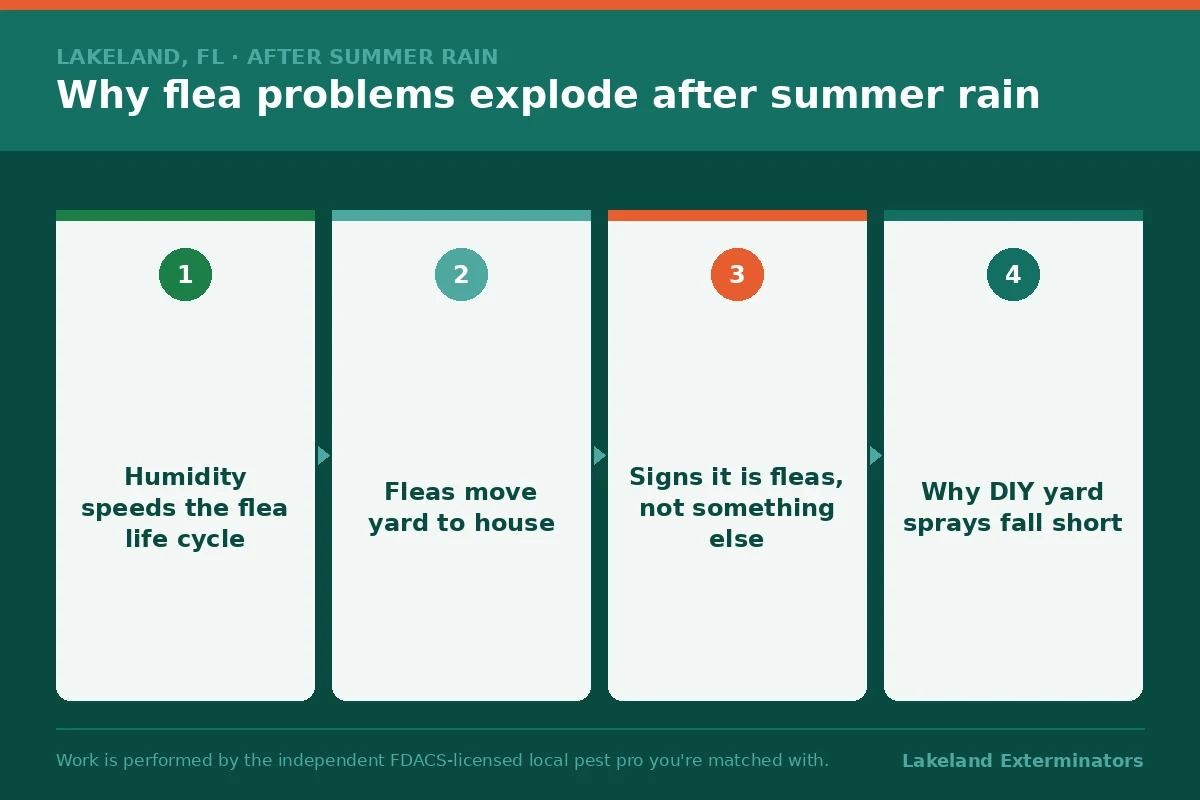
If you’ve noticed more bites around your ankles this July, or your dog suddenly can’t stop scratching, you’re not imagining it. Central Florida’s summer rainy season — hot days, afternoon downpours, and humidity that never really breaks — is peak flea-breeding weather. Lakeland’s yards, with their shade, sprinkler-damp soil, and steady traffic from pets and wildlife, are close to ideal conditions for a flea population to go from “a few bites” to “full infestation” in a couple of weeks.
Dealing with a pest problem right now?
📞 Call now — get matched with a licensed local exterminator: (888) 295-0220When you call, stay on the line for a few seconds while we match you with the licensed local exterminator for your area. Have your address and a quick description of the problem ready.
Licensed local pros · Fast response, subject to availability · No obligation
Here’s what’s actually happening in the yard and the house, and how to tell a real flea problem from the other things that bite in a Polk County summer.
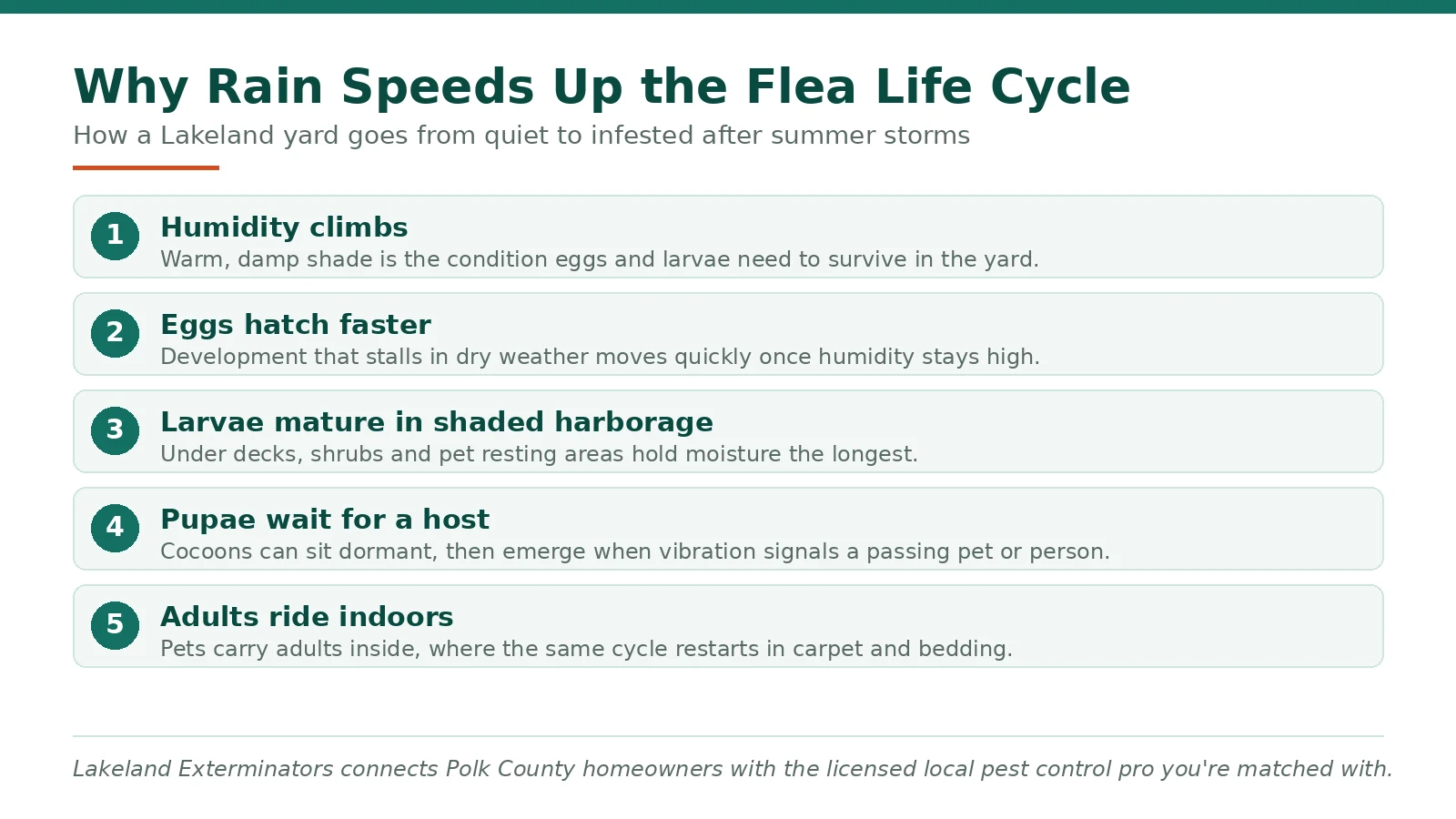
Why Humidity and Rain Speed Up the Flea Life Cycle
Fleas need moisture and warmth to develop, and Lakeland’s June-through-September stretch delivers both in spades. Eggs, larvae, and pupae all survive best in humid, shaded microclimates — under bushes, along fence lines, in mulch beds, underneath the porch or a raised shed. A flea egg can go from laid to adult in as little as two to three weeks when it’s warm and humid, compared to months in cooler, drier conditions.
That’s the part people miss: by the time you notice bites, the adult fleas you’re seeing are only a small fraction of the population. The bulk of it — eggs, larvae, and cocooned pupae — is still sitting in the yard or in carpet fibers, waiting for the right vibration or CO2 signal to hatch or emerge. Afternoon storms keep the soil and mulch damp enough to protect that hidden population even when the sun’s out and the top layer looks dry.
How Fleas Actually Get From the Yard Into the House
Pets are the main vector, and it’s not close. A dog or cat that spends any time in the yard — even just a supervised bathroom break — can pick up fleas from grass, mulch, or shaded resting spots and carry them straight to the couch, the bed, or the carpet. From there, a single female flea laying dozens of eggs a day means an indoor population can establish fast, especially in central Florida’s climate-controlled, humidity-buffered homes where conditions stay flea-friendly year-round indoors.
But pets aren’t the only path in. Fleas hitch rides on shoes and clothing after time outdoors, and wildlife traffic through Lakeland yards — raccoons, opossums, and stray or feral cats moving along fence lines or through wooded lot edges — regularly seeds yards with fleas even in households with no pets of their own. Our wildlife removal page covers the raccoon and opossum activity that often brings fleas onto a property in the first place. If your property backs up to undeveloped land, a greenway, or a lot with heavy shade cover, that wildlife pathway is worth taking seriously. Some of the same yard conditions that invite broader pest pressure around a Lakeland property — leaf litter, dense ground cover, standing shade and moisture — are exactly what lets a flea population get a foothold before anyone notices.
Telltale Signs You’re Dealing With Fleas, Not Something Else
A few signs tend to show up together when it’s genuinely a flea problem:
- Ankle and lower-leg bites that show up in small clusters, often after sitting or walking in a shaded part of the yard.
- Pets scratching, chewing at their fur, or losing hair in patches, especially around the tail base and belly.
- “Flea dirt” — small dark specks in pet bedding, carpet, or along baseboards that turn reddish-brown when wiped with a damp paper towel (that’s digested blood, not just dirt).
- Small jumping insects visible in carpet fibers or on light-colored flooring, especially in early morning or evening.
- Bites that keep happening indoors even when the household hasn’t been in tall grass or wooded areas recently — a sign the population has already moved inside.
If you’re only seeing outdoor bites near certain shrubs or the mailbox, that’s more consistent with other summer biters common to Polk County lawns — see our guide to lawn pest pressure in Polk County for the broader picture. Fleas tend to cluster around pet resting spots, shaded beds, and carpeted rooms rather than spreading evenly across a property.
Why DIY Yard Sprays Usually Fall Short
Most over-the-counter yard sprays only kill adult fleas on contact — they don’t reach eggs tucked into soil, larvae buried in shaded organic debris, or pupae in their protective cocoons, which can stay dormant and resistant to insecticide for weeks. That’s why a homeowner sprays, sees fewer fleas for a few days, and then watches the population rebound as the next wave of pupae emerges. Breaking the full life cycle takes treating the yard, the pet, and the indoor environment (especially carpet, rugs, and pet bedding) at the same time, timed to interrupt the hatch cycle rather than just knock down whatever’s currently jumping around.
This is also where good yard habits pull double duty. The same mowing height, thatch management, and moisture control practiced for general pest pressure reduces the shaded, damp microhabitat fleas need to complete their life cycle. Indoors, the cleaning routines that keep Lakeland homes pest-resistant — frequent vacuuming, washing pet bedding on hot water, staying on top of carpeted areas — directly interrupt the indoor flea life cycle by removing eggs and larvae before they mature.
When It’s Time to Call a Pro
A one-time flea spray from the hardware store is a reasonable first move for a light, early problem. But if you’re still finding flea dirt after a couple of weeks of vacuuming and washing, if pets are miserable despite topical treatments, or if bites keep showing up indoors, the life cycle has probably outrun the DIY approach. At that point it’s worth getting connected to a licensed pest control operator who can treat the yard, the structure, and advise on pet-safe indoor products together — trying to chase adults with spot treatments while eggs keep hatching in the carpet just resets the clock.
FAQ: Flea Infestations in Lakeland Homes
How fast can a flea infestation start after it rains? Under warm, humid conditions like a Lakeland summer, flea eggs can develop into biting adults in as little as two to three weeks, which is why infestations often seem to “appear” quickly after a stretch of rainy weather.
Can I get fleas in my house if I don’t have pets? Yes. Fleas can enter on clothing and shoes, and wildlife such as raccoons or stray cats moving through the yard can drop flea eggs and larvae in shaded areas near the home, which sometimes migrate indoors on their own.
What does flea dirt actually look like? It looks like small dark specks or grit, often in pet bedding, carpet, or along baseboards. Wiping it with a damp white paper towel and seeing a reddish-brown smear (from digested blood) is the quick way to tell it apart from ordinary dirt.
Why do fleas keep coming back after I spray the yard? Most yard sprays only kill fleas that are active and exposed at the time of treatment. Eggs, larvae, and pupae hiding in shaded soil, mulch, or thick grass are protected and can continue the life cycle for weeks after a single treatment.
Are flea bites dangerous? For most people, flea bites are itchy and irritating rather than dangerous, though scratching can lead to skin infection. Pets can develop more serious reactions, including flea allergy dermatitis, with repeated exposure.
How is a flea problem different from other summer bug bites in Polk County? Flea bites tend to cluster around the ankles and lower legs and are often tied to specific shaded or pet-heavy areas of a yard or home, while other biting insects common in Florida summers tend to bite more broadly or show up in different locations and patterns.
One call reaches a licensed, local exterminator who covers your address — and a real person answers, 24/7.