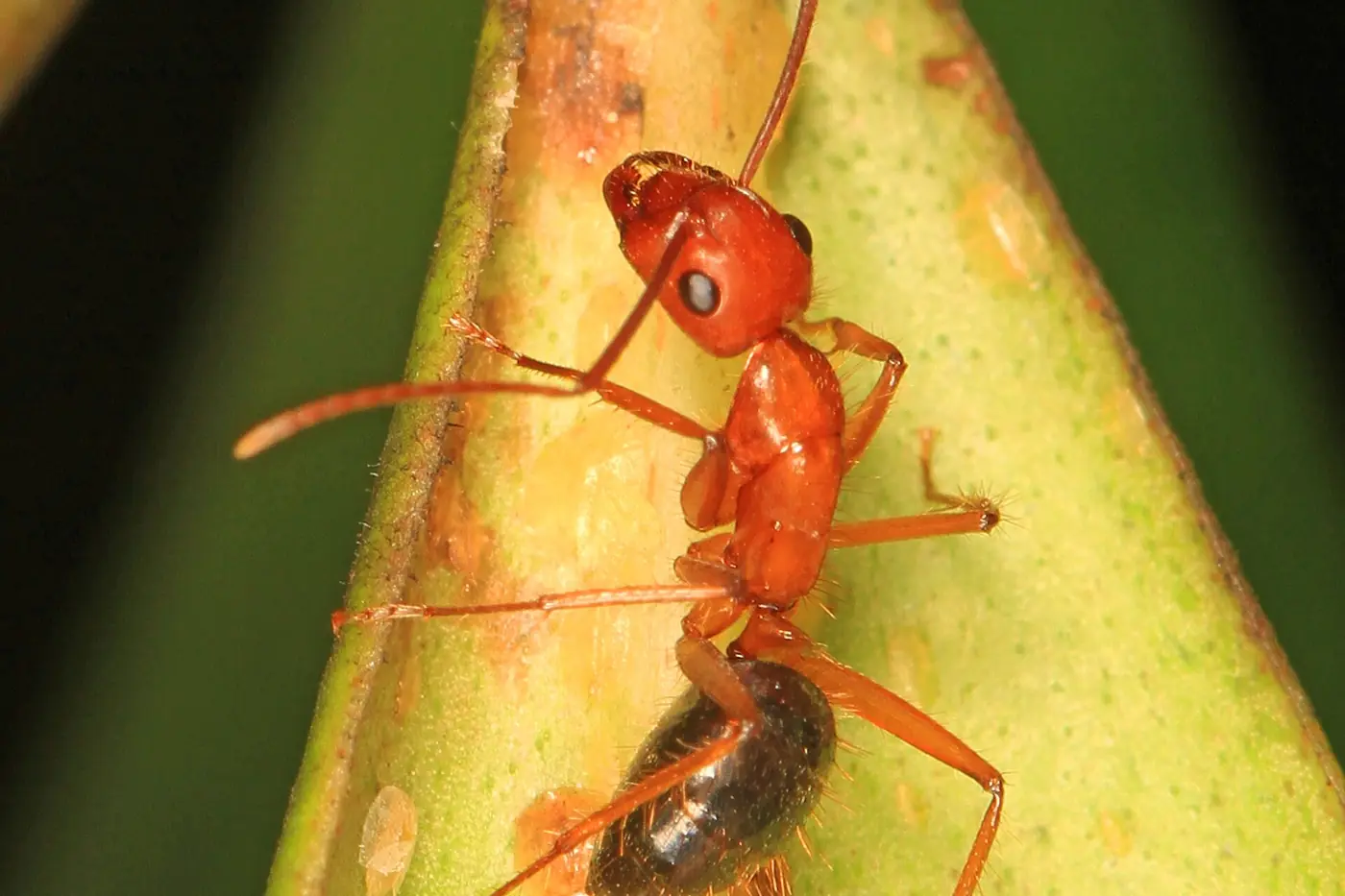
If you have found ants pouring out of your AC unit, swarming an outdoor outlet, or piling up dead in the corners of your garage by the hundreds, you are probably not dealing with a normal ant problem. In Polk County, those symptoms point to the tawny crazy ant — an invasive species that behaves so differently from the ants most homeowners know that the usual playbook simply does not work on it. The ants you can buy bait for at the hardware store will likely shrug it off.
Dealing with a pest problem right now?
📞 Call now — get matched with a licensed local exterminator: (888) 295-0220When you call, stay on the line for a few seconds while we match you with the licensed local exterminator for your area. Have your address and a quick description of the problem ready.
Licensed local pros · Fast response, subject to availability · No obligation
This guide explains what makes the tawny crazy ant such an unusual pest, the strange signs that distinguish it from ordinary ants, why it is drawn into electrical equipment, why over-the-counter products and DIY routines tend to fail against it, and what an effective professional approach actually looks like in Central Florida.
Meet the Tawny Crazy Ant
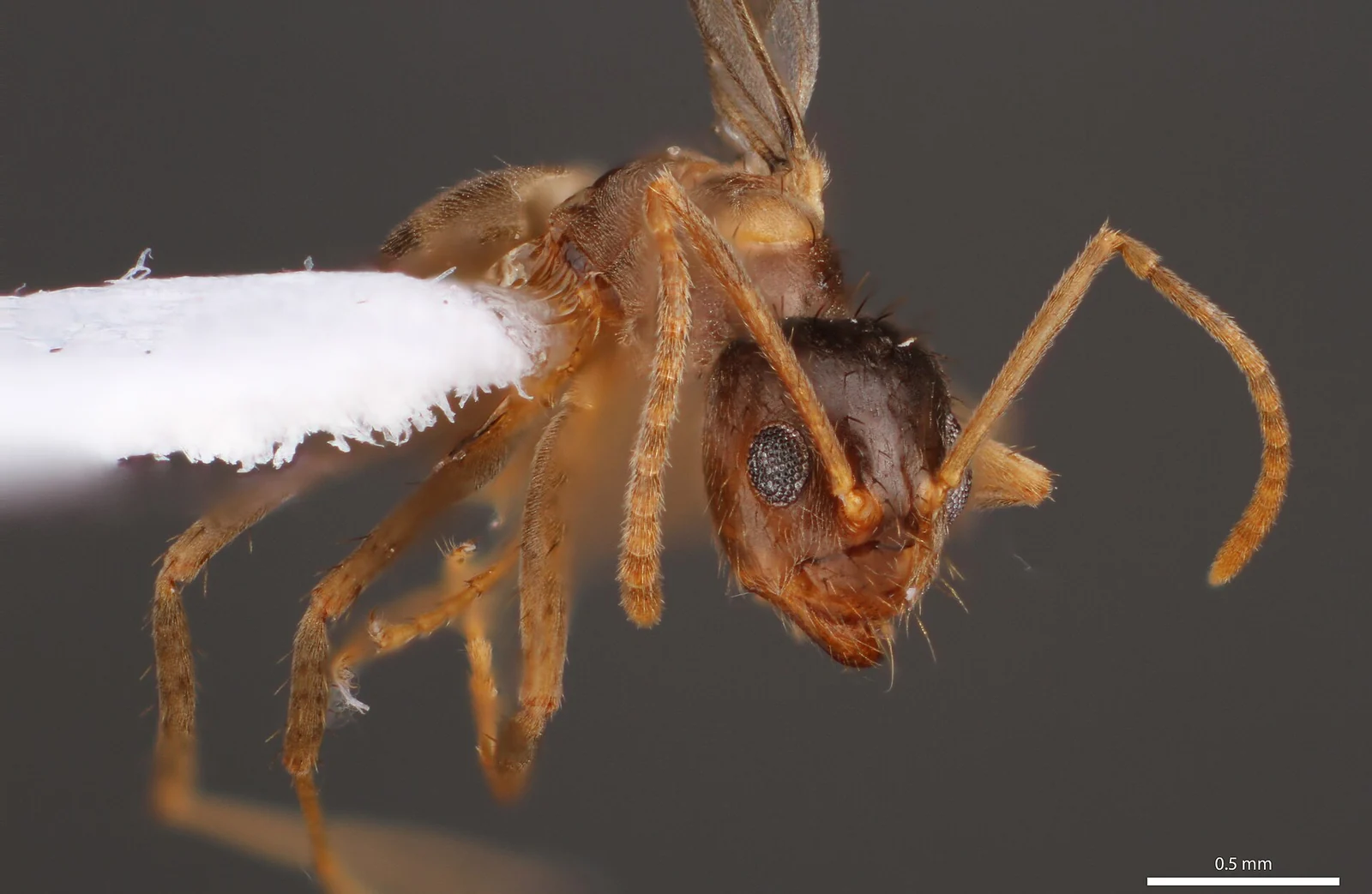
The tawny crazy ant (Nylanderia fulva) is small — about an eighth of an inch — uniformly reddish-brown, and covered in fine hairs. What you will notice first, though, is not its color but its movement. Where most ants march in tidy, predictable trails, tawny crazy ants move fast and erratically, darting in seemingly random directions, which is exactly where the “crazy” in the name comes from. Watch a group for a moment and the chaotic, jittery motion is unmistakable.
This is an invasive species, not a native one, and it has been established in Polk County since the early 2010s, spreading through Central Florida in the years since. That history matters because it means the ant arrived without the natural checks that keep native ants in balance, and it has a biology built to overwhelm an area once it gets a foothold. Understanding that you are dealing with an invasive super-colony — not a single nest you can find and treat — reframes the entire problem and is the reason the standard approaches disappoint. You can read more about how the tawny crazy ant in Polk County is identified and managed.
The Weird Signs
Tawny crazy ants announce themselves with a set of symptoms that, taken together, are hard to confuse with any other local ant.
The first is sheer numbers. These ants do not show up as a thin trail along the counter; they appear in enormous quantities, flooding an area with thousands of fast-moving individuals seemingly out of nowhere. The second is the erratic movement already described — a frantic, non-linear scramble rather than an orderly line.
The third sign is the strangest and the most diagnostic: large piles of dead ants. Tawny crazy ant populations turn over quickly and in such volume that their dead accumulate in visible drifts in corners, along baseboards and walls, around foundations, and near the equipment they infest. Homeowners often describe sweeping up what looks like a small dustpan of coffee grounds, only to find it is dead ants. The fourth sign is equipment trouble — AC units that fail, outdoor outlets and meters that stop working, and electronics that short out — which leads directly to the question of why an ant would be inside your air conditioner in the first place.
Why They Get Into AC Units, Meters, and Electronics
Tawny crazy ants are notorious for infesting electrical equipment, and the reason is a combination of how they nest and how they react to electricity. These ants do not build a single tidy nest; they form sprawling colonies that seek out warm, sheltered, protected cavities — and the inside of an AC condenser, an electrical box, a meter housing, a junction box, or a piece of outdoor electronics is exactly that kind of space.
Once inside, the trouble compounds. When a tawny crazy ant is shocked by electrical current, it can release an alarm signal that draws more ants to the same spot, so rather than being repelled, the colony piles in. Their accumulating bodies — living and dead — bridge electrical contacts and connections, causing shorts, overheating, and equipment failure. An infested AC unit or electrical box can fill with ants and debris until it malfunctions, which is why “ants killed my air conditioner” is a genuine and common complaint in areas where this species has taken hold. In a Polk County summer, an AC failure is not a minor inconvenience, which adds real urgency to getting the colony under control.
One call reaches a licensed, local exterminator who covers your address — and a real person answers, 24/7.
Why OTC Baits and DIY Usually Fail
This is the part that frustrates homeowners the most: the methods that work on ordinary ants tend to fail against tawny crazy ants, and it is not because you are doing it wrong. It is the ant’s biology.
The core issue is the super-colony structure. Most household ants have a single queen and a defined nest, so a bait that the workers carry back can collapse the colony. Tawny crazy ants instead form interconnected colonies with many queens and countless nesting sites spread across a property and beyond — under landscape debris, mulch, rocks, logs, potted plants, and into structures and equipment. There is no single nest to find and no single queen to eliminate, so killing the workers and even some queens you reach barely dents a population that is being replenished from dozens of other locations. Over-the-counter baits frequently do not attract or affect them reliably, and the visible swarm returns within days.
The sprawling, multi-queen, multi-site nature of the infestation is why DIY rarely lasts and why this ant needs a persistent, two-pronged professional approach: reducing the habitat that shelters the colonies — clearing leaf litter, debris, mulch buildup, and harborage around the foundation and equipment — combined with the right professional products applied as a sustained perimeter and treatment program rather than a one-time spray. Because the colony is so large and so connected, control is an ongoing management effort, not a single fix, and a licensed exterminator has both the products and the protocol that retail options lack. The pros in our network handle this as part of broader pest control in Polk County, FL, and because tawny crazy ants are routinely mistaken for other tiny pale ants, it can help to compare them against ghost ant control in Lakeland to be sure of the identification. If you have pets or children, ask the exterminator about pet-safe options and placement when you reach them.
What to Tell the Exterminator
A precise description helps a pro confirm the species and plan the program before they ever arrive. Mention the dead-ant piles if you have found them — that single detail is one of the strongest tells for this species. Note the numbers and movement: huge volumes of small reddish-brown ants moving erratically rather than in lines. Flag any equipment problems — AC issues, dead outlets, a malfunctioning meter — and where they occurred, since the colonies often nest in or near them. Point out the outdoor conditions around the house: mulch beds, leaf litter, woodpiles, rocks, potted plants, and debris against the foundation, all of which shelter the colonies. And note how long it has been going on and whether the numbers are growing. The clearer the picture, the more effectively the program can target the habitat and the harborage rather than just the swarm of the day.
One call reaches a licensed, local exterminator who covers your address — and a real person answers, 24/7.
Frequently Asked Questions
What are the signs of tawny crazy ants? Look for huge numbers of small reddish-brown ants moving fast and erratically rather than in neat trails, large piles of dead ants accumulating in corners and along walls, and trouble with electrical equipment like AC units, outlets, and meters. That combination — chaotic movement, dead-ant drifts, and equipment failures — is characteristic of this species.
Why are ants getting into my AC unit in Polk County? Tawny crazy ants seek warm, sheltered cavities to nest, and AC condensers and electrical boxes fit perfectly. When they are shocked, they release a signal that attracts more ants to the same spot, so the equipment fills with ants whose bodies bridge electrical contacts and cause shorts and failures. It is a well-documented behavior of this invasive species.
Why won’t store-bought ant bait kill tawny crazy ants? Because they form super-colonies with many queens and many nesting sites instead of a single nest. Killing the workers and queens you reach barely affects a population continually replenished from other locations, and many over-the-counter baits do not reliably attract them. That structure is why DIY results are short-lived and professional management is usually required.
Are tawny crazy ants dangerous? They do not deliver a significant sting, so they are not a major direct threat to people, but they are a serious nuisance and property pest. Their massive numbers and attraction to electrical equipment cause shorts and damage to AC units, outlets, and electronics, and they can overwhelm outdoor living areas, which is where the real cost shows up.
How did tawny crazy ants get to Central Florida? They are an invasive species that spread into the region and have been established in Polk County since the early 2010s, often moved between areas in potted plants, landscaping materials, and other goods. Without the natural controls that limit native ants, they can build enormous populations once established.
Can I get rid of tawny crazy ants myself? Reducing habitat — clearing leaf litter, mulch buildup, debris, and harborage around the foundation and equipment — helps and is worth doing, but DIY alone rarely controls an established super-colony because of its many queens and nesting sites. A sustained professional program that pairs habitat reduction with the right products is typically what brings the numbers down and keeps them there.
Why do I keep finding piles of dead ants? Tawny crazy ant populations are so large and turn over so quickly that their dead accumulate in visible drifts along walls, in corners, around foundations, and near infested equipment. Those piles, often mistaken for dirt or coffee grounds, are one of the clearest signs you are dealing with this species rather than ordinary household ants.
LakelandExterminators.com is a dispatch and matching service. We connect callers with independent, licensed Florida exterminators; we are not a licensed pest control company ourselves. Any reference to prompt or same-day response describes typical scheduling of matched independent providers and is not guaranteed — actual response times vary by provider, season, location, and demand. See our full disclaimer in the site footer.