Pest problem in The Villages? Golf-course country runs on turf — and so do fire ants.
The Villages spreads across Sumter, Lake and Marion counties — dozens of villages, dozens of executive and championship courses, and mile after mile of irrigated St. Augustine turf, retention ponds and preserve edges. That landscaping is the whole pest story: turf feeds fire ants, ponds feed mosquitoes, and the seasonal rhythm of snowbird households creates its own quiet problem every summer. The 24/7 dispatch line matches you by ZIP with an FDACS-licensed exterminator who works your part of the tri-county footprint.
Talk to a live dispatch coordinator now
Mounds along a cart path in your village, ants in the kitchen after months away, mosquitoes owning the birdcage at dusk — describe it and get routed to an independent, licensed and insured operator covering your Villages ZIP.
(863) 445-9190Tap to call — 24/7 dispatch
Free to call. Free to get matched. The licensed operator you’re matched with gives the quote.
24/7 line · A real person answers · Availability of same-day and emergency service depends on the provider.
Need pest control in The Villages, FL? Call (863) 445-9190 and a dispatch coordinator matches you with an FDACS-licensed exterminator serving the tri-county Villages footprint — termite, ant, roach, rodent, fire ant and mosquito work from the historic side to the newest southern villages. Lakeland Exterminators is a dispatch service: the licensed local operator you’re matched with inspects, quotes and treats.
Why is irrigated turf the engine of The Villages’ fire ant pressure?
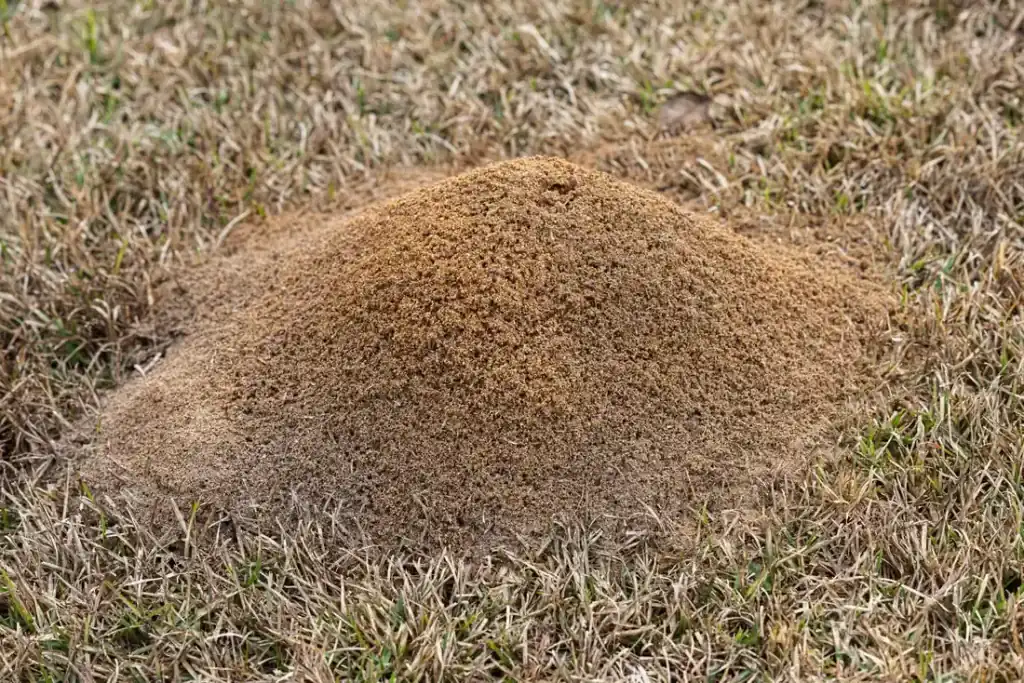
Red imported fire ants want three things — sun, moisture and disturbed sandy soil — and The Villages manufactures all three at community scale: irrigated St. Augustine lawns, freshly sodded new phases pushing south past SR-44, and sunny turf corridors along every cart path and executive course. Colonies spread by mated queens flying in from surrounding pasture land, and after heavy summer rain the mounds seem to erupt overnight — that’s existing colonies rebuilding upward, not a new invasion. The stakes are more than cosmetic here: fire ant stings are a genuine medical concern for older adults, and a resident kneeling in a flower bed or stepping off a cart path into a hidden mound gets dozens of stings in seconds. Mound-by-mound drenching feels productive but rarely kills queens; the treatment that actually clears a yard — and keeps common areas safe — is broadcast baiting on a schedule, timed to when workers actively forage.
The seasonal rhythm adds a problem unique to snowbird country. A house closed for the summer — air conditioning set warm, water in the traps evaporating, no one watching — gives ghost ants, German roaches and occasionally rodents months of undisturbed run. The classic call comes in October: owners return north-country fresh and find trails in the kitchen or droppings in the lanai storage. Operators who work The Villages know the close-and-leave drill — pre-departure perimeter service, dried drain traps, and a return inspection — and honest ones will tell you it’s cheaper than remediating a summer’s worth of quiet growth. Meanwhile the retention ponds and preserve edges that make evening cart rides pretty also breed mosquitoes; birdcage lanais help, but barrier treatment of shaded resting foliage is what changes the dusk hours.
How does pest pressure vary across the tri-county footprint?
- Historic side & Spanish Springs area (32159): the oldest housing stock — original termite pretreatments aging out, mature landscaping harboring American roaches.
- Lake Sumter Landing belt (32162): 2000s-era villages entering barrier re-check years; pond-margin mosquito pressure at dusk.
- Brownwood & the southern expansion (32163, 34785 line): the newest phases — fresh-sod fire ant colonization at its strongest, year-one ghost ants in new kitchens.
- Preserve and pasture edges throughout: mated fire ant queens and rodents recruiting in from surrounding ranch land — perimeter pressure that never fully stops.
- Golf and cart-path corridors: sunny turf mounds where residents and grandkids actually walk — the common-area stakes of fire ant work.
- Snowbird households in every village: close-and-leave summers — the quiet months when small problems become October surprises.
What kind of help can the line dispatch in The Villages?
Fire ant treatment
Scheduled broadcast baiting for yards and village turf — the method that reaches queens, timed to foraging.
Ant control
Ghost ant baiting for kitchens — including the post-summer return calls snowbird households know too well.
Termite control
Aging-pretreatment inspections for the older villages; bait systems or renewed treatment matched to evidence.
Roach extermination
German roach programs indoors; perimeter work for palmetto bugs in mature landscaping.
Rodent control
Exclusion and trapping for garages, attics and lanai storage — especially after unoccupied summers.
Commercial & emergency
Town-square restaurants and recreation facilities routed to commercial-capable operators, after-hours included.
How does The Villages dispatch actually work?
You call the line
Tap (863) 445-9190 any hour. A coordinator answers — describe the pest, your village and your ZIP.
The problem gets matched
A fire ant yard routes to a broadcast-baiting crew; a return-from-summer kitchen routes to an interior baiting operator. Matching runs on species and situation — and on which county your village sits in.
A licensed operator takes over
An independent, FDACS-licensed and insured tri-county exterminator contacts you, inspects, and quotes directly.
You decide
No obligation. If their plan works for you, they treat. The dispatch call costs nothing either way.
Mounds by the cart path? Ant trails waiting when you got back?
The line answers 24/7 and matches you with a licensed tri-county operator.
One tap. One call. Matched.
(863) 445-9190Tap to call — 24/7 dispatch
Free to call. The licensed operator gives the quote.
The Villages pest questions, answered straight
Why do fire ant mounds keep coming back no matter how many I treat?
We’re gone May through October. What should we set up before leaving?
Are fire ant stings actually dangerous, or just painful?
What does pest control cost in The Villages?
Disclosure
Lakeland Exterminators is a pest control dispatch and referral service, not a licensed pest control operator. All inspections, quotes and treatments in The Villages are performed by independent pest control operators licensed by the Florida Department of Agriculture and Consumer Services (FDACS) and insured in their own name. Calling the dispatch line is free and creates no obligation; the licensed local exterminator you’re matched with sets their own pricing and terms.