Pest problem in Wellington? Horse country runs on feed rooms, canals and irrigated turf — and pests exploit all three.
Wellington is the winter equestrian capital of the world, and its pest map reads like it. Barns, feed rooms and hay storage across the equestrian preserve keep rodents supplied like nowhere else in Palm Beach County; the C-51 canal network and hundreds of drainage lakes hold the water table — and the mosquito supply — high; and mile after mile of irrigated stucco-and-sod subdivisions run the standard South Florida ant and fire ant pressure at full volume. The 24/7 dispatch line matches you by ZIP with an FDACS-licensed exterminator who understands both the barn side and the subdivision side of town.
Talk to a live dispatch coordinator now
Rats in a feed room off Pierson Road, fire ant mounds across an Olympia lawn, mosquitoes owning a Binks Forest patio — describe it and get routed to an independent, licensed and insured operator covering your Wellington ZIP.
(863) 445-9190Tap to call — 24/7 dispatch
Free to call. Free to get matched. The licensed operator you’re matched with gives the quote.
24/7 line · A real person answers · Availability of same-day and emergency service depends on the provider.
Need pest control in Wellington, FL? Call (863) 445-9190 and a dispatch coordinator matches you with an FDACS-licensed exterminator serving Wellington and western Palm Beach County — termite, ant, roach, rodent, fire ant and mosquito work from the equestrian preserve to Olympia, Binks Forest and the Aero Club. Lakeland Exterminators is a dispatch service: the licensed local operator you’re matched with inspects, quotes and treats.
Why do barns and feed rooms make Wellington a rodent economy?
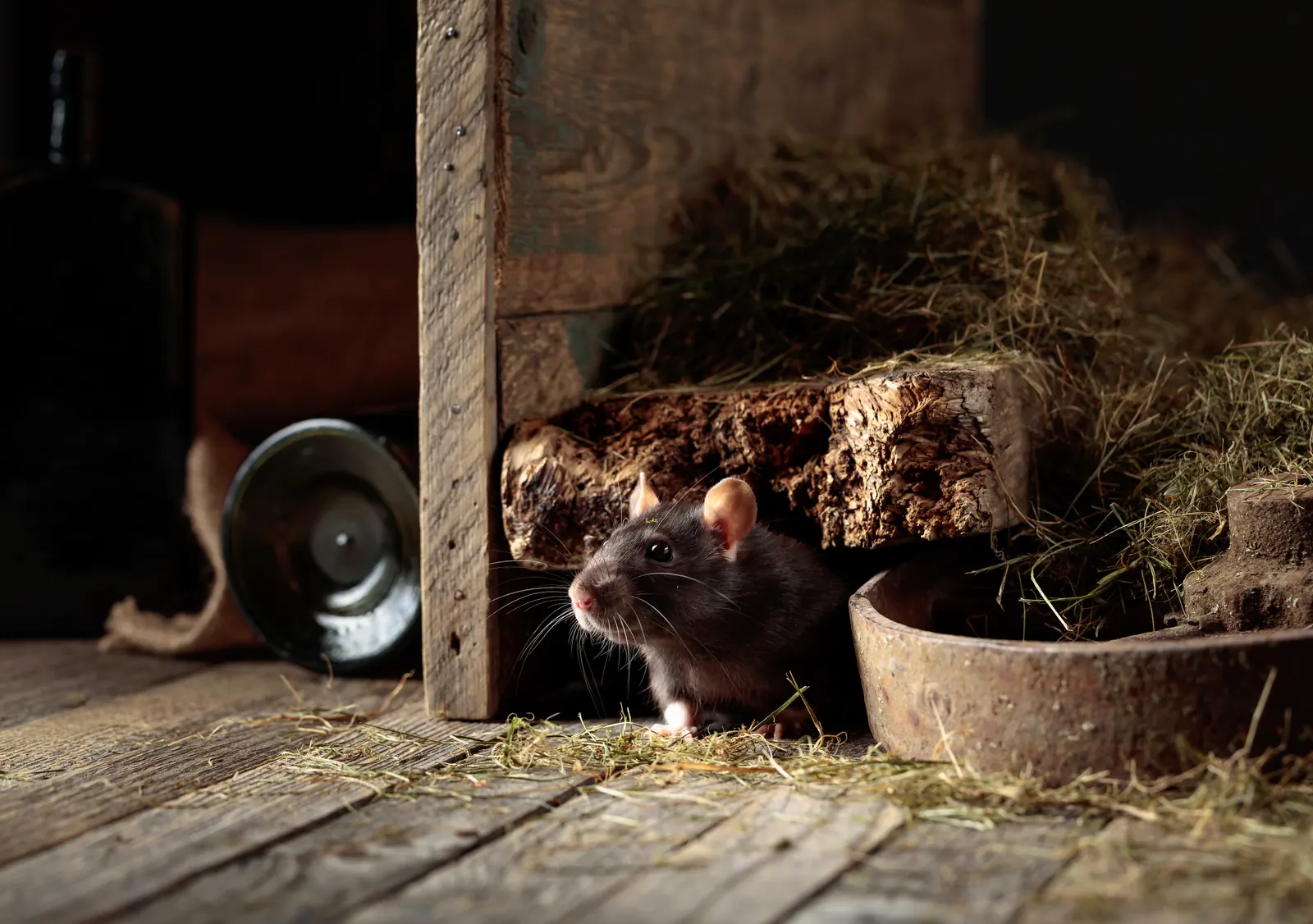
Every winter, thousands of horses — and their feed — concentrate in Wellington’s equestrian preserve, and rodents follow the calories. Feed rooms, hay lofts, tack rooms and barn aisles offer roof rats and mice a package no suburban kitchen matches: bulk grain, water at every stall, and structure after structure with truck-door-sized entries. Barn rodent work is its own discipline, and it has a non-negotiable constraint the dispatch line takes seriously: horses, barn cats, dogs and owls share the property, so control leans on exclusion-first strategy — sealed feed storage in metal bins, door sweeps and gap sealing, trapping programs on runways — with any baiting handled in tamper-resistant stations, placed by a licensed professional who works around animals for a living. The same logic extends to the equestrian estates’ guest houses and grooms’ quarters, which inherit barn-adjacent pressure the way restaurant-district apartments inherit roaches.
Off the preserve, Wellington runs South Florida’s suburban standard at scale. The village was engineered out of drained wetland — the C-51 canal and its laterals hold the water table down and the humidity up — so mosquitoes breed along canal margins, lake edges and every irrigated landscape bed, peaking at dusk from May through October; honest yard programs treat resting vegetation and container sites and leave the canal supply to county-level work. Fire ants thrive in the irrigated sod of Olympia, Buena Vida and the Aero Club — and around paddocks, where stings are a genuine risk to horses and riders alike, broadcast baiting on a schedule beats mound-by-mound whack-a-mole. Ghost and big-headed ants thread the stucco of every 1990s–2000s subdivision into kitchens; subterranean termites probe slabs whose builder pretreats are aging out on schedule; and German cockroaches work the Wellington Green and 441 corridor kitchens. Barn side or subdivision side, the first dispatch question is the same: what species, and what’s the setting?
Where does pest pressure concentrate around Wellington?
- The equestrian preserve & Pierson Road corridor (33414): feed-room and hay-loft rodents, paddock fire ants, animal-safe control constraints.
- Saddle Trail & Palm Beach Point (33414): estate barns with grooms’ quarters — barn-adjacent rodent and roach spillover, canal-margin mosquitoes.
- Olympia & Buena Vida (33414): irrigated-sod fire ants, stucco ghost ants, builder-pretreat countdowns on 2000s slabs.
- Binks Forest & the Aero Club (33414): golf-and-runway turf fire ants, preserve-edge rodent probing, shaded-landscape mosquito resting sites.
- The older village core off Forest Hill (33414): 1980s slabs with expired barriers — subterranean swarm-season calls and slab-edge checks.
- Wellington Green & the 441 corridor: restaurant and retail kitchens — documented German roach programs, dumpster-line rodent pressure.
What kind of help can the line dispatch in Wellington?
Termite control
Slab-era subterranean inspections and bait-system work as 1990s–2000s pretreats age out.
Ant control
Ghost and big-headed ant baiting for subdivision stucco; species ID before anything is applied.
Rodent control
Barn and feed-room exclusion with animal-safe strategy; subdivision attic trap-outs and roofline sealing.
Roach extermination
German roach programs for corridor kitchens and barn-adjacent quarters; palmetto bug harborage work.
Fire ant treatment
Broadcast baiting for paddock edges, HOA turf and irrigated lawns — sting-risk priority scheduling.
Commercial & emergency
Barns, show facilities and corridor restaurants routed to commercial-capable operators, after-hours included.
How does the Wellington dispatch actually work?
You call the line
Tap (863) 445-9190 any hour. A coordinator answers — describe the pest, the property and your ZIP.
The problem gets matched
A feed-room rodent run routes to an operator who works around animals; an Olympia fire ant lawn routes to a broadcast-baiting crew. Matching runs on species, setting and animal-safety constraints.
A licensed operator takes over
An independent, FDACS-licensed and insured Palm Beach County exterminator contacts you, inspects, and quotes directly.
You decide
No obligation. If their plan works for you, they treat. The dispatch call costs nothing either way.
Gnawing in the feed room? Mounds along the paddock fence?
The line answers 24/7 and matches you with a licensed Palm Beach County operator.
One tap. One call. Matched.
(863) 445-9190Tap to call — 24/7 dispatch
Free to call. The licensed operator gives the quote.
Wellington pest questions, answered straight
Can we use rodent bait around the barn? We have barn cats, dogs and owls.
Fire ant mounds keep appearing along the paddock fence line. What’s safe around horses?
Our subdivision backs a canal. Are the mosquitoes ours or the county’s?
What does pest control cost in Wellington?
Disclosure
Lakeland Exterminators is a pest control dispatch and referral service, not a licensed pest control operator. All inspections, quotes and treatments in Wellington are performed by independent pest control operators licensed by the Florida Department of Agriculture and Consumer Services (FDACS) and insured in their own name. Calling the dispatch line is free and creates no obligation; the licensed local exterminator you’re matched with sets their own pricing and terms.
Nearby: West Palm Beach, Boynton Beach, Jupiter · All Florida service areas