Pest problem in Cape Coral? One call reaches an operator who works 400 miles of canals.
Cape Coral was dredged out of the flats in the 1950s and 60s — more canal miles than any city on earth, laid over a pre-platted grid that’s still only partly built. Seawalls, dock lines, sandy dredge fill, vacant lots and the biggest burrowing owl population in Florida: every one of those changes how pest control has to be done here. The 24/7 dispatch line matches you with an FDACS-licensed exterminator who already knows.
Talk to a live dispatch coordinator now
Rats running the seawall at night, fire ants in the dredge-fill yard, mosquitoes off the freshwater canals — describe it and get routed to an independent, licensed and insured operator covering your Cape ZIP.
(863) 445-9190Tap to call — 24/7 dispatch
Free to call. Free to get matched. The licensed operator you’re matched with gives the quote.
24/7 line · A real person answers · Availability of same-day and emergency service depends on the provider.
Need pest control in Cape Coral, FL? Call (863) 445-9190 and a dispatch coordinator matches you with an FDACS-licensed exterminator serving all four quadrants of the Cape — rodent, termite, ant, fire ant, roach and mosquito work, including owl-safe rodent programs. Lakeland Exterminators is a dispatch service: the licensed local operator you’re matched with inspects, quotes and treats.
What do 400 miles of canals do to pest pressure?
They turn the whole city into waterfront — and waterfront has its own rules. Roof rats treat seawall caps, dock lines and boat canopies as a highway system; a canal-front home can be recolonized from three houses down without a rat ever crossing the street. The southwest Cape’s saltwater canals breed fewer mosquitoes than people assume (tidal flow works against larvae), but the freshwater canals and swale network north of Pine Island Road hold still water for months of the year, and an unmaintained pool on a half-empty street can shoulder an entire block’s mosquito problem. Meanwhile the ground itself — sandy dredge fill, fast-draining and sun-baked — is textbook fire ant habitat, which is why mounds reappear in Cape lawns no matter how many times the spot-kill jug comes out.
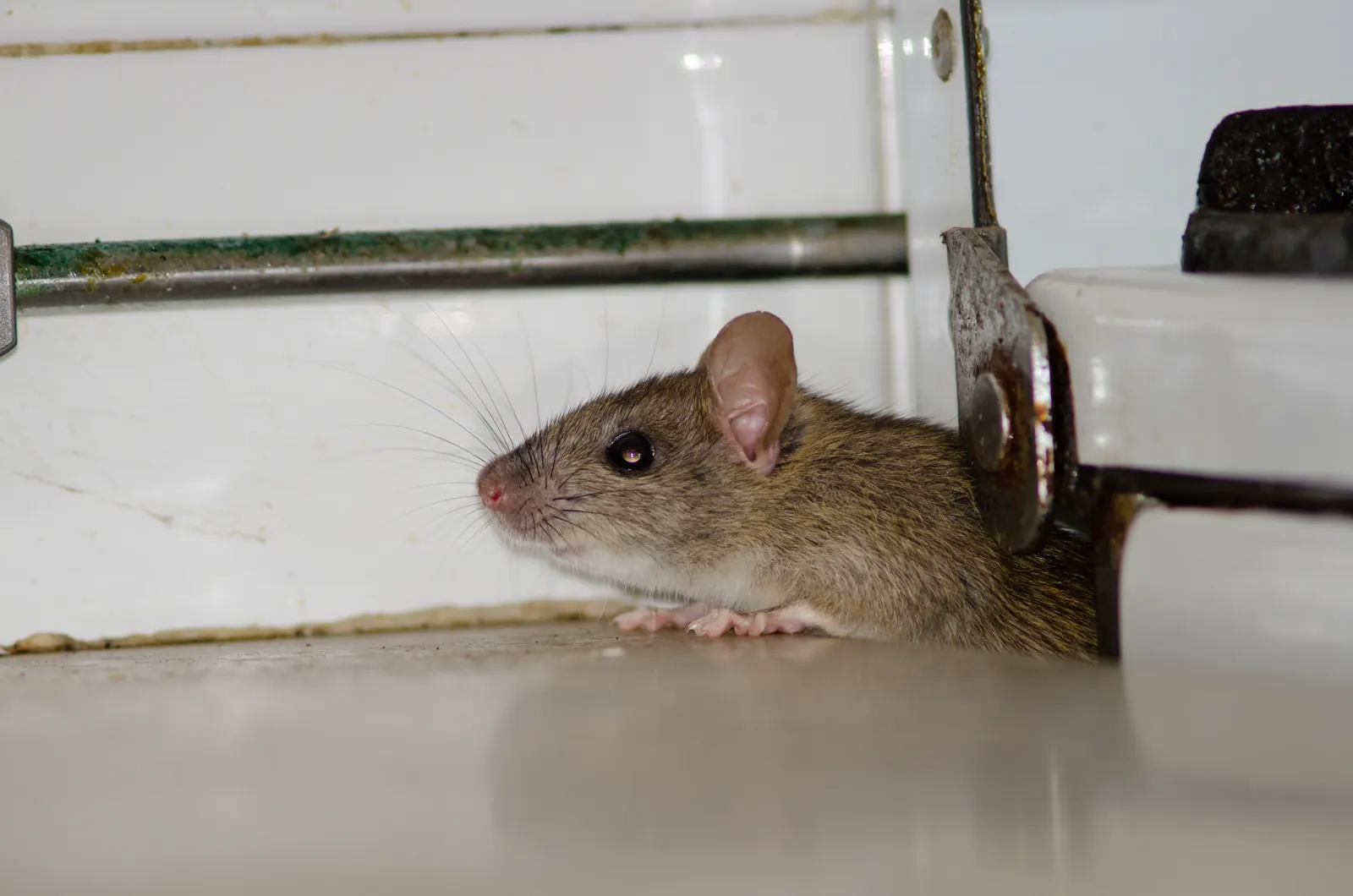
Then there are the owls. Cape Coral hosts the largest population of protected burrowing owls in Florida — they nest in the same vacant lots that make up the city’s famous checkerboard. That makes casual rodent poisoning genuinely reckless: a poisoned rat eaten by an owl passes the toxin up the chain. Operators dispatched in the Cape run owl-safe rodent programs — snap-trap-first indoors, secured tamper-resistant bait stations only where appropriate, and exclusion as the permanent fix. And because roughly half the platted lots are still empty scrub, the vacant-lot reinvasion math applies to everything: treating one yard on a checkerboard street is a perimeter-and-cadence game, not a one-visit event.
How does pest pressure map across the four quadrants?
- Southeast Cape (33904): the original 1960s–70s blocks around Bimini Basin — expired original construction, subterranean termite watch, seawall rat runs.
- Southwest Cape (33914): saltwater-canal homes toward Cape Harbour — drywood termites in older trusses, lanai mosquito programs, dock-line rodents.
- North-central (33990, 33991): the 1980s–2000s build-out — soil pretreats aging past their service life, fire ants in full sun.
- Northeast (33909): newer inland subdivisions — new-sod fire ant colonization and year-one ghost ants.
- Northwest (33993): the frontier checkerboard — vacant-lot reinvasion pressure, swale mosquitoes, owl burrows everywhere.
What kind of help can the line dispatch in Cape Coral?
Rodent control
Owl-safe trapping and exclusion for seawall, dock and attic pressure — the Cape’s signature job.
Fire ant treatment
Broadcast baiting tuned to dredge-fill sand where mound-by-mound killing always fails.
Termite control
Pretreat-age inspections for the 80s–2000s quadrants; drywood ID on the saltwater canals.
Roach extermination
German roach programs plus perimeter palmetto-bug work for canal-front lanais.
Commercial & emergency
Restaurants and marine-adjacent businesses routed to commercial-capable operators, after-hours included.
How does the Cape Coral dispatch actually work?
You call the line
Tap (863) 445-9190 any hour. A coordinator answers — describe the pest, the quadrant and your ZIP.
The problem gets matched
A seawall rat run routes to an exclusion-capable operator; a checkerboard-street mosquito problem routes to a source-and-barrier program. Matching runs on species and setting.
A licensed operator takes over
An independent, FDACS-licensed and insured Cape-area exterminator contacts you, inspects, and quotes directly.
You decide
No obligation. If their plan works for you, they treat. The dispatch call costs nothing either way.
Scratching over the lanai at 2 a.m.? Mounds back again in the dredge sand?
The line answers 24/7 and matches you with a licensed Cape Coral-area operator.
One tap. One call. Matched.
(863) 445-9190Tap to call — 24/7 dispatch
Free to call. The licensed operator gives the quote.
Cape Coral pest questions, answered straight
I see rats running the seawall at night. Is that normal here?
Can rodent bait even be used in Cape Coral with the burrowing owls?
The vacant lot next to us keeps sending fire ants and mice. Does treating just our yard work?
What does pest control cost in Cape Coral?
Disclosure
Lakeland Exterminators is a pest control dispatch and referral service, not a licensed pest control operator. All inspections, quotes and treatments in Cape Coral are performed by independent pest control operators licensed by the Florida Department of Agriculture and Consumer Services (FDACS) and insured in their own name. Calling the dispatch line is free and creates no obligation; the licensed local exterminator you’re matched with sets their own pricing and terms.
Nearby: Fort Myers, North Port, Sarasota.
Cape Coral service guides: Termite treatment, Rodent control, Ant control · All services