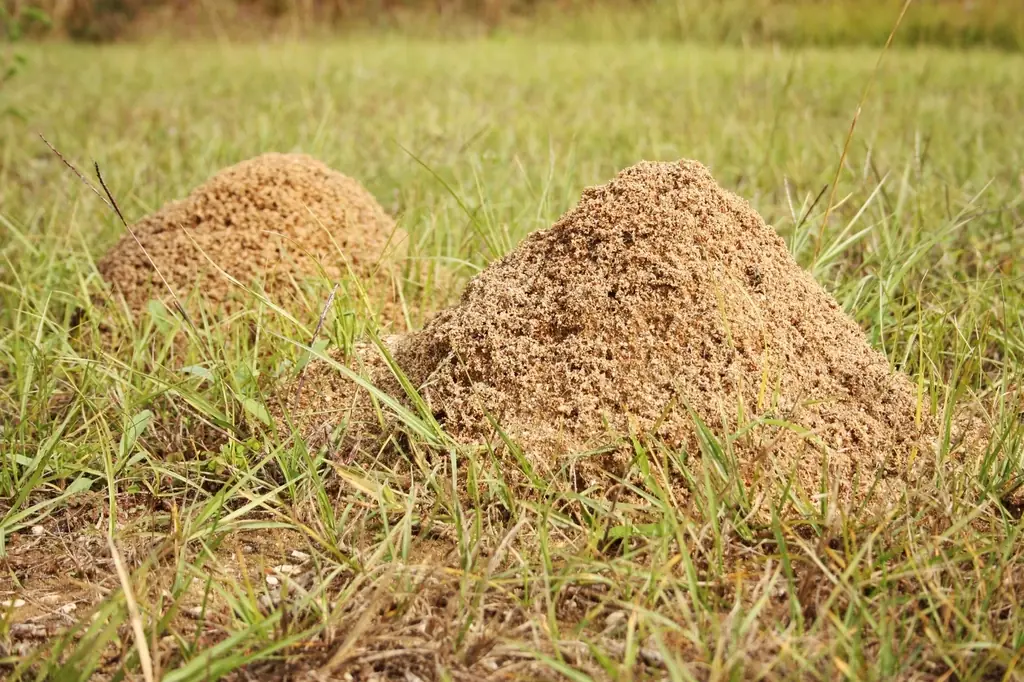
Stepping into a yard full of stinging fire ants, or finding fresh mounds pop up across the lawn after every Mulberry rain? Imported red fire ants thrive in the open, sandy, sun-baked ground that defines this part of Polk County’s old phosphate country. Here’s why Mulberry yards get hit hard and how to get matched with a licensed fire ant control pro.
Get matched with a Mulberry fire ant pro
One call reaches a licensed, local exterminator who covers your address — and a real person answers, 24/7.
Why Mulberry yards are fire ant country
Mulberry sits in the heart of Bone Valley, the phosphate district that shaped this corner of Polk County, and the land here carries that history. Decades of mining and reclamation left large areas of disturbed, re-contoured, sandy overburden, and reclaimed ground is close to a perfect imported red fire ant habitat: open, sunny, well-drained, and free of the established ant community that would otherwise compete.
That is the key ecological point. Imported red fire ants are a disturbance species. They arrived in the United States through the port of Mobile in the early twentieth century and spread across the South, and they dominate exactly where soil has been turned over, vegetation cleared, and native ant competitors displaced — roadsides, pasture, reclaimed mine land, new construction pads, and freshly graded lots. Mulberry has a great deal of all of those.
Two other local factors compound it. Florida populations are commonly polygyne — multiple queens per colony, with far less territorial aggression between adjacent mounds — which produces mound densities several times higher than single-queen populations elsewhere. And open, sun-exposed acreage with irrigated or seasonally wet pasture gives colonies both the warmth and the soil moisture they use to build.
Why mounds appear overnight after rain
The mound is not the colony; it is the colony’s climate-control structure. Most of the nest is a network of galleries below it. When heavy rain raises soil moisture, workers push saturated soil upward and rebuild the mound to keep the brood above the water table and in the warm, aerated upper chambers — which is why a yard that looked clear on Friday can show a dozen fresh mounds after a weekend of storms. The colonies were there the whole time; the rain made them visible.
Flooding produces the more dramatic version: a colony can evacuate and form a floating raft of linked workers with the queen and brood inside, drift until it contacts vegetation or high ground, and re-establish. That is worth knowing after a tropical system, because it explains mounds appearing in places that never had them — and it is a reason not to walk through flood water in a fire ant area.
Why knocking the mound over is worse than doing nothing
Kicking, raking, or hosing a mound does not harm the colony — the brood and queens are below grade. What it does is trigger a mass defensive response at exactly the moment you are standing over it, and it often prompts the colony to relocate a short distance, which makes it harder to treat. If you disturb a mound accidentally, move away promptly rather than trying to finish the job.
What makes fire ants different from your kitchen ants
Fire ants are a yard and turf problem, not a kitchen problem, and they behave differently from the tiny ants trailing along a countertop. They are aggressive nest defenders, they sting rather than merely bite, and they respond to disturbance by swarming up a vertical surface — a leg, a boot, a mower tyre — and stinging in coordination.
The sting itself is distinctive. Fire ant venom is alkaloid-based rather than protein-based like a bee’s, which is why a fire ant sting typically produces a sterile white pustule within about a day, sitting on a red welt. The pustules are not infected and should not be opened; scratching them open is what produces secondary infection. A small share of people have systemic allergic reactions to fire ant stings, and anyone with a history of significant reaction to stings should treat a fire ant yard as a genuine medical consideration and keep prescribed emergency medication accessible.
They also cause problems beyond stinging. Fire ants are strongly attracted to electrical fields and routinely nest in and damage irrigation timers, well pump controls, AC disconnects, junction boxes, and traffic and utility cabinets — a real maintenance cost on acreage. They damage young plantings, they are a hazard to ground-nesting wildlife and to penned livestock and pets, and they make a lawn genuinely unusable for children.
How licensed control works here
The approach that works on a Mulberry property is the two-part strategy that has been the standard recommendation for Southern fire ant control for decades: broadcast bait to reduce the population across the whole area, plus individual mound treatment for specific mounds that need to go now.
Broadcast baiting
A fire ant bait is a granular carrier soaked in oil, with a slow-acting active ingredient. Foragers collect it, share it through the colony by food exchange, and it eventually reaches the queens. That slow action is the point — a bait that killed foragers immediately would never reach the brood chamber. Broadcast bait treats the acreage rather than the individual mound, which is what addresses the colonies you have not found and the ones about to arrive.
Timing determines whether it works. Bait must be applied when ants are actively foraging, on dry ground, with no rain expected for a day or so, and it should be fresh — the oil in an old, opened bag goes rancid and gets refused. A practical field check is to set a small piece of a greasy potato chip near a mound and see whether ants find it within twenty or thirty minutes; if they do, it is a good time to bait. Spring and fall applications generally do the most work in Central Florida.
Individual mound treatment
Mound drenches, granules watered in, or injection kill a specific mound quickly — useful for a mound beside a playset, a doorway, or a pasture gate. What mound treatment does not do is fix the yard: it deals with one colony while the rest of the population continues, and with polygyne densities that is a lot of remaining colonies. Mound treatment alone is the usual reason a homeowner treats all season and never gets ahead.
Scale matters on acreage
On larger Mulberry lots, broadcast application with proper equipment across the full property is the difference between control and a permanent game of whack-a-mole. Perimeter and boundary pressure from adjacent pasture, roadside, or reclaimed ground is continuous, so a program is generally a seasonal cycle rather than a single event.
What “permanent” honestly means
Total elimination of fire ants from a Central Florida property is not a realistic goal, and any claim otherwise should be treated with suspicion. Newly mated queens fly in from surrounding land constantly, and Mulberry is surrounded by exactly the disturbed open ground they prefer. What is achievable, and what a competent program delivers, is a substantial and sustained reduction — a yard you can walk barefoot in, maintained by a treatment cycle rather than by a one-time fix.
Practical steps for a Mulberry property
- Walk the property after rain and map where mounds actually are before treating anything — the distribution tells you whether you have a boundary-pressure problem or a whole-property problem
- Wear closed boots when mowing or working in tall grass, and check equipment before handling it
- Keep bait fresh and stored sealed; rancid bait is refused and wastes an application window
- Do not disturb mounds before treatment
- Check irrigation timers, well pump controls, and AC disconnects periodically — ants in electrical equipment are a common and preventable failure
- Address the soil-insect and turf conditions on the property generally; see lawn pest control for the wider turf picture
- If anyone in the household has a history of systemic reaction to stings, treat the yard as a medical consideration and keep prescribed medication accessible outdoors
The indoor ants that show up in the same houses are an entirely separate problem with a separate treatment — see ant control in Haines City for the species that trail across counters, and ant control in Lakeland for the county-wide picture. For everything else Mulberry properties deal with, see pest control in Mulberry.
Mulberry fire ant FAQs
Why do fire ant mounds keep reappearing in my Mulberry yard?
Two reasons. Florida populations are commonly multi-queen, which produces mound densities several times higher than single-queen populations and means many colonies you have not found. And Mulberry is surrounded by reclaimed phosphate land, pasture, and roadside — open disturbed ground that fire ants dominate — so newly mated queens fly in continuously. Mound-by-mound treatment cannot keep up with either.
What’s the best way to control fire ants on a large lot or acreage?
Broadcast bait across the whole property, combined with individual mound treatment for specific mounds that need to go immediately. Broadcast bait is what addresses colonies you have not located and the constant pressure from surrounding land; individual treatment handles the mound beside the playset or the pasture gate. Using only one of the two is the usual reason a property never gets ahead.
Are fire ant stings dangerous?
For most people they are painful rather than dangerous, producing a characteristic sterile white pustule within about a day because the venom is alkaloid rather than protein-based. The pustules should not be opened, since scratching them is what leads to secondary infection. A small share of people have systemic allergic reactions, and anyone with a history of significant sting reaction should keep prescribed emergency medication accessible.
Why do new mounds appear right after it rains?
The mound is the colony’s climate-control structure, not the colony itself — most of the nest is galleries below it. When rain raises soil moisture, workers push saturated soil upward and rebuild to keep brood above the water table, which makes existing colonies suddenly visible. Flooding can also cause a colony to evacuate as a floating raft and re-establish somewhere it was not before.
Can I get rid of fire ants permanently?
Not permanently, and any claim otherwise deserves suspicion. Newly mated queens fly in constantly from the surrounding disturbed open ground that defines this part of Polk County. What is achievable is a substantial, sustained reduction maintained by a seasonal treatment cycle — a yard that is comfortably usable rather than one that is permanently ant-free.
When is the right time to apply fire ant bait?
When ants are actively foraging, on dry ground, with no rain expected for about a day, using fresh bait. The oil carrier in an opened or old bag goes rancid and gets refused, which wastes the application. A practical field check is to place a small piece of greasy potato chip near a mound; if ants find it within twenty to thirty minutes, conditions are good. Spring and fall generally do the most work in Central Florida.
Should I knock the mound down or flood it with the hose?
No. The brood and queens are below grade, so disturbing the mound does not harm the colony — it triggers a mass defensive response while you are standing over it, and it often prompts the colony to relocate a short distance, making it harder to treat. If you disturb a mound accidentally, move away rather than trying to finish.
Why do fire ants keep getting into my irrigation timer and AC disconnect?
Fire ants are strongly attracted to electrical fields and routinely nest in and damage irrigation controllers, well pump controls, AC disconnects, junction boxes, and utility cabinets. On acreage this is a genuine recurring maintenance cost, and it is worth checking those enclosures periodically rather than discovering the problem when equipment fails.
Take the yard back from the mounds
Tell us your address and how widespread the mounds are. We’ll match you with a licensed, insured Mulberry company to schedule an assessment.
Last reviewed August 2026 · reviewed on a quarterly cycle. Lakeland Exterminators is a dispatch and matching service that connects Polk County homeowners with independent, FDACS-licensed pest-control companies; we are not a licensed pest control operator and do not perform treatments ourselves.
Disclaimer: Lakeland Exterminators is a local dispatch and referral service, not a licensed pest-control operator. We connect Polk County, Florida homeowners with independent, FDACS-licensed and insured pest-control companies. All inspections and treatments are performed by those independent providers, who set their own pricing, scheduling, and service terms.
Any reference to same-day, emergency, or 24/7 service describes the typical scheduling of matched independent providers and is not guaranteed; actual response times vary by provider, season, location, and demand.