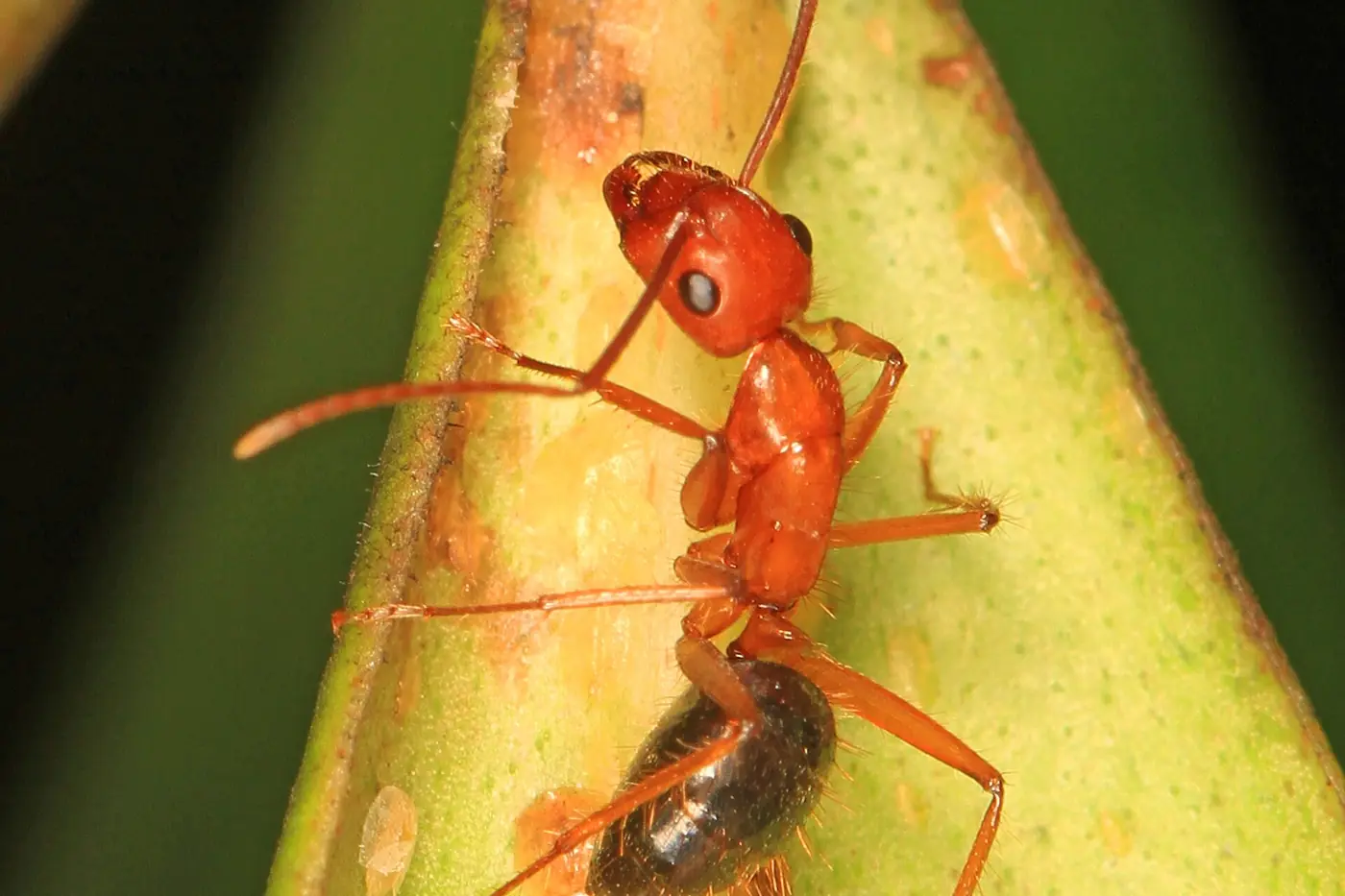
Trails of tiny ants marching across the kitchen counter or bathroom in your Haines City home, and they just keep coming back? Central Florida’s warm humidity supports several nuisance ant species that nest in walls and slabs and shrug off store-bought sprays. Here’s how to tell what you’ve got and how to get matched with a licensed ant control pro.
Get matched with a Haines City ant control pro
One call reaches a licensed, local exterminator who covers your address — and a real person answers, 24/7.
The ants that actually invade Haines City homes
“Ants” is not a diagnosis. Haines City sits at the junction of I-4 and US-27, in a belt that has gone from citrus and pasture to subdivision at speed, and the species turning up in kitchens here are not the same ones building mounds in the yard. Correct identification is what determines whether a treatment works, because several of the most common indoor species get dramatically worse when they are sprayed.
Ghost ants
Very small, with a dark head and thorax and a pale, almost translucent abdomen and legs — which is why they seem to disappear against a light countertop. They are strongly associated with moisture and are the classic Central Florida kitchen-and-bathroom ant, trailing along counter edges, around sinks, and up through the gap at the backsplash. Colonies are large, have multiple queens, and nest in wall voids, potted plants, and mulch against the foundation.
White-footed ants
Dark with distinctly pale feet, and present across Central Florida in enormous numbers. They are honeydew feeders that tend to trail up exterior walls from landscaping, and they are notoriously hard to control because a large share of the colony does not forage and workers do not share solid food efficiently — which defeats the transfer mechanism most ant baits rely on. See white-footed ants in Polk County for the detail on why they behave differently.
Crazy ants
Fast, erratic runners that do not follow neat trails. Populations can become extremely dense, and they are drawn to electrical equipment, showing up in irrigation timers, pool equipment, AC units, and junction boxes.
Pharaoh ants
Tiny and yellowish, most common in multi-family and commercial buildings. They are the species where spraying is most catastrophic, because a disturbed colony buds — it splits into multiple satellite colonies, converting one problem into several dispersed through the structure.
Carpenter ants
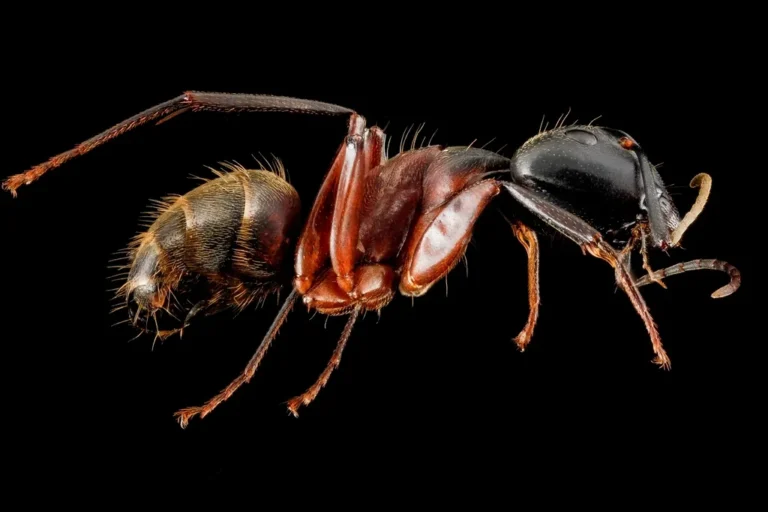
Much larger and black or bicoloured. They do not eat wood but excavate galleries in it, preferring wood that has been softened by moisture, so their presence is usually a signal about a leak, a damp wall base, or a soft window sill as much as about ants.
Why spraying makes several of these worse
Ghost ants and pharaoh ants both respond to repellent insecticide by budding: the colony fragments, queens relocate, and satellite nests establish elsewhere in the structure. What was one trail becomes three trails in three rooms, and the homeowner reasonably concludes the ants are “getting worse” — which they are, as a direct result of the treatment. This is the single biggest reason retail ant spray fails in Central Florida homes, and it is why licensed control leans on non-repellent products and baits that the ants carry back rather than contact killers that scatter them.
Why newer Haines City construction sees so much of this
A new subdivision is an ant-friendly place for reasons that have nothing to do with housekeeping. Fresh sod is laid in seams that stay damp; irrigation runs on a schedule that keeps the soil at the slab edge continuously moist; mulch is installed right up against the foundation; and new landscape plantings bring in honeydew-producing insects — aphids, scale, mealybugs, whiteflies — that supply the sugar that fuels large ant colonies. Meanwhile the building itself has the usual set of unsealed openings: weep holes, expansion joints, plumbing and AC line-set penetrations, and gaps behind the backsplash and under cabinet kick plates.
Put together, that is a food source outside, a moist harborage against the wall, and a set of doors. The ants trailing across the counter are the visible end of a colony that mostly lives outdoors or in the wall void, which is why treating the counter accomplishes nothing.
How licensed ant control works here
Identification and trailing
A competent visit starts by identifying the species and then following the trail to find where it enters and where it leads outside. This is unglamorous and it is the whole job: the nest determines the product, and the entry point determines the exclusion work.
Non-repellent perimeter and targeted treatment
Modern ant control uses non-repellent products the ants cannot detect, so they walk through treated zones and carry the active ingredient back into the colony through contact and grooming. That transfer effect is what reaches the queens, and it is the opposite of the scatter effect a repellent spray produces.
Baiting matched to the species and the season
Bait selection is not generic. Ghost ants and many Central Florida species are strongly sugar-feeding and respond to liquid sugar baits; other species shift between sugar and protein depending on colony needs at the time. White-footed ants respond poorly to solid baits for the behavioural reasons above. Getting this wrong is the usual explanation for bait being ignored.
Moisture and horticultural correction
The durable fixes are environmental. Pulling mulch back from the foundation, adjusting irrigation heads that are soaking the slab edge, fixing a dripping hose bib or condensate line, trimming shrubs and tree limbs so they do not bridge to the wall or roof, and dealing with aphid and scale infestations on ornamentals all remove either the moisture or the honeydew that the colony depends on.
Exclusion
Sealing at the backsplash, around plumbing penetrations under sinks, at cabinet kick plates, and at exterior penetrations removes the routes. It is slow work and it is what keeps the result once the colony is knocked down.
Are these the fire ants in my yard?
No — and it is worth being clear about it, because they are managed completely differently. The mounds in the lawn are imported red fire ants, an outdoor turf problem addressed with broadcast baits and mound treatment across the yard. The tiny ants on the kitchen counter are a different species entirely, living in a wall void or in landscaping against the house, and treating the lawn will not touch them. If you have both — common in this corridor — they are two separate jobs. See fire ant control for the yard side.
What you can do before the appointment
- Do not spray the trail. Leaving it intact lets the technician follow it to the nest, and spraying risks budding the colony. If you must clean, wipe with soapy water after the visit, not before
- Note where and when you see them — time of day, which room, whether it is near water or near food, and whether it started after rain
- Store sugar, honey, syrup, and pet food in sealed rigid containers, and wipe up spills promptly
- Check for the moisture source: under-sink leaks, a sweating supply line, a damp cabinet base, condensate line discharge at the slab edge
- Pull mulch back several inches from the foundation and check irrigation heads that spray the wall
- Look at your ornamentals for aphids, scale, or sooty mould — heavy ant traffic up a shrub usually means honeydew
Timing and what a realistic outcome looks like
Ant control on a large multi-queen colony is a reduction-and-collapse process, not a switch. Baiting deliberately relies on foragers surviving long enough to carry material home, so a bait that kills instantly at the trail is working badly. Expect trailing to continue for some days after treatment and then decline, and expect a follow-up if the species is one of the harder ones. A single visit with no return is a reasonable plan for a small, correctly identified problem and an unreasonable one for a large white-footed or ghost ant population.
For the broader county picture and the other species that show up in Polk County homes, see ant control in Lakeland and pest control in Haines City.
Haines City ant FAQs
What are the tiny pale ants on my Haines City kitchen counter?
Most often ghost ants — very small, with a dark head and thorax and a pale, almost translucent abdomen and legs, which is why they seem to vanish against a light surface. They are moisture-associated, trail along counter edges and around sinks, and nest in wall voids, potted plants, and mulch against the foundation. They have multiple queens and large colonies, which is why surface treatment does not resolve them.
Why do the ants come back after I spray them?
Because repellent sprays scatter rather than eliminate. Ghost ants and pharaoh ants respond to repellent insecticide by budding — the colony fragments, queens relocate, and satellite nests establish elsewhere in the structure, so one trail becomes several in several rooms. Licensed control uses non-repellent products and baits the ants carry back to the colony instead.
Are these the same as the fire ants in my yard?
No, and they are managed completely differently. Lawn mounds are imported red fire ants, an outdoor turf problem handled with broadcast bait and mound treatment across the yard. Counter ants are a different species living in a wall void or in landscaping against the house. Treating the lawn will not affect them, and having both is two separate jobs.
What attracts ants into newer Haines City homes?
New construction supplies all three requirements at once. Fresh sod seams and scheduled irrigation keep soil at the slab edge continuously moist; mulch installed against the foundation gives harborage; and new landscape plantings bring aphids, scale, and mealybugs whose honeydew fuels large colonies. The building then supplies the doors — weep holes, expansion joints, and unsealed plumbing and AC penetrations.
How long until the ants are gone?
Expect reduction over days rather than an immediate stop. Baiting deliberately depends on foragers surviving long enough to carry material back to the colony, so continued trailing right after treatment is a sign the approach is working, not failing. A single visit is reasonable for a small correctly identified problem; large ghost ant or white-footed ant populations normally need a follow-up.
Should I clean the trail before the technician arrives?
Preferably not. An intact trail lets the technician follow it to the entry point and the nest, which is what determines the treatment. Wiping it away removes the most useful diagnostic information in the house, and spraying it risks budding the colony. Clean after the visit rather than before.
I baited and they ignored it. Why?
Usually a species and formulation mismatch. Ghost ants and many Central Florida species are strongly sugar-feeding and take liquid sugar baits, while others shift between sugar and protein with colony needs. White-footed ants respond poorly to solid baits because a large share of the colony does not forage and workers share solid food inefficiently. The fix is a different formulation, not more of the same.
I have big black ants, not tiny ones. Is that different?
Yes. Larger black or bicoloured ants are usually carpenter ants, which do not eat wood but excavate galleries in it and strongly prefer wood softened by moisture. Their presence is often a signal about a leak, a damp wall base, or a soft window sill, so a competent response investigates the moisture source rather than only treating the ants.
Stop the trails for good
Tell us your address and where the trails are. We’ll match you with a licensed, insured Haines City company to schedule an inspection.
Last reviewed August 2026 · reviewed on a quarterly cycle. Lakeland Exterminators is a dispatch and matching service that connects Polk County homeowners with independent, FDACS-licensed pest-control companies; we are not a licensed pest control operator and do not perform treatments ourselves.
Disclaimer: Lakeland Exterminators is a local dispatch and referral service, not a licensed pest-control operator. We connect Polk County, Florida homeowners with independent, FDACS-licensed and insured pest-control companies. All inspections and treatments are performed by those independent providers, who set their own pricing, scheduling, and service terms.
Any reference to same-day, emergency, or 24/7 service describes the typical scheduling of matched independent providers and is not guaranteed; actual response times vary by provider, season, location, and demand.