Plant City calls itself the Winter Strawberry Capital of the World, and its identity as a farming town shaped how the city was built – a compact historic downtown near the old train depot, ringed by residential streets that grew up alongside packing houses and farmland long before the interstate corridor drew newer subdivisions further out. That older housing stock, combined with sandy, well-drained soil typical of the strawberry belt, creates steady conditions for subterranean termites to establish colonies close to home foundations. Lakeland Exterminators connects Plant City homeowners with FDACS-licensed pest control providers for residential termite inspection and treatment throughout the ZIP codes surrounding the city.
Dealing with a pest problem right now?
📞 Call now — get matched with a licensed local exterminator: (888) 295-0220When you call, stay on the line for a few seconds while we match you with the licensed local exterminator for your area. Have your address and a quick description of the problem ready.
Licensed local pros · Fast response, subject to availability · No obligation
Why Plant City’s Agricultural Edge Raises Termite Pressure
Sandy soil drains quickly on the surface but holds moisture at depth, and irrigation from the surrounding strawberry fields keeps groundwater levels in residential areas bordering farmland more consistent than in drier inland neighborhoods. Subterranean termite colonies use exactly this kind of below-surface moisture to travel from soil to structure, and homes along Plant City’s agricultural fringe – where a residential lot backs directly onto a field or a former grove – often sit closer to established termite activity than homes deeper inside a subdivision.
Plant City’s older downtown-adjacent housing adds a second layer of pressure. Many of these homes were built well before current termite pretreatment codes, with original wood-frame construction, pier-and-beam foundations in some cases, and decades of small additions and repairs that can create gaps a colony can exploit.
Signs of Termite Activity in Plant City Homes
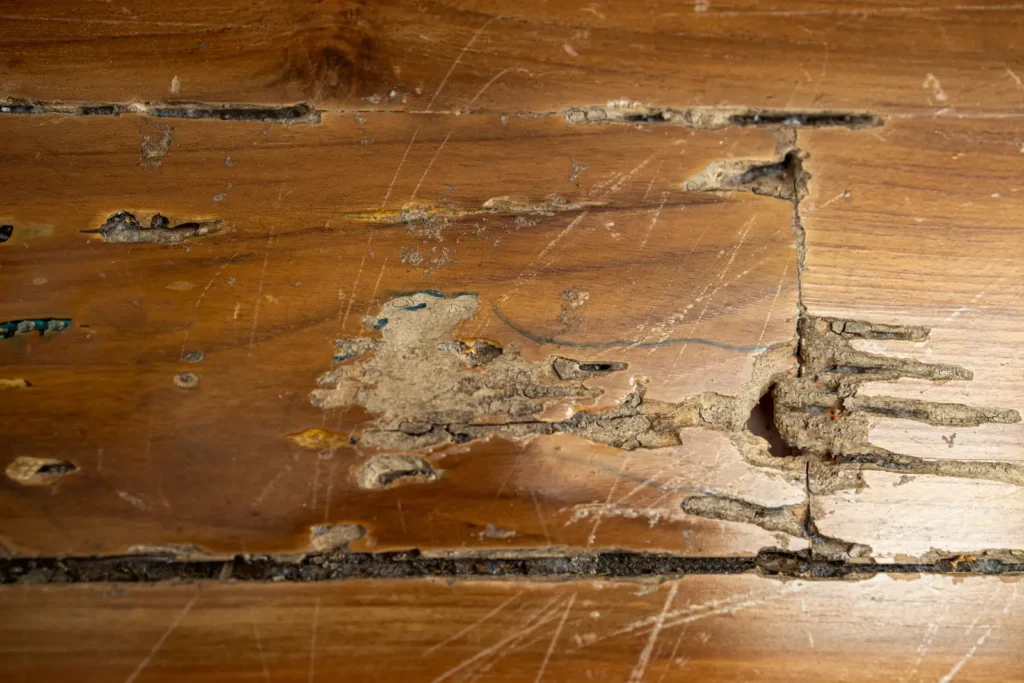
Mud Tubes on Foundation Walls Near Field-Facing Sides
Homes bordering agricultural land often show the earliest termite activity on the side of the foundation closest to the field, where soil moisture and undisturbed ground give a colony an easier path toward the structure.
Sagging or Soft Spots in Older Wood Flooring
In older Plant City homes with original wood subflooring, termite damage often shows up first as a slightly soft or springy spot underfoot near an exterior wall, well before any visible surface damage appears.
Swarmer Wings Collecting Near Foundation Vents
Subterranean termite swarmers are drawn to light and often emerge near foundation vents or crawl space openings, leaving small piles of shed wings in those areas after a swarm.
Check Termite Service Availability in Your Plant City ZIP Code
Lakeland Exterminators matches Plant City homeowners with an FDACS-licensed pest control provider for a residential termite inspection. Confirm coverage in your ZIP code before requesting an appointment.
How Dispatch Works for Termite Service in Plant City
Lakeland Exterminators is a dispatch and referral service, not a licensed pest control company. When a Plant City homeowner requests termite service through this site, the request is matched with an FDACS-licensed local provider who inspects the property, evaluates any field-edge or foundation-specific risk factors, and carries out treatment and monitoring directly. Confirming your ZIP code first ensures the request reaches a provider actively covering your part of Plant City. General residential coverage across the city is outlined on the Plant City pest control page.
A WDO Inspection Matters for Older Plant City Homes
Given the number of older, field-adjacent homes throughout Plant City, a wood-destroying organism (WDO) inspection is one of the most direct ways to confirm whether a property currently shows termite activity, and it is a standard step in real estate transactions in this part of Polk County. An inspection covers accessible crawl spaces, foundation lines, and attic framing, which matters more in older construction than in newer slab homes further from the agricultural fringe.
Reducing Termite Risk Between Inspections
Homeowners near Plant City’s field edges can reduce termite risk between professional visits by keeping irrigation runoff directed away from the foundation, maintaining a gap between mulch or soil and siding, and having any wood-to-ground contact points, like fence posts or trellises attached to the home, checked during a routine inspection. Countywide termite and moisture trends are tracked on the Polk County pest and termite pressure report.
Frequently Asked Questions
Does living next to a strawberry field increase termite risk?
Homes bordering active or former farmland often sit near consistently irrigated soil, which can support more active subterranean termite colonies than drier, non-agricultural residential areas.
How often should a Plant City home get a termite inspection?
An annual wood-destroying organism inspection is generally recommended for older or field-adjacent homes in Plant City, with an additional inspection typically required around a real estate transaction.
Are older Plant City homes more at risk than newer construction?
Yes, in general. Homes built before modern termite pretreatment requirements often lack the soil treatment barriers and elevated framing clearances standard in newer construction, giving termites more direct access.
What is the difference between subterranean and drywood termite damage?
Subterranean termites require soil contact and typically enter through foundations, while drywood termites can infest exposed wood, such as attic framing or furniture, without any soil connection at all.
Can irrigation runoff from a nearby field really affect termite risk?
Yes. Consistent irrigation keeps soil moisture elevated near a foundation, which is the primary condition subterranean termites need to travel from soil to wood framing.
How do I get matched with a termite provider in Plant City?
Confirm your ZIP code through this site and your request is routed to an FDACS-licensed pest control provider actively servicing your part of Plant City for a residential termite inspection or treatment.
Ready to Confirm Service in Plant City?
One call reaches a licensed, local exterminator who covers your address — and a real person answers, 24/7.