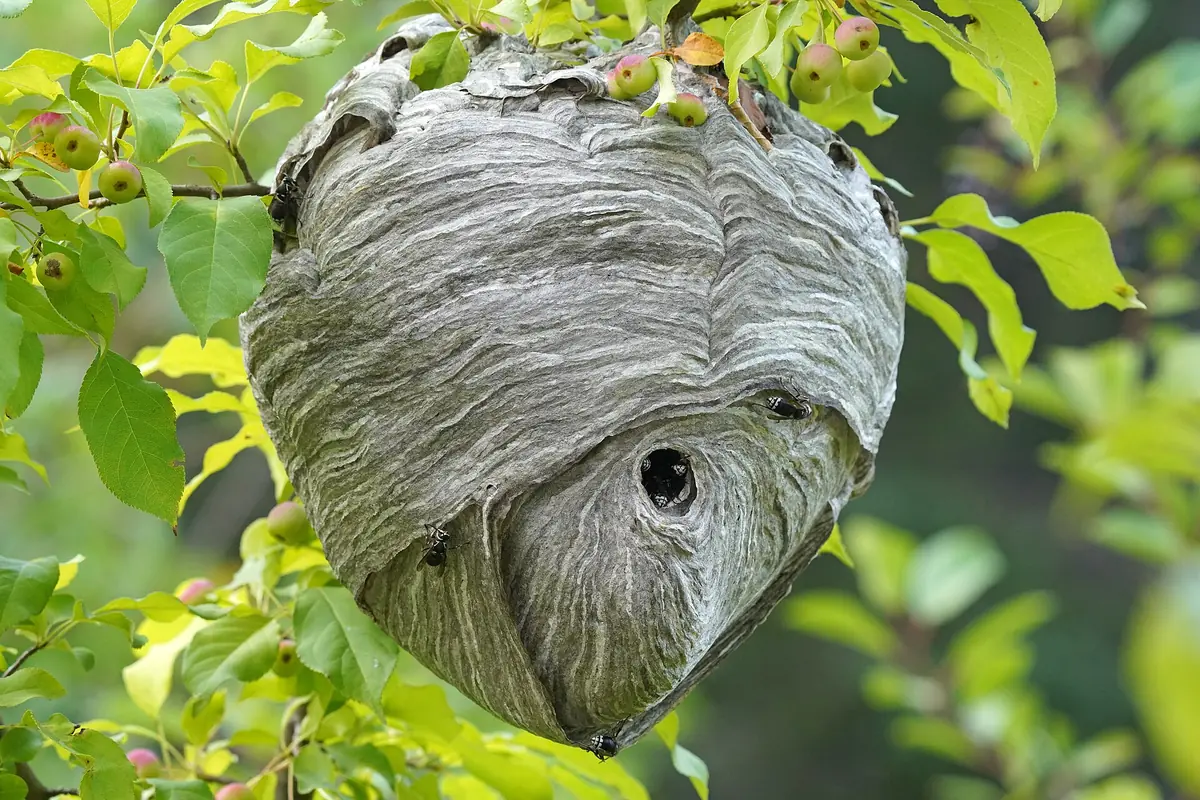
Late spring through summer is when wasp and yellow jacket colonies in Polk County hit their peak size, and it’s also when Lakeland homeowners start finding nests they didn’t know existed — tucked under a soffit on a Cleveland Heights porch, inside a meter box in South Lakeland, or built into the ground near a Highland City shed. A colony that started with a single queen in spring can carry dozens to hundreds of workers by July and August, and that’s exactly when stings happen: mowing over a hidden ground nest, brushing a porch eave, or disturbing a nest while trimming hedges near Lake Hollingsworth or Lake Morton.
Dealing with a pest problem right now?
📞 Call now — get matched with a licensed local exterminator: (888) 295-0220When you call, stay on the line for a few seconds while we match you with the licensed local exterminator for your area. Have your address and a quick description of the problem ready.
Licensed local pros · Fast response, subject to availability · No obligation
This guide covers how to identify what you’re dealing with, why DIY removal is riskier than it looks, and how to get matched with a licensed pest control professional for safe removal.
Wasps vs. yellow jackets vs. hornets: what’s actually in your yard
Central Florida yards host a few different stinging insects, and telling them apart matters because their nesting habits — and the risk of approaching them — differ.
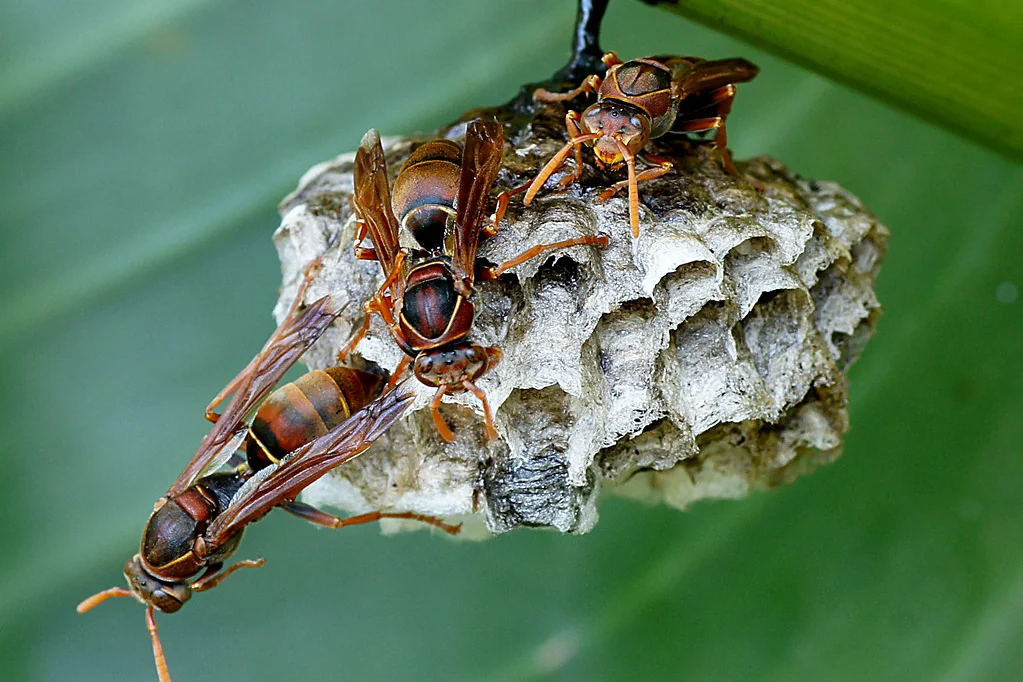
- Paper wasps build small, open, umbrella-shaped nests under eaves, porch ceilings, and railings. They’re generally less aggressive unless the nest itself is disturbed.
- Yellow jackets are more aggressive and often nest in the ground, in old rodent burrows, or inside wall voids and attic spaces. Ground nests are the ones people usually find by accident — a lawn mower or a bare foot finds them first.
- Bald-faced hornets (technically a type of yellow jacket) build the large, enclosed, gray papery nests you see hanging from tree limbs. These colonies can be sizable by late summer and defend the nest aggressively.
If you’re not sure which one you’re looking at, that uncertainty is itself a reason to keep distance and get a professional opinion rather than guess and approach.
Why nests are worse in July and August
Colonies are annual in Florida — they start small in spring with a single founding queen and build through summer as workers hatch and forage. By mid-to-late summer, a nest that was a golf-ball-sized paper structure in May can be the size of a basketball, and a ground colony can have well over a hundred workers defending it. Lakeland’s humidity and consistent rainfall support strong colony growth, and the Chain of Lakes area’s mix of mature trees, irrigation, and mulched landscaping gives both ground-nesting and aerial species plenty of cover.
That growth curve is why a nest that seemed manageable in June can become a genuine hazard by August — more workers, more aggressive defense, and a bigger area around the nest where a disturbance triggers a group response rather than a single sting.
Why DIY removal is riskier than it looks
A can of store-bought wasp spray works fine on the paper-wasp nest you can see clearly from six feet away in broad daylight. It does not work well on the situations that actually send people to urgent care:
- Ground nests are hard to fully treat from the surface. Yellow jackets build extensive underground galleries, and a surface spray often reaches only the entrance, leaving most of the colony agitated and intact.
- Wall-void and attic nests can’t be reached safely. Treating from outside a wall doesn’t address the nest itself, and spraying blind into a void can drive angry insects into living space instead of away from it.
- Multiple stings add up fast. A single sting is a nuisance for most people. A disturbed nest can deliver dozens of stings in a short window, which is a different medical situation — especially for children, older adults, or anyone with a known allergy.
- Allergic reactions are unpredictable. Someone can be stung without incident for years and then have a serious reaction on the next sting. Anaphylaxis is a medical emergency; if someone shows swelling beyond the sting site, difficulty breathing, dizziness, or hives spreading away from the sting, that’s a call to 911 or an ER, not a wait-and-see.
- Nighttime removal isn’t a safe workaround for a homeowner. Pros sometimes treat nests after dark when colonies are less active, but that requires proper protective equipment and knowing the species’ behavior — not just a headlamp and confidence.
Where nests tend to show up around Lakeland
A few patterns show up consistently across Polk County properties:
- Soffits, porch ceilings, and eaves on older homes in neighborhoods like Dixieland and Cleveland Heights, where mature construction gives paper wasps sheltered ledges.
- Irrigation boxes, meter boxes, and old rodent burrows in yards throughout South Lakeland and Highland City — common yellow jacket ground-nest sites that go unnoticed until someone steps near the entrance.
- Sheds, detached garages, and playset frames in suburban Winter Haven and Auburndale yards, where quiet, undisturbed corners make attractive nest sites.
- Tree limbs near lakefront properties around Lake Hollingsworth and Lake Morton, where bald-faced hornets build their enclosed gray nests well off the ground.
- Attic vents and gable ends on homes throughout Bartow and Mulberry, where a small gap is enough for a colony to establish inside the roofline.
What a licensed pro does differently
A licensed pest control operator brings a few things a homeowner with a spray can doesn’t have: proper protective equipment, treatment products intended for full-colony elimination rather than surface knockdown, the judgment to identify which species is present and how aggressive it’s likely to be, and the ability to treat ground and void nests at the source rather than just the visible entrance. For a hollow soffit or a nest built into a wall void, that often means opening the void enough to treat it directly and closing the entry point afterward so a new colony doesn’t move into the same spot next season.
Prevention: making your property less attractive to new colonies
Once a nest is cleared, a few habits reduce the odds of a repeat next season:
- Seal gaps around soffits, roof vents, and utility penetrations where a founding queen could establish a nest in spring.
- Keep trash cans covered and rinse recycling — food and sugar sources draw foraging wasps and yellow jackets toward a property in the first place.
- Check irrigation boxes and meter covers periodically in spring, when a founding queen is most likely to be establishing a new ground colony and is easiest to address early.
- Trim back tree limbs that overhang patios and walkways, since aerial nests built there put foot traffic directly in the defense zone.
For broader yard habits that reduce pest pressure generally, see our guide on yard care that reduces pest pressure around a Lakeland home. And if ants are part of the picture near the same trouble spots, our comparison of ghost ants vs. sugar ants covers a different but related summer nuisance.
FAQ
Is it safe to spray a wasp nest myself? For a small, clearly visible paper-wasp nest reached without a ladder, over-the-counter spray can work, but ground nests, wall-void nests, and larger colonies carry real risk of multiple stings and incomplete treatment. When in doubt, get a professional opinion before approaching.
How do I know if it’s a yellow jacket nest instead of a wasp nest? Paper wasps build small, open, umbrella-shaped nests you can usually see from outside. Yellow jackets more often nest in the ground, in old burrows, or inside wall and attic voids, and tend to defend the nest more aggressively when disturbed.
What should I do if I get stung multiple times? Move away from the area immediately and calmly. Watch for signs of a serious reaction — swelling beyond the sting site, difficulty breathing, dizziness, or spreading hives — and treat those as a medical emergency requiring 911 or an ER, not a wait-and-see approach.
Why do nests seem so much bigger by August than they were in June? Colonies build through the season from a single founding queen in spring. By late summer a nest has had months to add workers, so what looked manageable in June can be a much larger, more actively defended colony by August.
Can I fill in a ground nest with soil to get rid of it? That’s not a reliable removal method and can provoke the colony without eliminating it. Ground nests are best handled by a licensed pro who can treat the colony directly.
Do I need to worry about nests in an attic even if I never go up there? Yes. An attic or wall-void colony can grow undetected and eventually find its way into living space through light fixtures, vents, or wall gaps, so a nest you can hear or see activity around from outside is worth having checked.
Lakeland Exterminators is a dispatch and matching service connecting homeowners with independent, licensed (FDACS) pest control professionals. We do not perform pest control treatments ourselves.