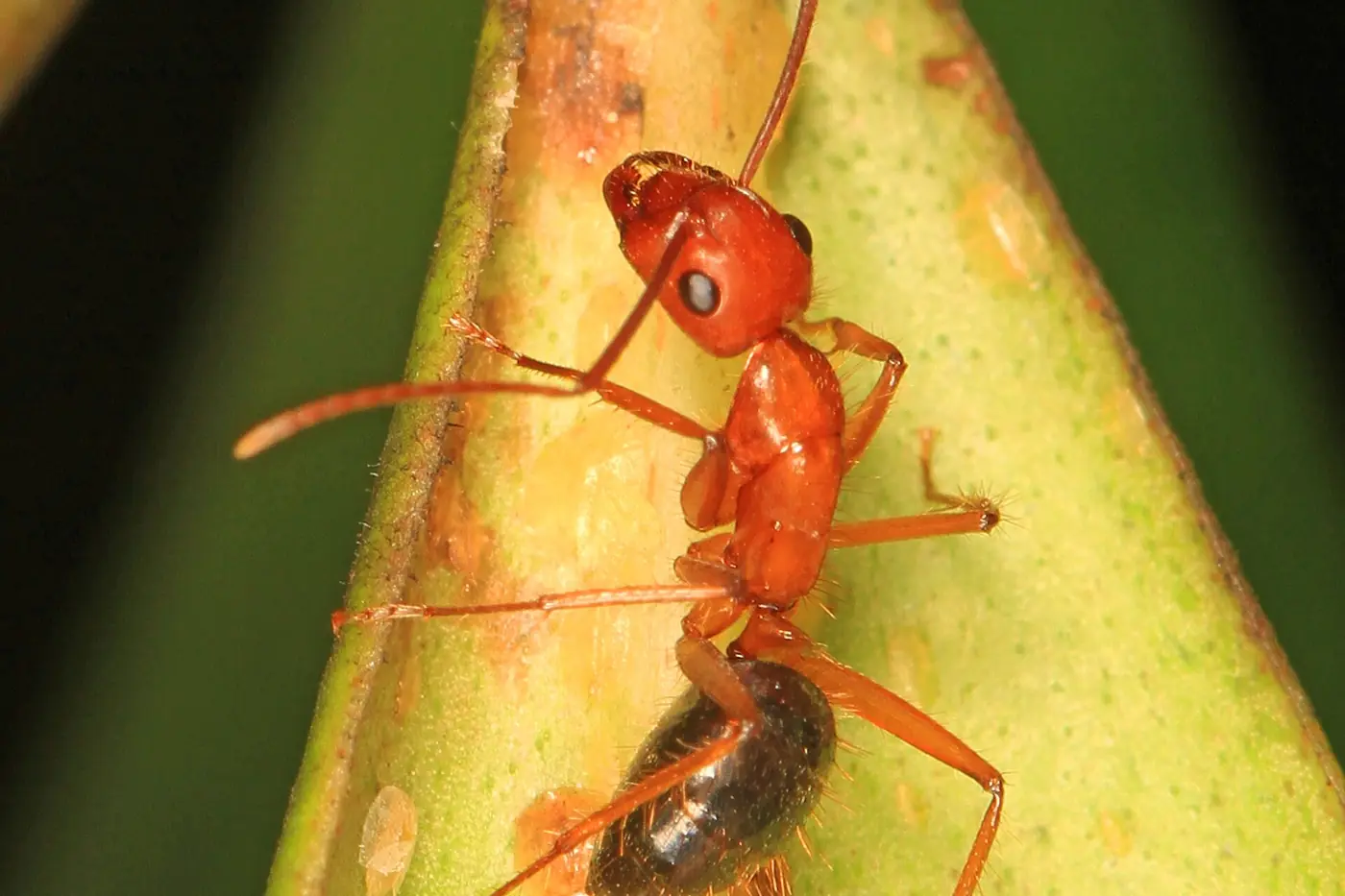
You wipe the counter, pour your coffee, and a thin line of barely-visible ants is already streaming across the backsplash toward a drop of juice. By the time you grab a paper towel, more have appeared. If you live in Lakeland or anywhere in Polk County, you have probably called them “sugar ants” — and you are not wrong about what they want. But the name hides something important about how to actually get rid of them.
Dealing with a pest problem right now?
📞 Call now — get matched with a licensed local exterminator: (888) 295-0220When you call, stay on the line for a few seconds while we match you with the licensed local exterminator for your area. Have your address and a quick description of the problem ready.
Licensed local pros · Fast response, subject to availability · No obligation
Here is the short version: “sugar ant” is not a real species. In Central Florida kitchens and bathrooms, the tiny ants people label sugar ants are almost always ghost ants — and the way you treat ghost ants is very different from how most people instinctively react. Reach for a spray can and you can genuinely make the problem bigger.
This guide walks through how to tell ghost ants apart from look-alikes, why your kitchen and bathroom are their favorite rooms, why DIY sprays cause the colony to split and spread, and the bait-and-sanitation approach that actually shrinks a colony instead of scattering it.
“Sugar Ant” Isn’t a Species — Here’s What People Usually Mean
If you search “sugar ants in Lakeland FL,” you will find a hundred pages using that phrase and almost none of them telling you that no insect is officially named the sugar ant. It is a catch-all nickname for any small ant that shows up hunting sweets. That vagueness matters, because different ants respond to different treatments, and guessing wrong wastes weeks.
In Florida, the small sweet-seeking ant trailing across a kitchen counter is usually one of a handful of species:
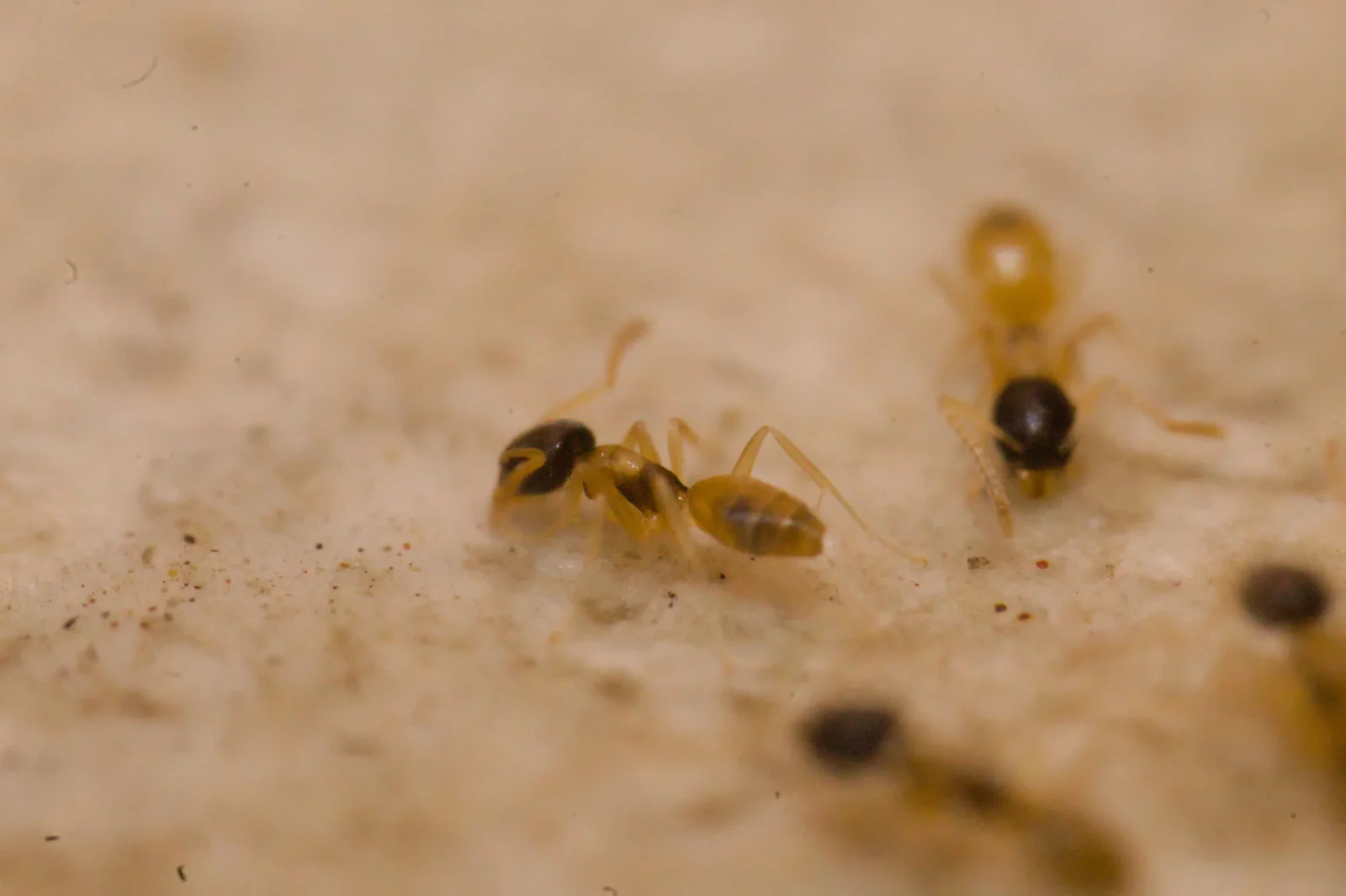
- Ghost ants — by far the most common “sugar ant” indoors here. Tiny, with a dark head and thorax and a pale, almost see-through abdomen and legs.
- White-footed ants — small and dark, often mistaken for ghost ants but a bit larger and uniformly colored.
- Thief ants — extremely small, yellowish to brown, named for nesting near other ant colonies and stealing food.
- Pharaoh ants — tiny and yellowish, a species you especially do not want to spray, because it buds aggressively.
The reason this list matters: several of these ants react badly to over-the-counter sprays in the same way. So before you do anything, it is worth spending two minutes confirming which ant you actually have. More often than not in a Lakeland home, the answer is the ghost ant.
How to Spot a Ghost Ant
Ghost ants earn their name. They are about 1.3 to 1.5 millimeters long — roughly the thickness of a few stacked sheets of paper — and the back half of the body is so pale and translucent it can be hard to see against a light counter. Look closely and you will notice a clear two-tone pattern:
- Dark head and thorax (the front portion of the body)
- Pale, milky, near-translucent abdomen and legs
That contrast is the giveaway. Many people first notice the dark heads moving in a line and assume the whole ant is dark; the back half simply disappears against the surface. Crush one and you may notice a faint coconut-like or rotten-coconut smell, which is another ghost ant trait.
A few more clues that point to ghost ants specifically:
- They move in distinct trails along grout lines, counter edges, the seam where the backsplash meets the wall, and around the base of the sink.
- They appear suddenly in large numbers near anything sweet — a sticky spot, a spill, pet food, an open sugar bag.
- They favor moisture. You will often find them near the dishwasher, under the coffee maker, around the bathroom sink, or near a slow leak.
If the ants you are seeing are clearly dark front-to-back, noticeably larger, or marching in a thick column outdoors along the foundation, you may be dealing with a different species — and that is worth mentioning when you describe the problem to a professional. For the classic “two-tone, almost invisible, tiny trail on the counter” picture, ghost ants are the usual answer.
One call reaches a licensed, local exterminator who covers your address — and a real person answers, 24/7.
Why Kitchens and Bathrooms? Moisture Plus Sweets
Ghost ants are looking for two things, and your kitchen and bathroom hand them both. They need a reliable water source and a steady supply of sugars, and Florida’s humidity plus indoor plumbing makes those rooms ideal year-round.
The moisture pull. Ghost ants nest in damp, protected spots — wall voids near plumbing, under loose tile, inside the cabinet under the sink, behind the dishwasher, and around water heaters. In a humid climate like Polk County’s, the gap behind a leaky appliance or a poorly sealed sink is prime real estate. This is why you so often see them in the bathroom even though there is no obvious food there: the water alone is enough to keep a satellite nest happy, and a smear of toothpaste or hair product is a bonus.
The sugar pull. The foragers you see on the counter are scouts and workers carrying food back to the nest. Ghost ants strongly favor sweets — fruit, juice, syrup, soda residue, honey, sugary spills, and the sugary “honeydew” that aphids and other insects leave on plants outdoors. A single sticky ring left by a soda can overnight is a feast.
Put those together and a Lakeland kitchen offers everything a ghost ant colony wants within a few square feet: water under the sink, crumbs and spills on the counter, pet food on the floor, and warm wall voids to nest in. That is also why they seem to “come from nowhere” — the colony may be tucked inside a wall or under the slab, with only the foraging trail visible.
Why DIY Sprays Make Ghost Ants Worse
This is the part most people get wrong, and it is the single most important thing to understand about ghost ants.
When you see a trail of ants and hit it with a can of contact spray, you kill the workers you can see and feel like you solved the problem. With many pests, that instinct is fine. With ghost ants, it can backfire badly, because ghost ant colonies respond to stress by budding.
What budding means. A ghost ant colony does not depend on a single queen in a single nest. These ants often have multiple queens and multiple connected nest sites. When the colony senses a threat — like a chemical it can detect along its trail — it can split. Queens and workers scatter and establish new satellite nests in new locations. One nest becomes two, or three, or more. So the spray that wiped out the visible trail can quietly turn one problem into several, now spread across different walls and rooms where you cannot see them.
That is the trap: the counter looks clear for a few days, you assume you won. Then ants reappear in a new spot — and another — because you stressed the colony into dividing rather than eliminating it.
Repellent sprays are the core issue. Many over-the-counter ant products are repellent, meaning ants avoid the treated area. Instead of carrying poison home, the colony simply reroutes and, under pressure, buds. You end up training the ants to avoid your treatment while the actual nest stays intact.
The takeaway: knocking down the ants you can see is not the same as removing the colony, and with ghost ants the quick spray can make the underlying situation harder to fix.
Bait-and-Sanitation Steps That Actually Work
The approach that works with ghost ants is the opposite of attacking the trail. You want the foragers to find food, carry it back, and share it throughout the colony — including the queens you will never see. That means patience, sweet baits, and cutting off the other food and water sources so the bait is the most attractive thing around.
1. Stop wiping out the trail you find. As frustrating as it sounds, resist the urge to spray or scrub away every trail immediately. A visible trail is information: it shows you where the ants are entering and where to place bait. If you erase it, you lose the map.
2. Take away competing food. Ghost ants will ignore bait if your counter offers something better. Wipe up spills right away, store sugar, honey, and syrup in sealed containers, rinse recyclables, keep pet food in sealed bins and pick up bowls between feedings, and run a damp cloth over counters and the stovetop nightly. The hungrier the colony is for your bait, the faster it works.
3. Fix the moisture. Address the water that is keeping them comfortable: repair the slow drip under the sink, dry the area behind the dishwasher, fix a sweating pipe, and run the bathroom fan to cut humidity. Reducing moisture removes one of the two reasons they are inside at all.
4. Use slow-acting, sugar-based bait — and leave it alone. Sweet liquid or gel baits placed along the existing trails let workers feed and carry the bait back to share. The key word is slow: a bait that kills foragers instantly never reaches the nest. Place bait near the trails and entry points, then be patient. You may even see more ants at first as they recruit to the bait — that is the bait working, not failing. Do not spray near the bait, because repellent spray will drive ants away from it.
5. Seal the obvious entry points — after baiting. Once activity drops, caulk gaps around pipes, the sink, baseboards, and where the backsplash meets the wall to make it harder for ants to re-enter. Sealing first, before the colony is dealt with, just pushes them to find another way in.
This bait-first, sanitation-heavy method is slower than a spray and emotionally harder, because you have to tolerate seeing ants for a while. But it targets the colony instead of scattering it.
Why Whole-Colony Removal Is Where Pros Earn Their Keep
The honest limit of DIY: even a careful bait-and-sanitation routine can stall when a colony is large, has already budded into several nests, or is nesting somewhere you cannot reach — inside a wall void, under the slab, or up in the soffit. At that point you are baiting one nest while two others keep the population topped up.
This is where a licensed professional makes the difference. The licensed Polk County exterminators in our network can identify the species for certain, trace trails back toward the actual nesting sites, choose non-repellent products and bait formulations matched to ghost ant behavior, and treat the connected nests rather than just the trail on your counter. The goal is to bring down the whole colony — including the satellite nests budding made — instead of chasing foragers room to room.
If you want to understand how a pro approaches this specific ant, our overview of ghost ant control in Lakeland walks through what a treatment plan typically targets. And if ghost ants are just one of several things you have been swatting at this season, the broader Lakeland pest control guide covers how the common Polk County household pests connect.
What to Tell the Exterminator
Homeowners in Haines City deal with the same ghost-ant and white-footed-ant trailing behavior described above — see our ant control in Haines City page for that area’s specifics.
When you describe the problem, a few specifics help the professional you are connected with size things up before they arrive:
- Where you see the trails — which counters, which rooms, and whether they appear in more than one room (multiple rooms can hint at budding).
- What the ants look like — tiny, two-tone, dark front and pale back is the ghost ant signature; note it if they look different.
- When they are most active — time of day, and whether activity spikes after you cook or leave food out.
- Any moisture issues — a leak under the sink, a sweating pipe, a humid bathroom, a problem appliance.
- What you have already tried — especially any sprays, since recent spraying can have triggered budding and changes how a pro reads the situation.
The more precisely you can describe the pattern, the faster the right plan comes together.
One call reaches a licensed, local exterminator who covers your address — and a real person answers, 24/7.
Frequently Asked Questions
Are ghost ants and sugar ants the same thing? “Sugar ant” is a nickname, not a species. In Lakeland and the rest of Polk County, the tiny ants people label sugar ants are usually ghost ants — recognizable by a dark head and thorax with a pale, near-translucent abdomen and legs.
Why do I have tiny ants in my Lakeland kitchen? Ghost ants come indoors hunting moisture and sweets. A kitchen offers both: water under the sink and behind appliances, plus crumbs, spills, and sugary residue on counters. Florida’s humidity keeps them active year-round.
Are ghost ants dangerous or do they bite? Ghost ants are mostly a nuisance. They do not sting, and they are not known to spread disease the way some pests do. The main problem is contamination of food and the sheer persistence of the trails. The bigger risk is making them worse by spraying.
Why do ghost ants come back after I spray them? Spraying often triggers budding — the colony splits and establishes new nests in response to the stress. You clear the visible trail but scatter the colony, so ants reappear in new spots. Slow-acting sweet baits work better because workers carry them back to the nest.
What kind of bait works on ghost ants? Slow-acting, sugar-based liquid or gel baits placed along active trails. The idea is for workers to feed and share the bait throughout the colony before it takes effect. Avoid spraying near the bait, since repellent sprays drive ants away from it.
Why are there ghost ants in my bathroom if there’s no food? Ghost ants need water as much as sugar. A bathroom offers steady moisture around the sink, tub, and pipes, which is enough to support a satellite nest. Toothpaste and hair-product residue can also draw foragers.
How long does it take to get rid of ghost ants? With consistent baiting and good sanitation, you may see activity drop over a couple of weeks, though large or already-budded colonies take longer. If the population keeps rebounding, it usually means there are nests you cannot reach, which is when a professional treatment helps.
Should I clean up the ant trail or leave it? While you are baiting, leave active trails alone — they show foragers the path to the bait and show you where to place it. Once activity has dropped off, then clean the trails and seal the entry points.
LakelandExterminators.com is a dispatch and matching service. We connect callers with independent, licensed Florida exterminators; we are not a licensed pest control company ourselves. Any reference to prompt or same-day response describes typical scheduling of matched independent providers and is not guaranteed — actual response times vary by provider, season, location, and demand. See our full disclaimer in the site footer.