Auburndale grew up around the citrus packing houses that once lined its rail spurs, and much of the city’s older residential core still sits close to the groves that gave the town its identity. That grove-edge geography matters for termite pressure: citrus root systems, irrigation berms, and the sandy, organically rich soil used to support decades of grove cultivation all create conditions where subterranean termite colonies establish easily and then migrate toward the nearest wood structure once a grove is thinned, replanted, or abandoned. Lakeland Exterminators connects Auburndale homeowners with FDACS-licensed pest control providers who handle residential termite inspection and treatment throughout the ZIP codes surrounding the city.
Dealing with a pest problem right now?
📞 Call now — get matched with a licensed local exterminator: (888) 295-0220When you call, stay on the line for a few seconds while we match you with the licensed local exterminator for your area. Have your address and a quick description of the problem ready.
Licensed local pros · Fast response, subject to availability · No obligation
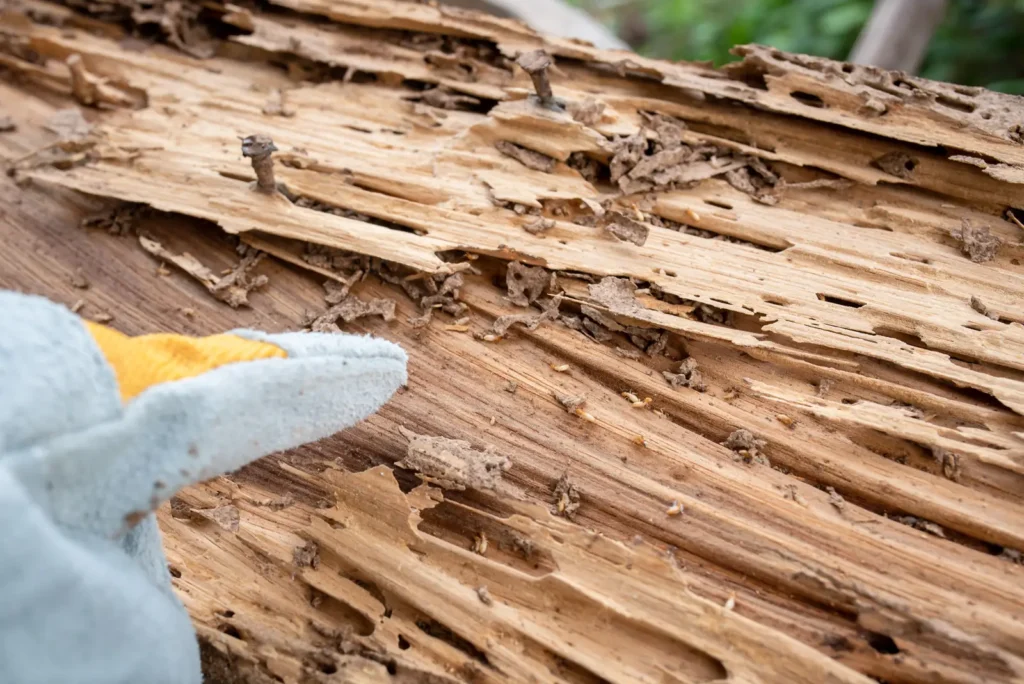
Why Grove-Edge Auburndale Carries Distinct Termite Pressure
Subterranean termite colonies feed on decaying wood and organic matter in soil, and citrus groves – even well-maintained ones – generate a steady supply of pruned wood, root debris, and mulch along their edges. Neighborhoods built directly against former or active grove land, particularly on the west and south sides of Auburndale near Lake Myrtle, sit closer to this organic matter than homes in the middle of a subdivision. When a grove parcel is cleared for redevelopment or a portion goes fallow, the termite colonies that were feeding on grove debris do not disappear; they relocate to the nearest available wood source, which is often a neighboring home’s fence line, shed, or foundation framing.
Auburndale’s packing-house-era housing stock adds a second layer of exposure. Many homes near the historic downtown core and along the old rail corridor were built decades before current termite pretreatment standards, meaning original wood framing sits closer to grade than it would in new construction.
Signs of Termite Activity in Auburndale Homes
Mud Tubes Near Grove-Adjacent Fence Lines
Because colonies often travel in from grove-edge soil, mud tubes frequently first appear on the grove-facing side of a property – along back fences, sheds, or the rear foundation wall – before they reach the street-facing side of the home.
Soft or Crumbling Wood Around Irrigation Lines
Grove-style irrigation risers and older sprinkler lines that were part of a property’s original citrus use can keep soil consistently damp near a foundation, and wood trim or fencing near these lines is worth checking for softness or crumbling.
Swarmers Near Windows During Warm, Humid Evenings
Winged termite swarmers are most active on warm, humid evenings after rain, a pattern that lines up with Central Florida’s citrus-growing climate; finding discarded wings near windows or porch lights is a reliable sign a nearby colony has matured.
Check Termite Service Availability in Your Auburndale ZIP Code
Lakeland Exterminators matches Auburndale homeowners with an FDACS-licensed pest control provider for a residential termite inspection. Confirm coverage in your ZIP code before requesting an appointment.
How Dispatch Works for Termite Service in Auburndale
Lakeland Exterminators is a dispatch and referral service, not a licensed pest control company. When an Auburndale homeowner requests termite service through this site, the request is routed to an FDACS-licensed local provider who conducts the inspection, recommends a treatment approach, and handles any follow-up monitoring directly. Confirming your ZIP code first ensures the dispatch process matches you with a provider actively servicing your part of Auburndale, whether that is a grove-adjacent lot, a home near Lake Myrtle, or a property in the historic downtown grid. See the full Auburndale pest control overview for general service coverage across the city.
Older Homes Near Historic Downtown Auburndale
The residential streets surrounding Auburndale’s historic downtown and rail corridor include a meaningful concentration of homes built during the citrus-packing boom of the early-to-mid 1900s. Original wood-frame construction, older pier foundations, and decades of settling all create the kind of small gaps and moisture pockets that make wood-to-soil contact easier for a subterranean colony to exploit. A wood-destroying organism (WDO) inspection is the clearest way to confirm current activity on a specific property, and it is routinely required during real estate transactions in this part of Polk County.
Reducing Termite Risk Between Inspections
Homeowners near grove edges can lower their exposure by keeping cleared grove debris and mulch away from fence lines and foundations, redirecting any legacy irrigation risers away from the structure, and having fence lines and sheds checked whenever an adjacent grove parcel is cleared or replanted. These steps reduce opportunity without replacing a licensed inspection. Countywide termite and soil-moisture trends are tracked on the Polk County pest and termite pressure report.
Frequently Asked Questions
Does living near a citrus grove increase termite risk in Auburndale?
Yes. Grove debris, pruned wood, and root systems support subterranean termite colonies, and when a grove parcel is cleared or thinned, those colonies often relocate toward the nearest structure, including neighboring homes.
How often should an Auburndale home be inspected for termites?
An annual wood-destroying organism inspection is standard for homes near grove edges or older housing stock in this part of Polk County, with an additional inspection recommended around any real estate transaction.
What should I do if a grove near my home is being cleared?
Have fence lines, sheds, and the grove-facing side of your home inspected soon after clearing begins, since displaced termite colonies look for the nearest available wood source.
Are subterranean or drywood termites more common in Auburndale?
Subterranean termites are the primary concern given the grove-adjacent soil and organic debris in much of the city, though drywood termites can also affect exposed attic framing and furniture throughout Central Florida.
What does a wood-destroying organism inspection check for?
A WDO inspection documents visible evidence of termites, wood-decay fungi, and other wood-destroying pests across accessible areas of a structure, and is commonly required during home sales and refinancing in Polk County.
How do I get matched with a termite provider in Auburndale?
Confirm your ZIP code through this site and your request is routed to an FDACS-licensed pest control provider actively servicing your part of Auburndale for a residential termite inspection or treatment.
Ready to Confirm Service in Auburndale?
One call reaches a licensed, local exterminator who covers your address — and a real person answers, 24/7.