Quick answer: Rats chew car wires because rodent incisors grow constantly and engine bays offer warm, sheltered gnawing spots. In Lakeland, the culprit is usually the roof rat — Florida’s most common rat — moving between trees, attics, and garages. Look for chewed insulation, droppings on the engine cover, and shredded nesting material under the hood. Lasting fixes combine trapping, parking-area cleanup, and sealing the garage; the licensed local exterminator you’re matched with can handle the trapping and exclusion side.
Dealing with a pest problem right now?
📞 Call now — get matched with a licensed local exterminator: (888) 295-0220When you call, stay on the line for a few seconds while we match you with the licensed local exterminator for your area. Have your address and a quick description of the problem ready.
Licensed local pros · Fast response, subject to availability · No obligation
A car that cranked fine on Friday and throws a dashboard full of warning lights on Monday is a familiar story in Polk County — and the cause is often a rodent, not a mechanic’s problem alone. Wiring damage from rats is one of the more expensive pest problems a Lakeland homeowner can run into, because the animal doing the chewing rarely stops at one harness. Here is how the problem starts, how to confirm it, and how to make your garage and driveway a much harder target.
Why do rats chew car wires in the first place?
Rat incisors never stop growing, so rats gnaw constantly to keep them worn down. Wire insulation happens to be an ideal texture: firm enough to file teeth, soft enough to strip quickly. An engine bay adds two more attractions — residual warmth for hours after you park, and a covered, dark cavity that feels like a den.
Many drivers have also heard that modern soy-based wire insulation attracts rodents. The honest version: automakers shifted toward bio-based insulation blends years ago, and rodents do chew them readily, but rats will gnaw petroleum-based insulation too. The draw is mostly shelter and gnawing habit — which is why parking habits and rodent pressure around the property matter more than what your wiring is coated with.
Which rat is doing this in Lakeland?
Almost always the roof rat (Rattus rattus), also called the citrus rat or fruit rat. According to the University of Florida IFAS Extension, roof rats are the most abundant and damaging rodent pest in Florida, and when they invade structures they chew through wires — damage UF/IFAS notes can potentially start fires. The same publication points out that roof rats make themselves known as dooryard citrus ripens from September through March, which is exactly the backyard fruit season across Polk County’s old grove neighborhoods.
Roof rats are arboreal climbers. In Lakeland that matters because so many driveways and carports sit under mature live oaks, palms, and backyard citrus. A rat traveling a fence line or oak limb can drop onto a carport roof, follow the wall down, and be inside your engine bay without ever touching open ground. Homes near Lake Hollingsworth, Lake Morton, and the older tile-roof streets of Cleveland Heights see steady roof rat pressure for exactly this reason, and vehicles parked outside overnight are within reach of it.
What are the signs a rodent has been in your engine bay?
Pop the hood in daylight and look for:
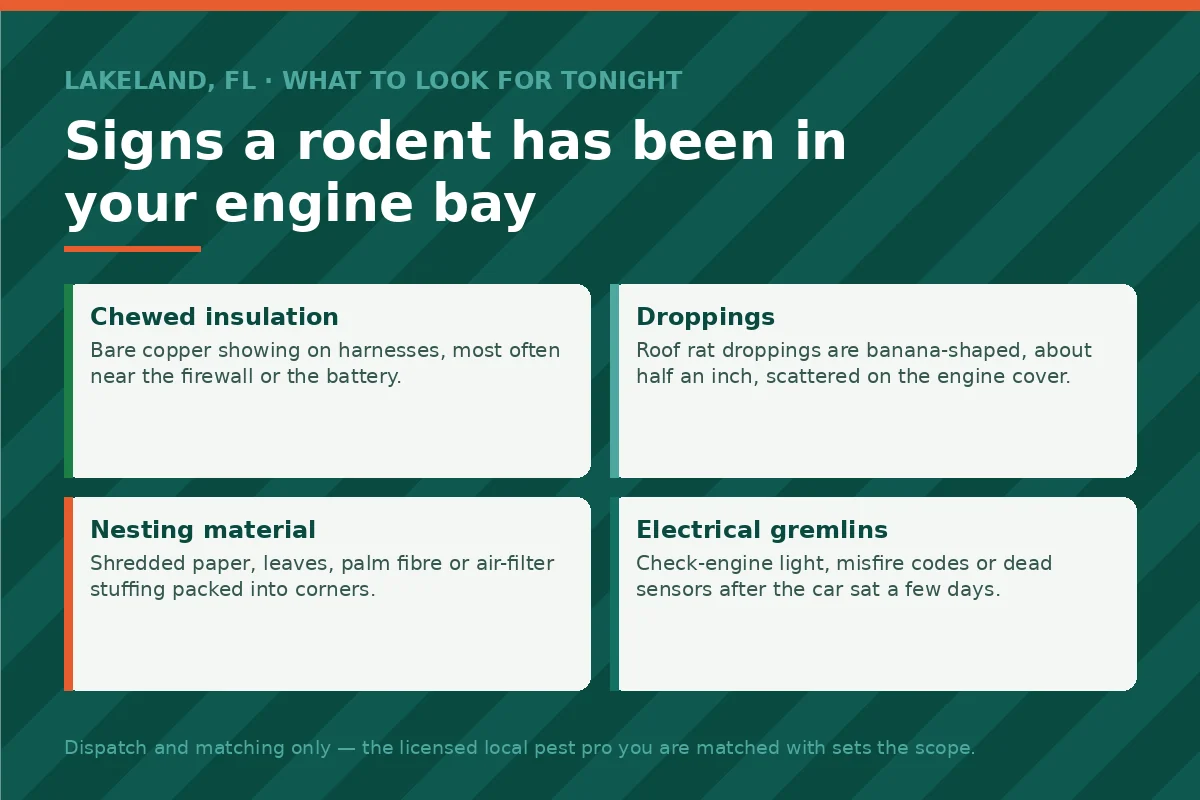
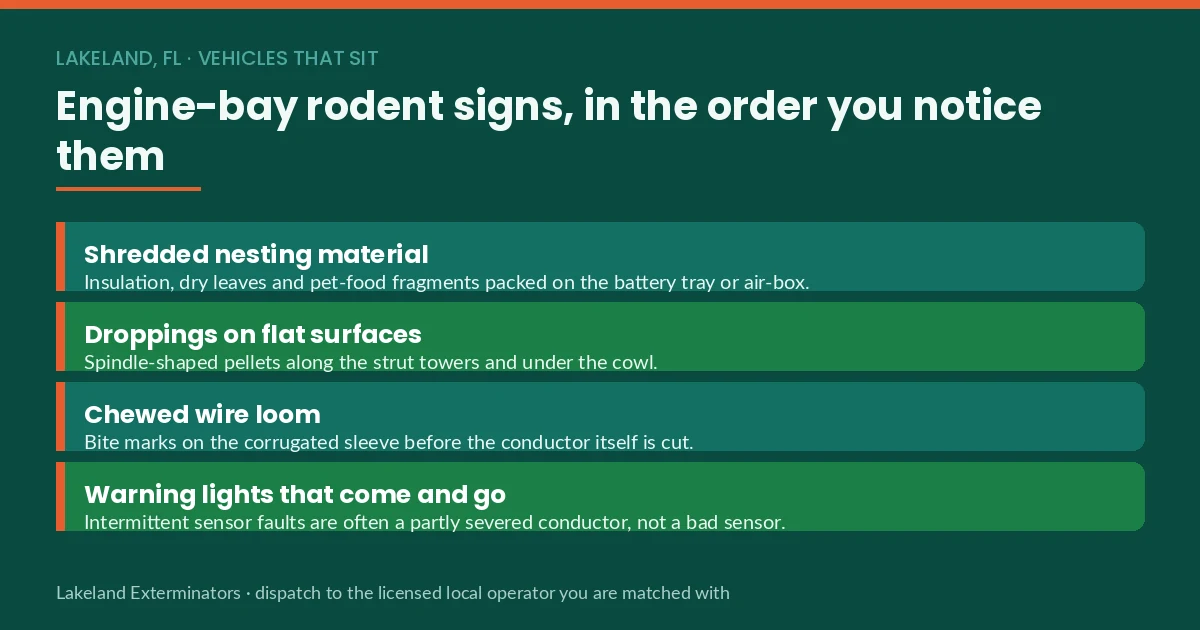
- Chewed or stripped insulation — bare copper showing on harnesses, often near the firewall or battery.
- Droppings — roof rat droppings are banana-shaped, about a half inch long, usually scattered on the engine cover, battery tray, or strut towers.
- Nesting material — shredded paper, leaves, palm fiber, or air-filter stuffing packed into corners of the bay.
- Grease rub marks — dark smudges along the routes rats travel repeatedly.
- Electrical gremlins — a check-engine light, misfire codes, or dead sensors that appear after the car sat for a few days.
If you see droppings but no wire damage yet, treat it as a countdown rather than a pass. A rat that shelters in an engine bay once will usually return the following night.
Why does this get worse in late summer in Polk County?
August in Lakeland is peak heat and peak afternoon storm season. Daily downpours flood the burrow sites and ground-level cover rats use, while attics and garages stay dry and warm — so rodent activity shifts toward structures weeks before the cooler weather most people associate with rat season. UF/IFAS also notes roof rats breed year-round in Florida with peaks in spring and fall, which means the juveniles dispersing in late summer are actively hunting for new harborage. A garage with a gap under the door, a carport stacked with storage bins, or a car parked under a fruiting tree is exactly what they are looking for.
What can you do tonight to protect your vehicle?
- Park inside a sealed garage when you can. A garage door with a chewed or flattened bottom seal is an open invitation; rats need only a gap about the size of a quarter.
- Cut the highways. Trim tree limbs back from the roofline and carport, and keep palm fronds off the ground. Roof rats prefer never to cross open pavement.
- Remove the buffet. Pick up fallen citrus and other backyard fruit, store pet food and bird seed in metal or heavy plastic bins, and keep garbage lids tight.
- Open the hood on a car that sits. For a vehicle parked more than a few days, leaving the hood up makes the bay brighter and less den-like.
- Skip mothballs and ultrasonic plug-ins. UF/IFAS reports no evidence that ultrasonic or electromagnetic devices drive rats out of an area, and no repellents are registered specifically for roof rats.
When is it time to bring in a licensed pro?
DIY snap traps can catch an individual rat, but engine-bay damage almost always means a population living close by — in the attic, the soffits, a shed, or a neighbor’s overgrown lot. The durable fix is exclusion: finding and sealing every entry point on the structure, then trapping out the rats already inside, so the garage stops being a rodent hub in the first place. That is licensed work in Florida, and it is exactly what rodent exclusion service in Lakeland is built for. If you are still deciding whether the animal in your garage is a rat at all, the Polk County roof rat species guide walks through droppings, sounds, and sightings step by step.
When you call, the licensed local exterminator you’re matched with can inspect the garage, carport, and attic together — because a car being chewed in the driveway is very often the visible edge of an attic problem you have not heard yet.
Frequently asked questions
Does insurance or a warranty cover rodent wire damage?
Comprehensive auto coverage often includes rodent damage, but policies vary — check yours before repairs begin. Factory warranties frequently exclude animal damage, which is one more reason prevention beats repair.
Will a cat or peppermint oil keep rats out of my engine?
Not reliably. Roof rats travel above ground level and quickly learn safe routes around predators, and scent deterrents fade within days under a hot hood. Habitat cleanup plus exclusion and trapping is what changes the outcome.
How fast can a rat damage wiring?
A single night is enough. Rats gnaw daily to maintain their teeth, so a rat that shelters in an engine bay overnight can strip insulation from several harness sections before morning.
Is it safe to drive a car after finding chew marks?
Have the wiring inspected first. Damaged insulation can short sensors, disable safety systems, or in a bad case create a fire risk — the same wire-chewing hazard UF/IFAS flags for structures applies under the hood.