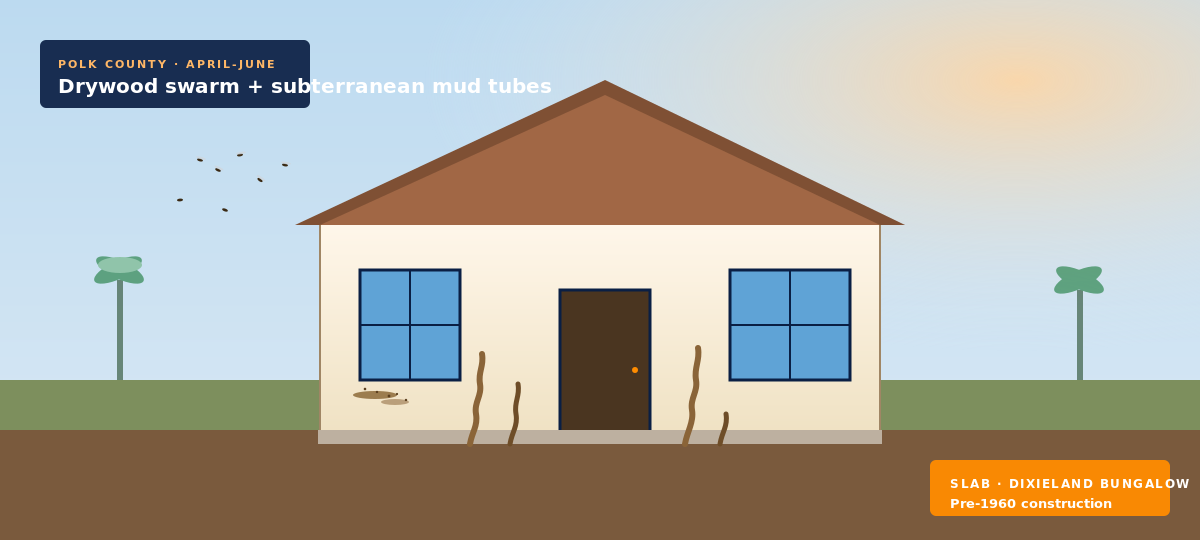
Florida drywood termite swarm season in Polk County, FL is one of the most under-recognized pest events of the Lakeland calendar. Unlike the subterranean termite swarms that arrive in spring, the Florida drywood termite (Cryptotermes brevis) typically swarms during mid-to-late summer evenings — often visible as small clouds of soft-winged insects emerging from attic vents, window frames, or under-eave soffits. Because drywood termites need no contact with soil and can colonize wood entirely above ground, their swarms are a different kind of warning than what most homeowners expect. This guide walks through when Polk County drywood swarms appear, what they look like, and what FDACS-licensed treatment options exist.
Dealing with a pest problem right now?
📞 Call now — get matched with a licensed local exterminator: (888) 295-0220When you call, stay on the line for a few seconds while we match you with the licensed local exterminator for your area. Have your address and a quick description of the problem ready.
Licensed local pros · Fast response, subject to availability · No obligation
When Drywood Termites Swarm in Polk County
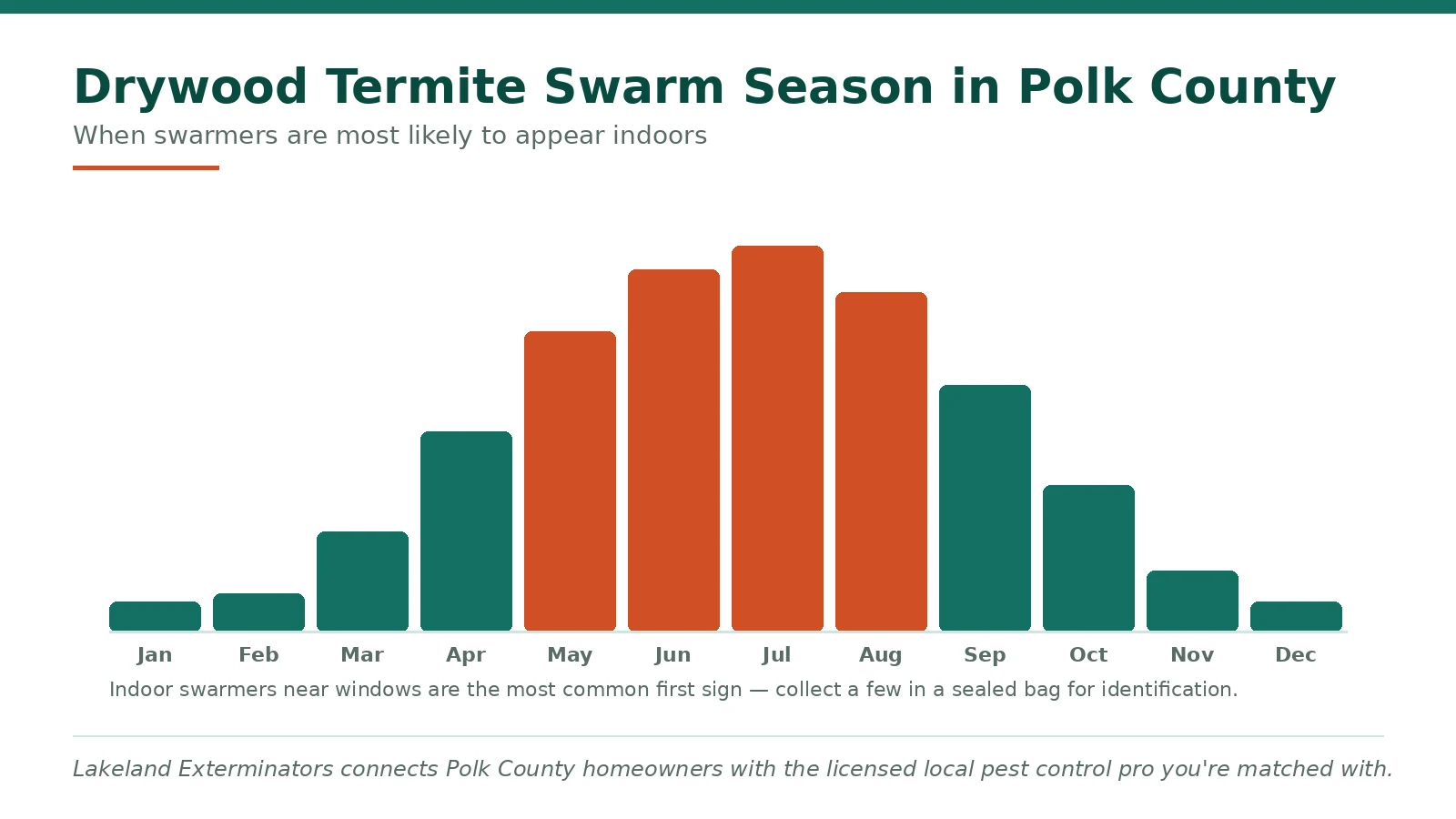
The Florida drywood termite swarm window in central Florida runs roughly from May through October, with the densest activity in June and July. Swarm flights typically occur in the early evening on warm, humid nights — often between 6:00 PM and 9:00 PM — after a rain event that lifted humidity. Polk County’s climate (with regular afternoon thunderstorms and overnight dew points in the mid-70s) creates near-ideal swarm conditions throughout summer.
Compared with subterranean termite swarms (large clouds, daytime, spring), drywood swarms are:
- Smaller in raw numbers — typically dozens to a few hundred winged adults per flight, not thousands
- Evening or near-sunset
- Often emerging directly from a structure rather than from a soil-based colony nearby
For full species background, see our Florida drywood termite profile and the comparative drywood vs. subterranean termites guide, or for a broader look at which treatment applies to which type, our subterranean vs. drywood termites comparison.
How to Identify a Drywood Termite Swarmer
Drywood swarmers (alates) are distinguishable from subterranean swarmers and from flying ants:
- Body: reddish-brown head, dark amber-brown body, length 11 to 12 mm including wings
- Wings: two pairs of equal-length wings, with three darkened parallel veins in the leading edge of the forewing
- Antennae: straight, bead-like (not elbowed like ants)
- Shed wings: after the brief flight, drywood swarmers drop their wings on windowsills, in bathtubs, around interior lights. Piles of identical clear wings are a strong indicator.
Where Drywood Termites Establish in Polk County Homes
Because drywood colonies live entirely inside the wood they consume, they don’t need contact with soil:
- Attic framing and rafters: a frequent first-establishment site, especially in older homes with attic vents that allow swarmer access
- Window and door frames: the most common visible-from-inside infestation site
- Wood furniture, antiques, and structural trim: drywoods can be moved into a home in infested furniture
- Roof eaves and soffits: shaded, occasionally humid wood under overhangs
The signature damage indicator is the fecal pellet (frass): distinctive hard, six-sided pellets about 1 mm across. Small piles of pellets below an inconspicuous “kickout hole” in window trim or under a rafter is essentially diagnostic. See our signs of termites in a Lakeland home page for visual identification.
Drywood Treatment Options in Florida
- Tent fumigation (sulfuryl fluoride / Vikane): the only treatment that addresses the entire structure simultaneously. See our cost of termite tenting in Florida and Polk County fumigation cost pages.
- No-tent / spot treatment: targeted application of borate, foam, or dust treatments when the infestation is small and accessible. See our no-tent termite treatment page.
- Heat treatment: raising structural wood to lethal temperatures for an extended period
- Wood replacement: for severely damaged framing members, replacement is part of the post-treatment scope
For a broader breakdown of what these options typically run in dollars, see our termite treatment cost guide for Lakeland & Polk County, which covers inspection, spot-treatment, and full-tenting price ranges side by side. If you’re buying or selling and need the regulated paperwork rather than just a treatment plan, our page on home inspection vs. termite (WDO) check in Polk County explains how the WDO report differs from a general home inspection.
What to Do If You See an Indoor Drywood Swarm
- Collect a small sample of swarmers (including any shed wings) in a sealed bag for ID confirmation
- Photograph the location where they emerged — kickout holes, gaps in trim, ceiling penetrations
- Schedule an FDACS-licensed inspection within a few days; an indoor swarm confirms an established colony already inside the structure
Do not spray over-the-counter insecticide on emergence points — it complicates inspection and can mask evidence the inspector needs to bound the infestation.
Getting Connected to a Licensed Polk County Exterminator
One call reaches a licensed, local exterminator who covers your address — and a real person answers, 24/7.
Frequently Asked Questions
How quickly does drywood damage progress in a Polk County home?
Drywood colonies grow slowly compared with Formosan or eastern subterranean colonies — meaningful structural damage typically takes years, not months. Multiple colonies in the same structure compound the timeline.
If I only see a few swarmers, do I really need an inspection?
Yes — an indoor swarm confirms a mature colony already in the structure. The flight itself is harmless, but the colony will continue feeding regardless.
Can drywood termites move from infested furniture into the structure?
Yes, and this is a well-documented introduction route. If you acquire used furniture and see kickout holes or frass, address it before bringing the piece into the home.
Is tent fumigation always necessary?
No — when the infestation is small, accessible, and clearly bounded, spot treatments may be appropriate.
Does pre-construction termite treatment prevent drywoods?
Pre-construction soil treatments protect against subterranean termites but don’t prevent drywood colonization, which arrives by aerial swarm. See our pre-construction termite treatment page.
Related: Florida combined termite pressure zone.
Disclaimer: Lakeland Exterminators is a local dispatch and referral service, not a licensed pest-control operator. We connect Polk County, Florida homeowners with independent, FDACS-licensed and insured pest-control companies. All inspections and treatments are performed by those independent providers, who set their own pricing, scheduling, and service terms.
Any reference to same-day, emergency, or 24/7 service describes the typical scheduling of matched independent providers and is not guaranteed; actual response times vary by provider, season, location, and demand.