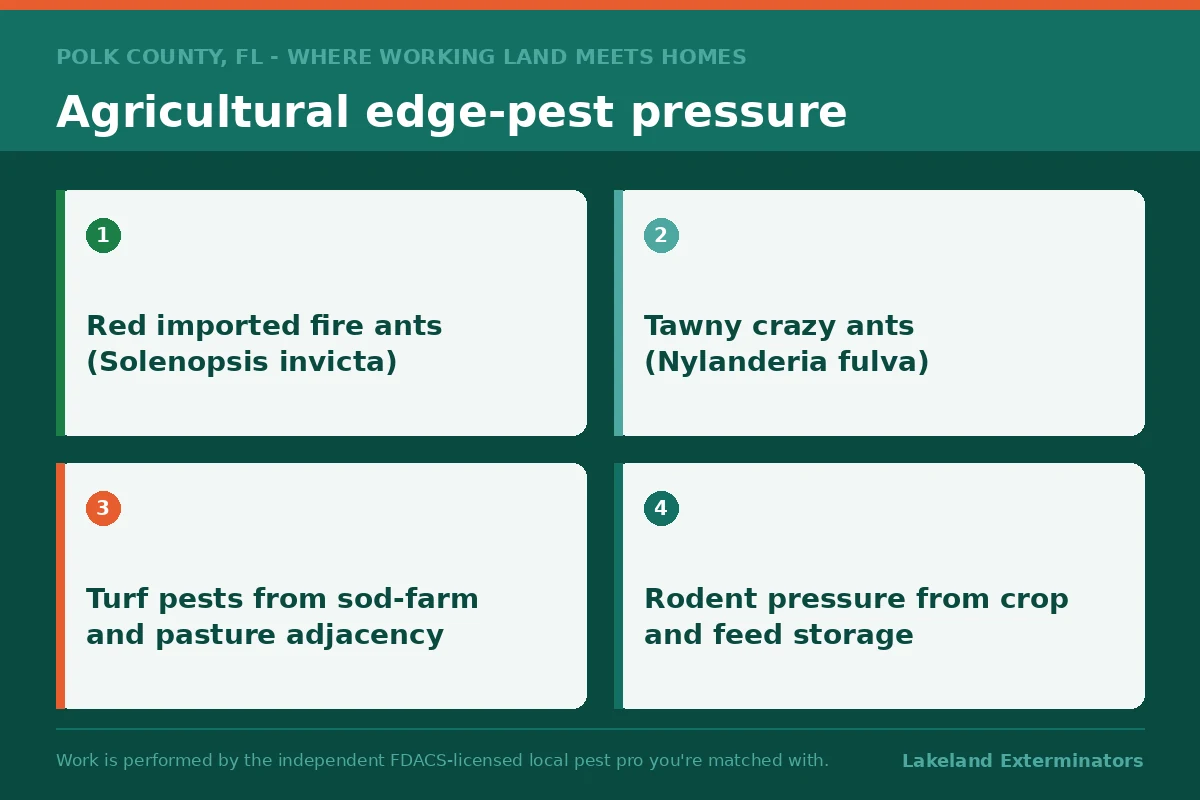
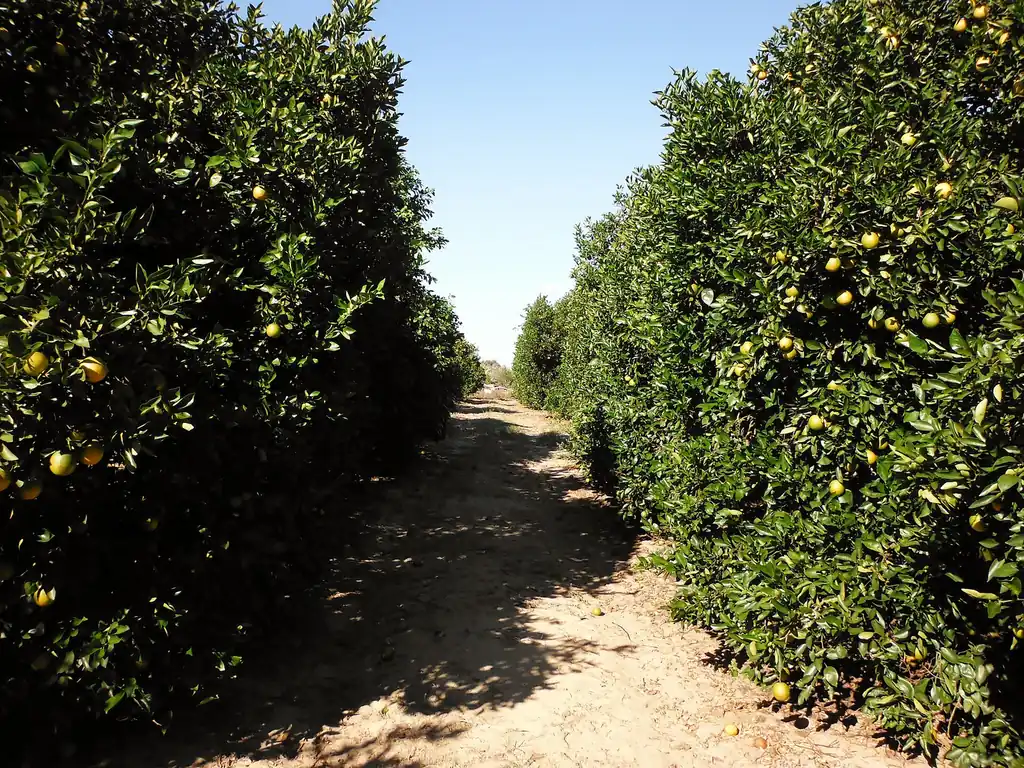
Polk County agricultural edge pests are a distinctive category of pest pressure for Lakeland-area homeowners whose properties border working land — citrus groves, cattle pasture, strawberry fields, sod farms, or the larger pine and improved-pasture tracts that still cover much of unincorporated Polk County. Florida’s agricultural geography creates predictable pest flows between working land and adjacent residential yards, and those flows are very different from the urban pest pressure inside Lakeland city limits. This guide walks through the most common edge-pest species, what their presence on your property indicates, and what FDACS-licensed treatment options exist.
Dealing with a pest problem right now?
📞 Call now — get matched with a licensed local exterminator: (888) 295-0220When you call, stay on the line for a few seconds while we match you with the licensed local exterminator for your area. Have your address and a quick description of the problem ready.
Licensed local pros · Fast response, subject to availability · No obligation
This is an informational guide. Residential pest treatment in Polk County is performed by independent, FDACS-licensed Florida pest-control companies. For the common household pests our Polk County dispatch line currently covers, see pest control in Polk County.
Why Polk County’s Geography Creates Edge-Pest Pressure
Polk County is one of Florida’s most diversified agricultural counties — historically the state’s citrus capital, with major cattle, strawberry, sod, blueberry, and nursery operations across its 2,000-square-mile footprint. Residential development around Lakeland, Bartow, Auburndale, Winter Haven, and the I-4 corridor has progressively intermingled with that working land, creating sustained “edge zones” where:
- Insecticide applications on the agricultural side drive resident pest populations toward residential cover
- Irrigation and crop residue create breeding habitat for species that subsequently move into yards
- Cattle, equine, and poultry operations support fly, tick, and rodent populations that radiate outward
- Hurricane and wind events scatter populations farther than a typical season would
For citrus-specific pressure, see our citrus-grove pest pressure page; this post takes the broader agricultural view.
Red Imported Fire Ants (Solenopsis invicta)
Fire ants thrive on edge habitat — disturbed soil, irrigation moisture, and the open ground at the boundary between working land and residential lawn. Polk County yards adjacent to cattle pasture or recently cleared land frequently see fire-ant mound counts in the dozens per acre. Indicators:
- Mounds 4 to 18 inches tall on lawn margins, especially after summer rain
- Aggressive defensive response when disturbed (the species’ definitive behavioral cue)
- Lawn-equipment injury risk and pet exposure
See our Lakeland fire ant control page for the FDACS-licensed treatment options. Growers along Mulberry’s agricultural edge see the same mound-building behavior push into adjacent yards; our fire ant control in Mulberry, FL page covers the two-step broadcast-bait approach licensed operators use there specifically.
Tawny Crazy Ants (Nylanderia fulva)
This invasive species established in Polk County in the 2010s and now appears in many residential properties adjacent to ag land. Unlike fire ants, tawny crazy ants don’t form mounds — they form super-colony populations that move through landscapes in massive numbers. Signs:
- Sudden appearance of huge numbers of small (3 mm), reddish-brown, fast-moving ants in mulch, leaf litter, and against foundations
- Displacement of resident ant species — fire ants conspicuously absent where tawny crazies have established
- Damage to outdoor electrical equipment (heat-attracted, can short-circuit AC condensers and pool equipment)
See our tawny crazy ant control page for treatment specifics.
Lawn and Turf Pests Driven by Sod-Farm and Pasture Adjacency
Residential lawns within a mile or two of sod farms or improved pasture see higher pressure from a predictable list:
- Chinch bugs: St. Augustine turf damage, especially in sun-exposed areas with thatch buildup
- Tropical sod webworm: nighttime feeding on grass blades, visible damage at dawn
- Mole crickets: tunneling damage in turf, especially Bahia and Bermuda
- Armyworms: seasonal outbreaks during late summer, capable of clearing a lawn in days
See our Lakeland lawn pest control page for the treatment scope.
Flies, Ticks, and Mosquitoes Near Cattle and Equine Operations
Properties within a half-mile of active cattle pasture or horse operations see distinct pressure:
- Stable fly (Stomoxys calcitrans): aggressive day-biter that travels surprisingly far from larval habitat in soiled bedding
- Lone star tick (Amblyomma americanum): expanding range in central Florida, vector for several diseases including alpha-gal syndrome. See our Lakeland tick control page.
- Mosquitoes: agricultural-water sources (low-spot pasture, irrigation tail water, ditches) expand the breeding habitat available to multiple species
Rodent Pressure From Crop and Feed Storage
Working agricultural operations support rodent populations through feed storage, crop residue, and grain handling. Adjacent residential properties experience secondary pressure, particularly:
- Roof rats (Rattus rattus): Polk County’s dominant residential rat (see our roof rat profile)
- Norway rats (Rattus norvegicus): burrowing rats more common near pasture and ag storage (see our Norway rat profile)
- House mice: seasonal pressure into garages and outbuildings from late fall through early spring
Rodents are not the only edge-adjacent wildlife pushed toward residential lawns by agricultural land use. Nine-banded armadillos follow the same grub- and insect-rich soil that draws crop and pasture pests, and yards bordering working land often see armadillo digging alongside the rodent and ant pressure described above. If that is the nuisance you are seeing, our armadillo removal in Polk County page covers what a licensed operator’s approach typically looks like.
Working With a Licensed Inspector
For a Lakeland-area property bordering agricultural land, an FDACS-licensed pest-control company can assess the edge pressure specific to your property and structure an appropriate combined-target program. Florida law requires FDACS Chapter 482 licensing for any operator performing residential structural pest control in Polk County; verify the operator’s FDACS license number before signing.
Frequently Asked Questions
Will an agricultural neighbor’s pesticide use affect my residential treatment plan?
Sometimes yes. Licensed technicians coordinate product selection to avoid duplicating active ingredients that may already be present from drift, and to address pests displaced by agricultural treatment.
How wide is the “edge zone” where ag pest pressure noticeably affects a yard?
A useful rule of thumb is the first 200 yards from a property line for crawling pests, the first half-mile for flies and ticks, and the first mile for mosquitoes. Wind, irrigation, and elevation modify these.
Do tawny crazy ants displace fire ants permanently?
Where tawny crazy ants establish, they often suppress fire ants for years — but management needs continue, since tawny crazies are themselves a significant nuisance and damage pest.
Is there a season when agricultural-edge pressure peaks?
Late summer through early fall, when crop residue is highest, irrigation is most active, and pest populations have built across the growing season.
What if my neighbor’s agricultural operation is the obvious source — can it be addressed?
Pest control of residential property is the homeowner’s lane. Operational pest management of agricultural land is regulated separately under FDACS and FDEP programs.
Disclaimer: Lakeland Exterminators is a local dispatch and referral service, not a licensed pest-control operator. We connect Polk County, Florida homeowners with independent, FDACS-licensed and insured pest-control companies. All inspections and treatments are performed by those independent providers, who set their own pricing, scheduling, and service terms.
Any reference to same-day, emergency, or 24/7 service describes the typical scheduling of matched independent providers and is not guaranteed; actual response times vary by provider, season, location, and demand.