
If you live in Lakeland, Winter Haven, or any of the lake-belt subdivisions across Polk County, you already know that mosquito pressure is unusually heavy here. What’s less obvious is where the mosquitoes are actually coming from. Most homeowners assume the bugs they’re swatting in their own yard are breeding in their own yard — and a lot of the time, they’re not. Understanding the difference between yard-source and neighbor-source mosquito pressure changes what you should do about it.
Dealing with a pest problem right now?
📞 Call now — get matched with a licensed local exterminator: (888) 295-0220When you call, stay on the line for a few seconds while we match you with the licensed local exterminator for your area. Have your address and a quick description of the problem ready.
Licensed local pros · Fast response, subject to availability · No obligation
This is an informational guide. Mosquito treatment in Lakeland and Polk County is performed by independent, FDACS-licensed Florida pest-control companies. For the common household pests our Polk County dispatch line currently covers, see pest control in Polk County.
The 200-yard rule
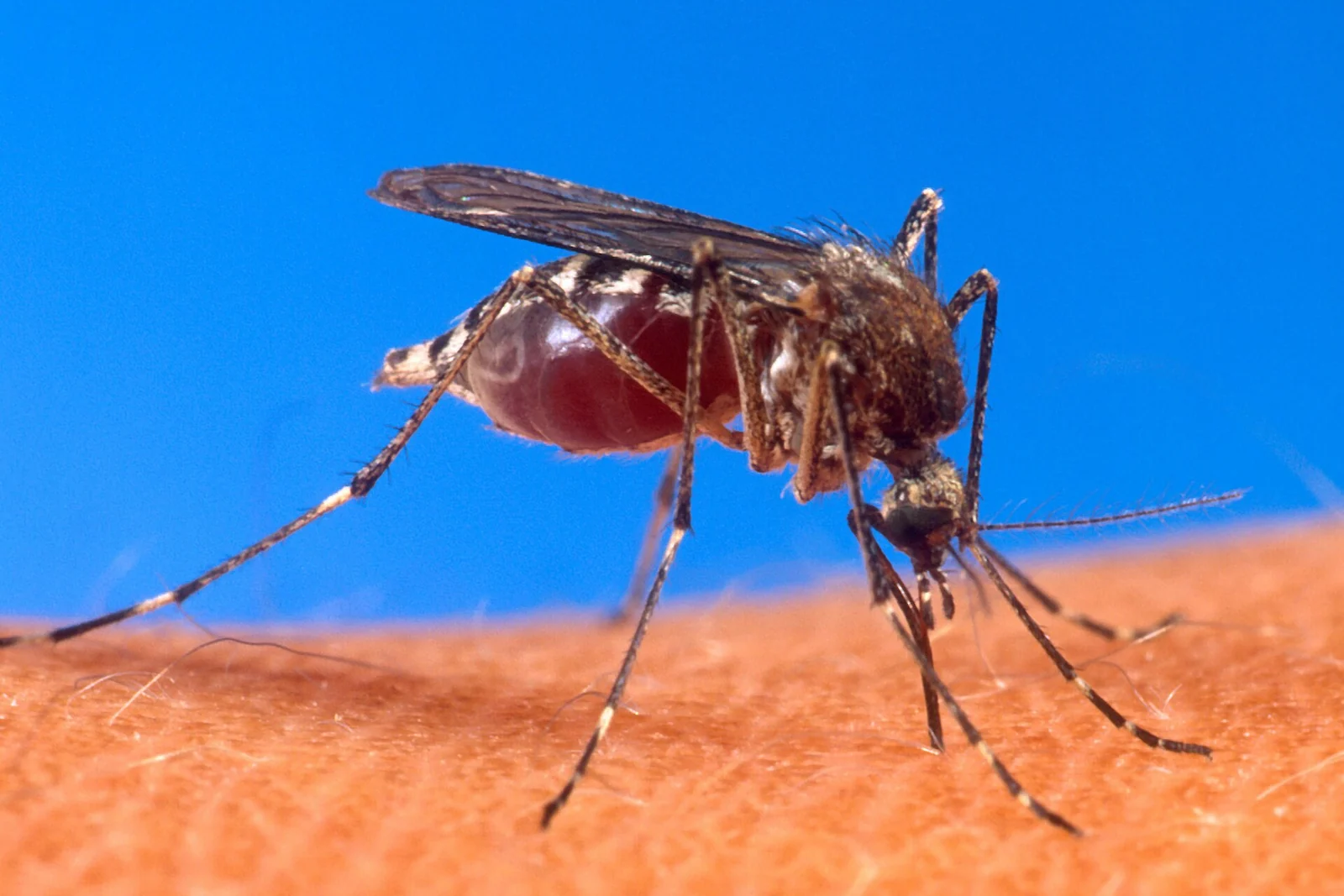
Most of the mosquito species that make Polk County life miserable have a flight range of 100 to 400 yards from breeding water, depending on species. Aedes aegypti (yellow fever mosquito) and Aedes albopictus (Asian tiger mosquito) — the two daytime biters most Lakeland residents complain about — typically stay within 200 yards of where they hatched. Culex species (the nighttime biters that carry West Nile and St. Louis encephalitis virus) can travel farther but still concentrate near their breeding water.
That 200-yard radius is the key number. If your house is 200 yards from a stagnant pond, a chain of lakes, a neighbor’s neglected pool, or a poorly drained citrus block, you have a neighbor-source problem. No amount of treatment on your own property will completely solve it. You can manage it, but you can’t eliminate it.
Yard-source mosquito problems
A yard-source problem is when the breeding water is actually on your property. The good news: this is solvable, usually for low cost, and a single perimeter treatment will hold for 3-4 weeks. Common Lakeland yard-source breeding sites:
- Bromeliads — Florida’s favorite landscape plant is a perfect mosquito incubator. The water that pools in the leaf axils breeds Aedes in 4-6 days.
- Plant saucers and pots — Even a tablespoon of water is enough.
- Bird baths not refreshed weekly — Larvae hatch and pupate in 7 days.
- Clogged gutters with debris — The standing water you can’t see is the worst kind.
- Pool covers, kiddie pools, tarps — Anything that collects rainwater.
- Wheelbarrows, buckets, watering cans stored upright outdoors.
- Tire piles, old grills with rusted bottoms — Common in older Lakeland Highlands lots.
- AC condensate drains pooling at the slab — Surprisingly common breeding site.
- Tree holes and rotting palm boots — Especially for the citrus-belt subdivisions.
If you walk your yard and find any of these, you have a yard-source problem. Dump them, store them inverted, refresh weekly, or treat with a Bti dunk (mosquito dunks are biological and pet-safe — they target only mosquito and black-fly larvae).
Neighbor-source mosquito problems
A neighbor-source problem is when the breeding water is on someone else’s property or in a public space within 200 yards of your home. You can’t go fix it directly. Common Polk County neighbor-source breeding zones:
- Abandoned in-ground pools — Foreclosure-era leftovers in some Polk subdivisions are still breeding mosquitoes 5+ years later. Polk County Code Enforcement will respond to formal complaints.
- Citrus blocks (active or abandoned) — Irrigation pooling, equipment-track ruts, ditches. The citrus-edge subdivisions in Lake Wales, Frostproof, and east Bartow have unusually heavy Aedes pressure from this.
- Drainage retention ponds in HOA common areas — When the outflow gets clogged, they go from “designed wetland” to “mosquito factory” in two weeks.
- Construction sites with idle stormwater — New-build subdivisions in north Lakeland and Davenport have this issue chronically during phased buildout.
- Lake shorelines with poor flow — Especially Lake Hollingsworth coves, Lake Parker shallows, and parts of the Winter Haven chain on north shore.
- Storm drains in older neighborhoods — Especially in Dixieland, the lake belt around Lake Bonny, and parts of south Lakeland with cracked or settled inlets.
- Failed septic drainfields — Less common but real; visible as wet spots even in dry weather.
- Bromeliad-heavy landscaped yards next door — In Polk County’s wetter neighborhoods, one neighbor’s untended bromeliad bed can dominate a four-house cluster’s mosquito pressure.
How to tell which one you have
Walk your property carefully at sunset on a still evening. Pay special attention to:
- Where the mosquitoes are biting you — Front yard, back yard, near the street, near a fence line, near a specific neighbor.
- What the wind is doing — Mosquitoes fly with the wind, not against. If the prevailing afternoon wind is from the southeast and your problem is heaviest on the southeast side of your house, the source is southeast of you.
- What time you’re being bitten — Daytime bites = Aedes species, likely within 200 yards. Evening/dawn bites = Culex, may be a bit farther.
- What’s on the lot lines you can see — Do you see standing water across the fence? An overgrown bromeliad bed? A pool with green water?
Yard-source signs:
- Mosquitoes are bad everywhere on your property, equally on all sides.
- You can find standing water in any of the common breeding sites on your lot.
- Killing the standing water sources causes pressure to drop within 7-10 days.
Neighbor-source signs:
- Mosquitoes are concentrated on one side of the house.
- You’ve already eliminated every breeding site you can find on your lot and pressure is still heavy.
- Pressure spikes within 24-48 hours of heavy rain (because nearby reservoirs refill).
- The species biting you is Aedes albopictus (visible white stripes) and you have well-watered landscaping or a wooded property within line of sight.
What works for each problem
Yard-source: Eliminate breeding water + monthly perimeter treatment during peak season (April-October). Cost in Polk County typically sits at a modest monthly rate. See the Lakeland mosquito control page for the full service overview. Homeowners in Winter Haven work through the same yard-source checklist — see mosquito control in Winter Haven, FL for that area’s service overview.
Neighbor-source: Same monthly perimeter to manage what’s flying in + barrier landscaping (denser shrub line on the source-facing edge) + fan-based outdoor air movement on patios. You won’t eliminate the problem because you can’t eliminate the source — but a properly applied barrier service can reduce in-yard biting substantially. Pet-safe options matter here because you’ll be running treatment more often than yard-source homeowners; see pet-safe mosquito control.
Both: If you’re in a neighborhood with chronic neighbor-source pressure AND your yard contributes its own, the math changes. Monthly is genuinely better than quarterly for these properties. See when to spray for mosquitoes in Polk County for the timing breakdown.
When to involve Polk County
Polk County Mosquito Control District (PCMCD) responds to neighborhood-level complaints, especially for confirmed abandoned pools and chronic retention pond issues. Their service is ideal for problems affecting multiple properties — they won’t typically treat your individual yard. For a confirmed neighbor-source breeding site you can’t get fixed neighborly, file with PCMCD and with Polk County Code Enforcement simultaneously.
Pricing reality
For most Lakeland homes with mixed yard- and neighbor-source pressure, a monthly perimeter service running April through October in Polk County costs a modest per-visit rate, adding up to a moderate annual total over the season. Compare that to repeated DIY chemical purchases that don’t actually reduce population numbers and you’ll see why most Polk County homeowners in heavy-pressure neighborhoods just run the monthly service through peak season.
Frequently asked questions
How far do mosquitoes fly in Polk County? The two daytime Aedes species most common in Lakeland (Aedes aegypti and Aedes albopictus) typically stay within 200 yards of where they hatched. Nighttime Culex species can travel up to 400 yards, sometimes more with wind assistance.
Do mosquito misters work in Lakeland? Outdoor automated mister systems can reduce biting pressure on a patio but they don’t address breeding source. They’re a comfort tool, not a control tool. Most Polk County homeowners are better off with monthly professional perimeter treatment plus targeted source elimination.
Are bromeliads really that bad for mosquitoes? Yes. UF/IFAS research has confirmed bromeliads are among the top mosquito breeding habitats in Florida residential landscapes. If you want bromeliads in your Lakeland yard, flush the leaf axils weekly with a hose during mosquito season.
Will Polk County Mosquito Control treat my yard? PCMCD typically does not treat individual yards. Their services are area-based — aerial spraying, retention pond treatment, abandoned pool response. For yard-level service, you need private pest control.
What’s the difference between a perimeter treatment and yard fogging? Perimeter treatment is applied to vegetation harborage (shrub line, fence line, eaves) and persists 21-30 days. Fogging is a one-time aerial knockdown that affects only adult mosquitoes present in the moment and dissipates within hours. For Polk County’s chronic pressure, perimeter is what works.
Next steps
If you’ve walked your yard and you’re not sure whether you’re dealing with yard-source or neighbor-source, that’s exactly what an FDACS-licensed mosquito control company will determine on a site walk before recommending a plan.
More Polk County mosquito reading:
- Mosquito control complete guide — Polk County
- When to spray for mosquitoes — Polk County
- Pet-safe mosquito control — Lakeland
- Summer mosquito surge — Polk County lakefront
- Asian tiger mosquito — Polk County
- Pest control complete guide — Lakeland
Disclaimer: Lakeland Exterminators is a local dispatch and referral service, not a licensed pest-control operator. We connect Polk County, Florida homeowners with independent, FDACS-licensed and insured pest-control companies. All inspections and treatments are performed by those independent providers, who set their own pricing, scheduling, and service terms.
Any reference to same-day, emergency, or 24/7 service describes the typical scheduling of matched independent providers and is not guaranteed; actual response times vary by provider, season, location, and demand.