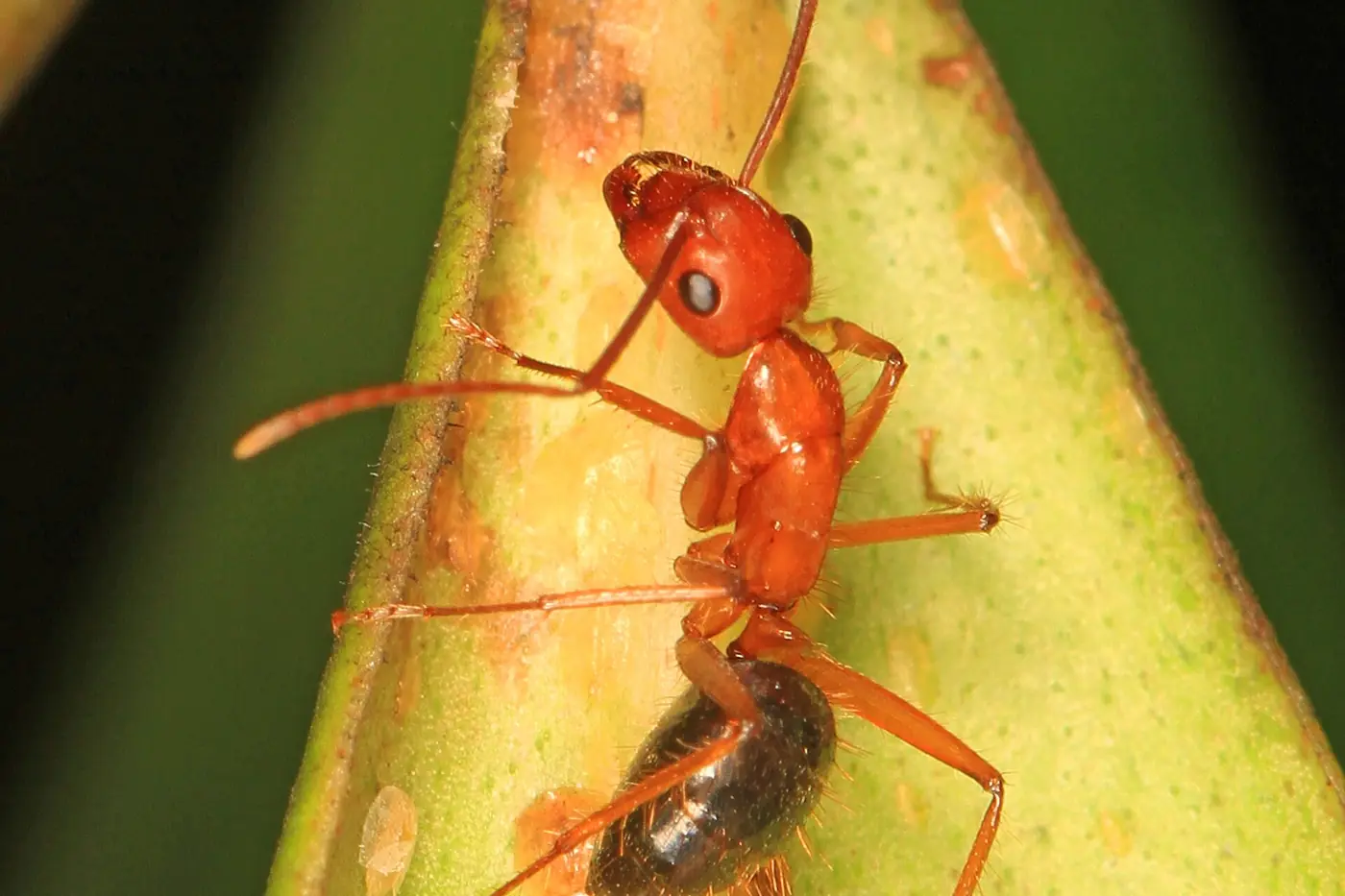
When a Lakeland homeowner finds winged insects swarming inside the house in late spring or early summer, the first thought is almost always “termites.” Sometimes that’s right. Often it’s not — and the difference matters. Florida carpenter ants (Camponotus floridanus) swarm in the same months as Eastern subterranean termites, they’re roughly the same size, they leave the same wing piles on windowsills, and they cause structural damage. But the treatment, the urgency, and the cost are very different. Confusing one for the other is the most common Polk County pest misdiagnosis we see.
Dealing with a pest problem right now?
📞 Call now — get matched with a licensed local exterminator: (888) 295-0220When you call, stay on the line for a few seconds while we match you with the licensed local exterminator for your area. Have your address and a quick description of the problem ready.
Licensed local pros · Fast response, subject to availability · No obligation
One call reaches a licensed, local exterminator who covers your address — and a real person answers, 24/7.
The 60-second visual ID
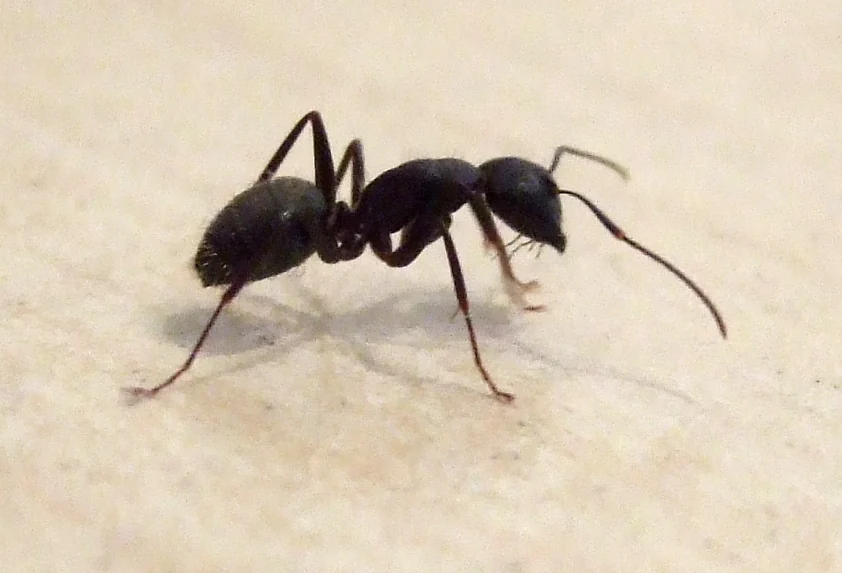
You can usually tell carpenter ants from termites with a hand lens and a few seconds. Three differences matter:
| Feature | Carpenter ant | Termite |
|---|---|---|
| Antennae | Bent (elbowed) | Straight, bead-like |
| Waist | Pinched, narrow | Broad, no waist |
| Wings | Front pair longer than back; both folded over body | Both pairs equal length; shed easily on light surfaces |
Both insects shed wings after swarming. The quickest field test: gather a few wings on a sheet of white paper. If all four wings are nearly identical in length and they all came off easily, you have termites. If two are visibly longer than the other two and they stayed attached to the body during your collection, you have carpenter ants.
If you’re not sure or you can’t catch a specimen, photograph what you found at the highest zoom your phone allows and call the dispatch line — the operator can usually ID from a clear photo.
Why Polk County has heavy carpenter ant pressure
Florida carpenter ants are not termites. They don’t eat wood. What they do is excavate galleries in wet or soft wood to build nests. They prefer:
- Wood that’s already been water-damaged (roof leaks, plumbing drips, AC condensate near framing)
- Dead branches and standing dead trees on or near the property
- Decking and porch posts where ground contact has caused decay
- Foam insulation (yes — foam, not wood, is a frequent carpenter ant target in newer Polk County construction)
- Logs, mulch piles, palm boots, and citrus stumps within 50 feet of structure
Polk County has all of these in abundance. The combination of mature oak canopy, year-round moisture, and the citrus-edge subdivisions creates ideal carpenter ant habitat. The peak swarm window in Polk County runs mid-May through early July, with reproductive flights triggered by warm humid evenings.
See the dedicated carpenter ant — Lakeland species page for the full life-cycle profile.
Why termite confusion is so common
The summer swarm calendars overlap heavily:
- Eastern subterranean termites — March-May peak, with secondary flights into June
- Florida drywood termites — March-October, with peak May-June
- Florida carpenter ants — Mid-May through early July
- Formosan subterranean (limited Polk presence) — April-July
The result: late May and June are when Lakeland homeowners are most likely to find winged swarmers indoors, and the species could be any of these four depending on what’s around the house. Real ID matters because:
- Subterranean termite swarmer = active mature colony in or near foundation — needs WDO inspection within days
- Drywood termite swarmer = active colony inside wood — needs inspection and potential tenting
- Carpenter ant swarmer = active colony in damp wood or foam — needs moisture fix + colony treatment
- Sugar ant swarmer (different species) = nuisance — minor concern
Treating carpenter ant damage as termite damage means you pay for tenting or termite bond renewals you didn’t need. Treating termite damage as a carpenter ant problem means the termites keep eating while you address moisture. And if the swarmer does turn out to be a termite, the type still matters — our subterranean vs. drywood termites comparison for Polk County walks through how to tell those two apart and why the treatment differs.
What carpenter ant damage looks like
Carpenter ants don’t eat wood — they excavate it. The damage signature is different from termites:
- Smooth, finished galleries — Carpenter ants polish their tunnels. Termites leave them rough and packed with soil.
- Frass piles — Sawdust-like debris (called “frass”) ejected from gallery openings. Looks like fine wood shavings mixed with insect parts. Termites don’t make frass piles like this — subterranean termites pack soil into galleries, drywoods leave round pellets.
- Localized to moisture source — Carpenter ant damage is almost always near a leak or chronic moisture. Termite damage spreads from a colony, not from water.
- Hollow-sounding wood with smooth interior — Tap a suspect timber. Hollow = something inside. Cut it open: if the interior is smooth and finished, that’s carpenter ants. If it’s packed with soil or shows hollow chambers with rough texture, that’s termites.
The two also coexist in damaged structures — carpenter ants move into spots that termites previously damaged because the wood is soft and accessible. A WDO inspection finding both is not unusual.
Treatment differences (and what they cost in Polk County)
Carpenter ant treatment
- Find and fix the moisture source first — Roof leak, plumbing drip, AC condensate, decking decay. Without this, no chemical will hold.
- Identify and treat the satellite nests — Mature colonies have a main nest plus 5-15 satellite nests scattered around the property.
- Non-repellent perimeter + bait — Modern carpenter ant work uses non-repellent products (fipronil, thiamethoxam) that ants carry back to the colony.
- Quarterly maintenance — Re-colonization happens unless ongoing pressure is managed.
Polk County pricing: Single-colony treatment sits in the moderate range. Colony + moisture remediation moves into the moderate-to-high range. Quarterly perimeter service that includes carpenter ant coverage typically runs at the standard per-visit rate for routine pest plans.
Termite treatment
- Subterranean treatment — Liquid (Termidor) or bait stations (Sentricon) around the structure. Annual bond inspection follows.
- Drywood treatment — Spot treatment for small infestations; tenting (fumigation) for whole-structure work.
Polk County pricing: Subterranean initial install runs high, plus a moderate recurring annual bond. Drywood spot treatment is moderate. Whole-home tenting is the highest-cost option on this page by a wide margin.
For more, see termite treatment cost in Lakeland and cost of termite tenting in Florida.
When carpenter ants and termites coexist
In Polk County homes with chronic moisture issues, finding both is normal. The treatment sequence:
- WDO inspection — Documents species and extent for both.
- Termite treatment — Address the structural threat first.
- Moisture remediation — Fix the underlying water issue.
- Carpenter ant treatment — Treat the colony and any satellite nests.
- Perimeter maintenance — Quarterly that covers both pressures.
Skipping moisture remediation between steps 2 and 4 leaves the home vulnerable to both pests returning. The single strongest long-term protection for a Polk County home with damp-wood damage is to fix the water, then maintain quarterly perimeter coverage.
Frequently asked questions
Can carpenter ants destroy a house like termites? Carpenter ants can cause significant structural damage in untreated colonies over years, but they damage wood much more slowly than termites and only target moisture-affected wood. A termite infestation in dry framing is generally a faster threat to structural integrity than carpenter ants in damp wood.
Are flying ants the same as carpenter ants? “Flying ant” is a generic term for any reproductive ant during swarm season. The most common winged ants in Polk County summer flights are carpenter ant reproductives, but pavement ants and several other species also produce winged forms.
Do carpenter ants live in foam insulation? Yes. Florida carpenter ants will excavate galleries in rigid foam insulation (XPS, EPS) and even in some closed-cell spray foam. This is increasingly common in newer Polk County construction where foam is used at sill plates and attic deck.
How do I find the carpenter ant nest? Follow the workers at dusk with a flashlight. Carpenter ant foragers travel established trails between nest and food. The trail will lead back to the colony location, which is almost always in damp or compromised wood within 30 feet of where you see the workers.
Will my pest control quarterly service prevent carpenter ants? Most quarterly pest control plans in Polk County include carpenter ant coverage in the perimeter spray, but they don’t include satellite-nest treatment for an established colony. If you have visible damage or frass piles, you need a one-time colony treatment in addition to ongoing quarterly maintenance.
Next steps
One call reaches a licensed, local exterminator who covers your address — and a real person answers, 24/7.
Related Polk County ant + termite reading:
- Carpenter ant — Lakeland
- Ant control — Lakeland
- Termite treatment — Lakeland
- How to identify termite damage — Lakeland
- Drywood termites vs subterranean termites — Polk County
- Subterranean vs. drywood termites — which treatment you need
- Termite swarming season — Florida
- Pest control complete guide — Lakeland
One call reaches a licensed, local exterminator who covers your address — and a real person answers, 24/7.
Disclaimer: Lakeland Exterminators is a local dispatch and referral service, not a licensed pest-control operator. We connect Polk County, Florida homeowners with independent, FDACS-licensed and insured pest-control companies. All inspections and treatments are performed by those independent providers, who set their own pricing, scheduling, and service terms.
Any reference to same-day, emergency, or 24/7 service describes the typical scheduling of matched independent providers and is not guaranteed; actual response times vary by provider, season, location, and demand.