📞 Call (888) 295-0220Open 24/7. Enter your ZIP on the keypad and talk live with a local pest control company that serves your area.
Plant City calls itself the Winter Strawberry Capital of the World, and the agricultural fields that back up to residential neighborhoods on the city’s edges create a fire ant pressure pattern distinct from nearby Polk County. Strawberry fields and the irrigation berms that run alongside them are graded, cultivated, and re-worked on a seasonal cycle, and that repeated soil disturbance is close to ideal for fire ant colonization. Lakeland Exterminators connects Plant City homeowners with local pest control companies that handle residential fire ant control throughout the ZIP codes surrounding the city.
Fire ant mounds popping up along the field edge at your Plant City home?
Call, enter your 5-digit ZIP on the keypad, and get connected live with a local pest control company. Free to call, 24/7.
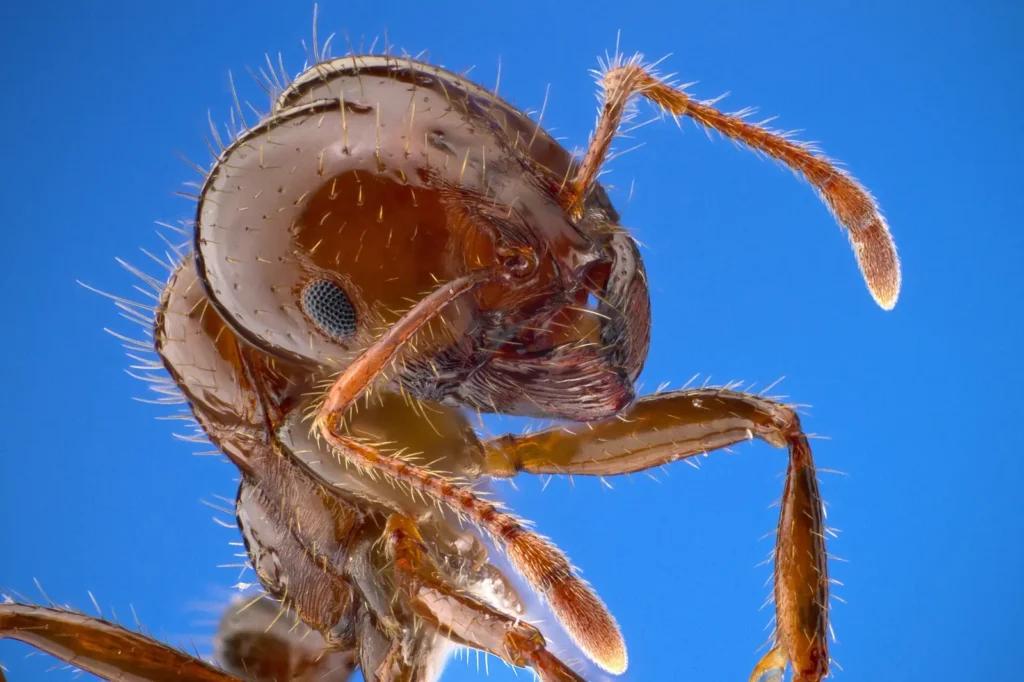
Why Field-Edge Residential Lots See More Fire Ant Activity
Row-crop agriculture, including the strawberry fields that ring much of Plant City, relies on graded irrigation berms and periodically tilled soil to manage water flow across the growing season. Between planting cycles, these berms and field margins sit exposed to full sun with loose, workable soil – exactly the profile fire ant queens seek out when founding new colonies. Residential lots on the agricultural fringe of Plant City, particularly on the city’s eastern and southern edges where development meets working farmland, inherit this field-edge pressure directly.
Because field maintenance is seasonal, fire ant mound activity in these neighborhoods can spike noticeably right after a field is harvested and left fallow between growing seasons, when the disturbed, unplanted ground becomes available for new colonies to establish before the next planting.
Signs of Fire Ant Activity in Plant City Yards
New Mounds Following a Nearby Harvest
Watch for a jump in mound activity in the weeks after an adjacent field is harvested, since fallow field margins become open real estate for fire ant colonization until the next planting cycle begins.
Mounds Concentrated Along Drainage Ditches and Berms
Irrigation berms and drainage ditches bordering residential lots hold the same loose, well-drained soil profile fire ants favor in the fields themselves, making these features a common first location for mounds.
Rapid Mound Rebuilding After Mowing or Disturbance
Colonies in agriculturally active areas are accustomed to regular soil disturbance from farm equipment and tend to rebuild mounds quickly after a yard is mowed or a mound is disturbed.
Timing Treatment Around the Growing Season
Because mound activity on field-adjacent lots tends to track the local growing and harvest calendar, a treatment scheduled shortly after a nearby harvest can address newly established colonies before they mature into larger, harder-to-treat mounds. Homeowners bordering active fields should keep an eye on harvest timing for adjacent crops so a follow-up inspection can be scheduled accordingly.
Reducing Fire Ant Risk Between Treatments
Homeowners on the agricultural fringe can reduce colonization by keeping drainage ditches and berms mowed and monitored, avoiding unnecessary soil disturbance near property lines, and checking field-facing yard areas after any nearby harvest. Countywide pest pressure trends are tracked on the Polk County pest and termite pressure report.
Check the company before treatment starts
In Florida, pest control companies must hold a business license from the Florida Department of Agriculture and Consumer Services (FDACS) under Chapter 482, Florida Statutes. Ask for the company’s license number and look it up on the FDACS license search before work starts.
Get the treatment plan, the products to be used, any follow-up visits and the price in writing. For termite work, ask what the contract or bond covers, whether it’s retreatment only or includes repair of damage, and how long it lasts. Our guide on checking an FDACS pest control license walks through it.
How the call works
- Call (888) 295-0220. Any time, day or night.
- Enter your 5-digit ZIP code on your phone’s keypad when prompted.
- Get connected live with a local pest control company that serves your ZIP. Describe what happened and ask when they can come out and what the job will cost.
Frequently Asked Questions
Why does my Plant City yard get fire ants right after a nearby field is harvested?
Once a field is harvested and left fallow before replanting, the disturbed, unplanted margins become open ground for new fire ant colonies to establish, and that activity often spreads into the nearest residential lot.
Are drainage ditches and irrigation berms a common fire ant location in Plant City?
Yes. These features hold the same loose, well-drained soil profile found in the surrounding fields, making them a frequent first location for new mound activity on field-adjacent lots.
Why do fire ant mounds near farmland rebuild so quickly after mowing?
Colonies in agriculturally active areas are already adapted to regular soil disturbance from farm equipment, which is one reason they tend to rebuild mounds faster after a yard mowing or a disturbed mound.
Does treatment timing matter for field-adjacent Plant City properties?
Scheduling a treatment shortly after a nearby harvest can address newly established colonies before they mature, since that is typically when fallow field margins see the most new colonization activity.
Is fire ant pressure worse in Plant City than in nearby Polk County?
Residential lots bordering active agricultural fields tend to see more frequent mound activity than lots farther from farmland, due to the seasonal soil disturbance and open sun exposure those fields provide.
How do I get connected with a fire ant company in Plant City?
Call the line, enter your 5-digit ZIP on the keypad, and you’re connected live with a local pest control company that serves your part of Plant City for residential fire ant treatment.
Lakeland Exterminators is a free referral line that connects callers with independent local pest control companies. We don’t perform the work. The company you’re connected with gives the quote, does the work and stands behind it.