Pest problem in Fort Lauderdale? A hundred miles of canals, old drywood neighborhoods — and America’s only conehead termite beachhead.
The Venice of America earns its nickname twice: once from the canals, and once from the pests that use them. Seawalls and dock lines give roof rats a waterfront highway network through Las Olas and the Isles; the 1920s–50s neighborhoods from Victoria Park to Rio Vista sit deep in the drywood termite belt; and Broward County holds the distinction no county wants — the only established U.S. population of the conehead termite, an aggressive invader the state actively works to contain. The 24/7 dispatch line matches you by ZIP with an FDACS-licensed exterminator who knows which of Fort Lauderdale’s problems is yours.
Talk to a live dispatch coordinator now
Pellets on a Victoria Park windowsill, rats running a Las Olas Isles dock line, roaches in a beach-corridor kitchen — describe it and get routed to an independent, licensed and insured operator covering your Fort Lauderdale ZIP.
(863) 445-9190Tap to call — 24/7 dispatch
Free to call. Free to get matched. The licensed operator you’re matched with gives the quote.
24/7 line · A real person answers · Availability of same-day and emergency service depends on the provider.
Need pest control in Fort Lauderdale, FL? Call (863) 445-9190 and a dispatch coordinator matches you with an FDACS-licensed exterminator serving Fort Lauderdale and Broward County — termite, ant, roach, rodent, fire ant and mosquito work from Victoria Park and Rio Vista to the Isles, Coral Ridge and the beach corridor. Lakeland Exterminators is a dispatch service: the licensed local operator you’re matched with inspects, quotes and treats.
Why do Fort Lauderdale’s canals and old wood set a three-front pest fight?
Front one is the wood. Victoria Park, Rio Vista, Croissant Park, Sailboat Bend — the city’s founding neighborhoods carry nearly a century of frame construction, trim carpentry and roof structures in drywood termite country. Colonies live entirely inside the wood, spread roofline to roofline on warm-evening swarm flights, and show themselves only as pepper-grain pellet piles under kick-out holes. Front two is underground and imported: Formosan subterranean termites have an established Broward presence, with carton nests that can persist inside walls above ground, and the county is also the containment zone for the conehead termite — a Caribbean invader that, unusually, forages across open ground like ants and builds visible brown tunnel networks over fences, trees and structures. Conehead sightings are rare and concentrated, but they’re a state-level containment priority — one more reason evidence here should be identified by a professional rather than guessed at over a search engine.
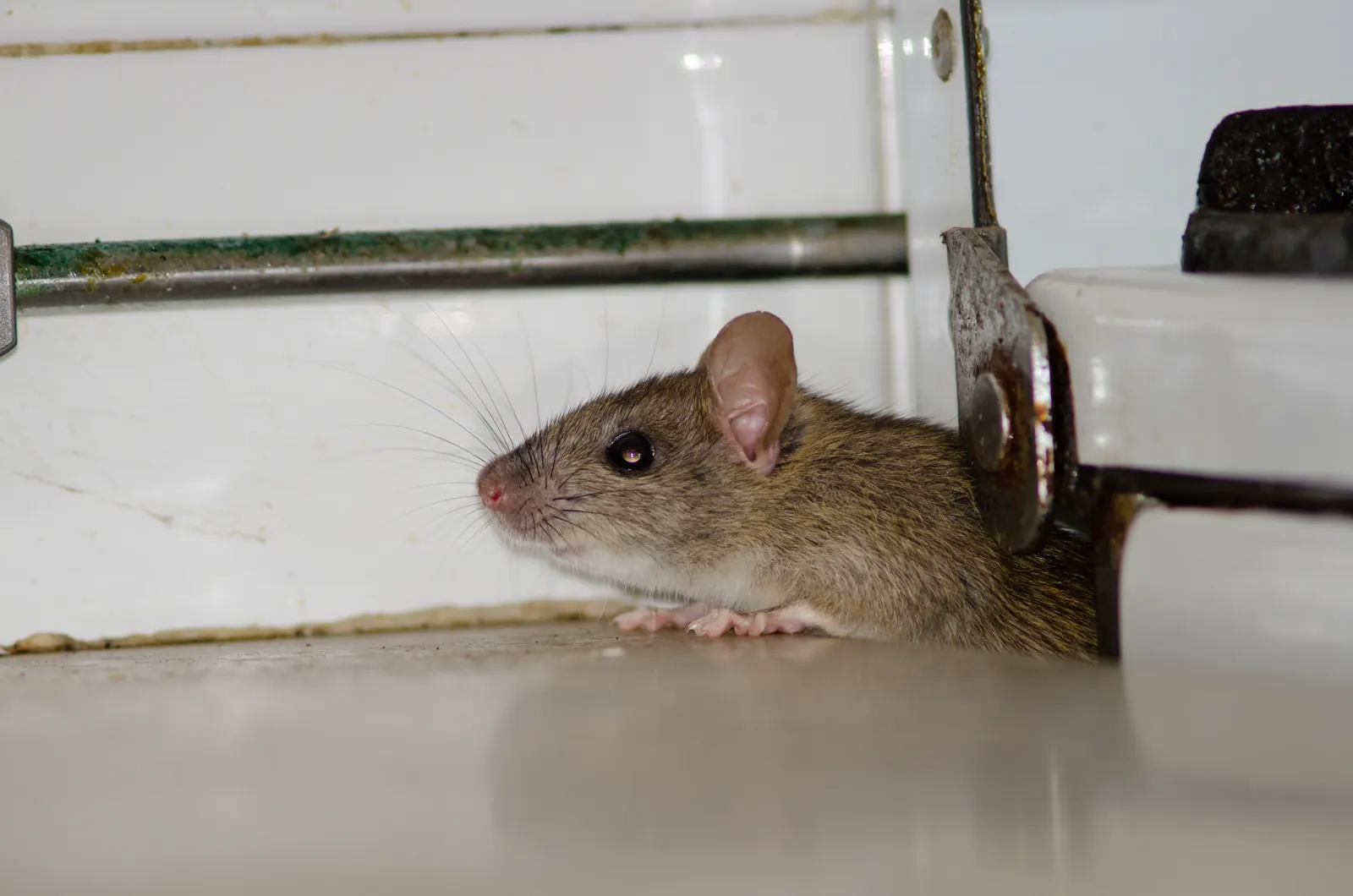
Front three is the water line. A hundred-plus miles of navigable canals mean a hundred-plus miles of seawall caps, dock pilings and boat lines that roof rats patrol nightly — waterfront exclusion in the Las Olas Isles and Coral Ridge is as much about mooring lines and mangrove trim as it is about fascia gaps. The same waterways plus bromeliad-heavy landscaping keep Aedes mosquitoes in business (container breeders a disciplined yard program suppresses), while the beach corridor’s restaurant density and high-turnover rental stock run the county’s heaviest German cockroach economy. Round it out with ghost and big-headed ants threading barrier-island condo kitchens and mainland stucco, fire ants in park turf and swales, and the occasional post-storm rodent displacement along the New River, and Fort Lauderdale dispatch is triage first: species, structure, and which front you’re fighting on.
Where does pest pressure concentrate around Fort Lauderdale?
- Victoria Park & Rio Vista (33301, 33316): the drywood core — 1920s–50s frame and trim; pellet inspections at windows, fascia and roof structures.
- Las Olas Isles & the finger canals (33301): seawall and dock-line rodent runs; waterfront exclusion plus mooring-line management.
- Coral Ridge & the Intracoastal side (33306, 33308): canal rats, condo association drywood decisions, landscaped mosquito resting sites.
- Sailboat Bend & Riverside Park (33312): older frame stock along the New River — both termite evidence types possible; species ID first.
- The beach corridor (33304, 33316): hospitality kitchens and high-turnover rentals — building-wide German roach programs with documentation.
- Riverland & the western neighborhoods (33312, 33317): mid-century slabs with expired barriers, fire ants in swale turf, big-headed ant sidewalk colonies.
What kind of help can the line dispatch in Fort Lauderdale?
Termite control
Species-first inspections — drywood pellets, Formosan mud, or unusual surface tunnels each route differently.
Ant control
Ghost and big-headed ant baiting for condo kitchens and stucco seams; ID before treatment.
Rodent control
Waterfront exclusion for canal homes — seawall runs, dock lines, roofline sealing and attic trap-outs.
Roach extermination
German roach programs for beach-corridor kitchens and multifamily buildings; palmetto bug harborage work.
Fire ant treatment
Broadcast baiting for parks, swales and sunny turf across the mainland neighborhoods.
Commercial & emergency
Restaurants, hotels, marinas and associations routed to commercial-capable operators, after-hours included.
How does the Fort Lauderdale dispatch actually work?
You call the line
Tap (863) 445-9190 any hour. A coordinator answers — describe the pest, the property and your ZIP.
The problem gets matched
A Victoria Park pellet pile routes to a drywood-fluent inspector; dock-line rats in the Isles route to a waterfront exclusion crew; odd surface tunnels get flagged for professional ID. Matching runs on species and waterfront exposure.
A licensed operator takes over
An independent, FDACS-licensed and insured Broward County exterminator contacts you, inspects, and quotes directly.
You decide
No obligation. If their plan works for you, they treat. The dispatch call costs nothing either way.
Pellets under the window? Something running the dock line at dusk?
The line answers 24/7 and matches you with a licensed Broward County operator.
One tap. One call. Matched.
(863) 445-9190Tap to call — 24/7 dispatch
Free to call. The licensed operator gives the quote.
Fort Lauderdale pest questions, answered straight
What are these brown tunnel lines running up our fence — and should we worry?
How do rats keep getting into our canal-front house? We’ve sealed the yard.
Our condo association found drywood evidence in two units. Whole-building fumigation?
What does pest control cost in Fort Lauderdale?
Disclosure
Lakeland Exterminators is a pest control dispatch and referral service, not a licensed pest control operator. All inspections, quotes and treatments in Fort Lauderdale are performed by independent pest control operators licensed by the Florida Department of Agriculture and Consumer Services (FDACS) and insured in their own name. Calling the dispatch line is free and creates no obligation; the licensed local exterminator you’re matched with sets their own pricing and terms.
Nearby: Miami, Boca Raton, West Palm Beach · All Florida service areas
Fort Lauderdale service guides: Termite treatment, Bed bug treatment, Roach control, Rodent control, Mosquito control · All services