The Polk County Home Pest Prevention Guide
A month-by-month calendar for every pest that actually shows up around Lakeland’s lakes, the Lake Wales Ridge, and Polk County’s citrus country — termites, ants, roaches, rodents, mosquitoes, ticks, fleas, stinging insects, and bed bugs included. What drives each one, how to tell a stray from an infestation, and the prevention steps that actually keep them out. Built to be useful first.
Talk to a licensed exterminator now
Call and we’ll connect you with a licensed, local exterminator who covers your address. It takes about two minutes, and a real person answers.
Free to call. Free to get matched. The licensed operator gives the quote.
A real person answers · Availability of same-day and emergency service depends on the provider.
A genuine 12-month reference — no species left off the calendar.
Why Polk County runs its own pest calendar
Polk County covers 2,011 square miles of chain-of-lakes humidity, Lake Wales Ridge scrub, and citrus country — a USDA Zone 9b climate with roughly 325 frost-free days a year means pests here rarely get a real off-season. UF/IFAS Extension’s Polk County office (Bartow) and the Florida Department of Agriculture and Consumer Services (FDACS) are the two public sources this calendar leans on most.
Lakeland alone sits near 38 named lakes, and homes within a half mile of Lake Hollingsworth, Lake Mirror, Lake Parker, and the rest of the chain carry higher ambient moisture than the county baseline — exactly the condition that drives silverfish, earwig, centipede, mosquito, and millipede activity. Citrus-adjacent neighborhoods around Frostproof, Lake Wales, Bartow, and Dundee see a different mix, with heavier fire ant and rodent migration off grove edges. Summer rain, hurricane season, and Polk County’s year-round tourist and snowbird traffic each add their own pest pressure — this guide covers all of it, not a partial list.
The Polk County pest year, month by month
Every pest a Polk County homeowner actually deals with, across all twelve months. Individual years can run early or late depending on rainfall.
| Month | Pest pressure | What’s happening | Prevention focus |
|---|---|---|---|
| January | Roof rats & house mice | Tile-roof attic entry is Polk County’s steadiest rodent call; pressure builds as outdoor food sources thin in cooler weather. Mosquito activity is at its lowest but doesn’t fully stop in a mild winter. | Close tile-gap and soffit entry points; screen vents before nights get colder. |
| February | Native subterranean termites begin swarming | Eastern subterranean termites start daytime swarms after warm rain — often the most common Polk County swarm of the year. Ticks start reactivating in brush and tall grass as temperatures climb. | Schedule a WDO inspection, especially in pre-1980 Dixieland, South Lake Morton, or Cleveland Heights homes. |
| March | Termite swarms continue; ants reactivate | Subterranean swarms continue into spring; ghost ants, white-footed ants, and carpenter ants pick back up as soil warms. Spring-break travel raises bed bug introduction risk from hotels and rentals. | Watch for mud tubes at slab joints; inspect luggage and secondhand items after any trip before bringing them inside. |
| April | Formosan termite swarms begin; fire ants ramp; ticks peak | Formosan subterranean termites — established in Lakeland — start dusk swarms on warm, humid evenings; fire ant mound-building accelerates; ticks are near their yearly peak in wooded and grassy edges. | Turn off unnecessary porch lighting on humid nights; check new-construction yards for fresh mounds; keep grass trimmed along tree lines. |
| May | Formosan swarms peak; drywood termites begin; mosquito season opens | Formosan swarms mob porch lights and streetlamps; Florida drywood termites start their May–August evening swarm window through soffit vents; early wet-season rain kicks off mosquito breeding. | Screen soffit vents; check attic framing and window sills for frass pellets; start weekly standing-water checks. |
| June | Rainy season begins — mosquitoes surge; roaches climbing; wasps building nests | Summer rain bands flood every uncovered container into a mosquito breeding site; American and smokybrown roaches (“palmetto bugs”) fly in on humid evenings; yellowjackets and paper wasps begin building new colonies. | Empty standing water weekly; seal gaps that give roaches entry; watch eaves and shed corners for early wasp nests. |
| July | Peak mosquito & flea season; drywood termites continue | Heavy summer rain sustains mosquito breeding and pushes flea populations in shaded, humid yards; centipede, millipede, earwig, and silverfish activity stays high in lake-district homes; drywood swarms continue. | Keep gutters clear and yard drained; treat pets and mow regularly to break the flea cycle; reduce mulch-to-siding contact. |
| August | Stinging insects peak; roach & mosquito pressure continues | Wasp and yellowjacket colonies reach their largest size and most defensive point of the year; peak humidity sustains roach and mosquito activity, especially near citrus-grove edges. | Seal weep holes and foundation vents; have any active nest near doors or walkways assessed rather than disturbed. |
| September | Hurricane season peak; German roaches steady indoors | Storm season raises the risk of a post-storm pest surge — rodent and wildlife displacement, mosquito booms from standing floodwater, roach spikes, and termite pressure on any water-damaged framing. | Review the hurricane pest prep guide; confirm rodent entry points and clear standing water before and after any storm. |
| October | Rodents move indoors; squirrels active; snowbird bed bug risk begins | Cooling nights start the roof rat and house mouse indoor push; squirrels forage and seek attic access before winter; the start of Polk County’s snowbird and holiday-travel season raises bed bug introduction risk. | Trim limbs off the roofline; screen attic and soffit gaps; inspect any secondhand or storage-unit furniture before bringing it in. |
| November | Rodent pressure rising; wildlife seeking shelter; ticks still present | Opossums, raccoons, and skunks look for denning sites near foundations and sheds as nights cool; ticks remain active in brush through the fall in Florida’s mild climate. | Close crawlspace and shed gaps; secure garbage and pet food outdoors overnight; check pets after outdoor time. |
| December | Rodent indoor season continues; termites stay active in soil; holiday-travel bed bug risk | Florida’s mild winters rarely fully halt subterranean termite activity, even in December; holiday travel and out-of-town guests are a recurring bed bug introduction point. | Good month for a termite bond status check before spring swarm season; inspect luggage after any trip or overnight guest stay. |
Why humidity matters more than the calendar. Silverfish, earwigs, centipedes, millipedes, and mosquitoes aren’t strictly seasonal — they’re moisture pests that show up whenever conditions stay damp, which in lake-district Lakeland can be most of the year. If an “out of season” pest turns up, look for a moisture source first — a slow leak, poor grading, a clogged gutter, or standing water — before assuming the calendar is off.
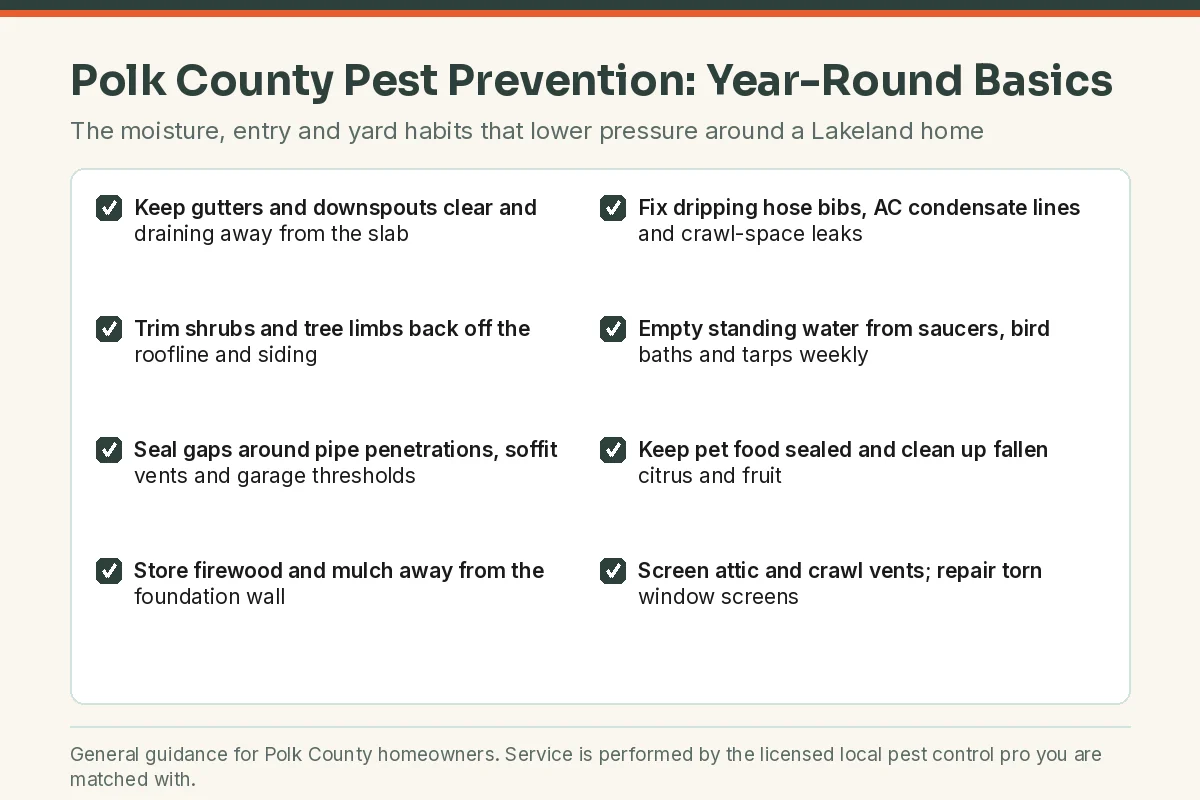
Home-sealing & moisture-control checklist
Nine prevention steps that address the moisture, access, and habitat issues behind most Polk County pest calls — covering the full range, not a partial list.
Manage moisture at the roofline
Clean gutters, redirect downspouts at least 3 feet from the foundation, and fix roof or plumbing leaks promptly — the top driver behind silverfish, earwig, centipede, and millipede calls near the lakes.
Create a foundation gap
Keep mulch, soil, and firewood at least 6–12 inches below siding and off direct wood contact, reducing both termite and ant harborage.
Seal tile-roof and soffit entry points
Screen tile-gap eave lines and soffit vents — Polk County’s number-one roof rat entry route, and open soffits are the drywood termite’s preferred way in.
Trim vegetation off the structure
Cut tree limbs and shrubs back 6+ feet from the roofline and walls to remove rodent and ant travel routes, and mow tall grass along fence lines to cut down tick habitat.
Reduce clutter and harborage
Store firewood off the ground and away from the house; declutter garages, sheds, and crawlspaces, especially near citrus-grove edges where migration pressure is higher.
Manage exterior lighting
Swap bright white porch lights for yellow “bug” bulbs or motion-activated fixtures — it measurably cuts down on Formosan and drywood swarm activity, and on mosquitoes gathering at the door.
Eliminate standing water weekly
Dump gutters, plant saucers, tarps, birdbaths, and anything else holding water for more than a few days — mosquitoes only need about a week to complete a breeding cycle.
Break the flea and tick cycle
Treat pets on a regular schedule, mow and edge regularly, and keep wildlife (a common flea and tick source) from denning close to the house.
Check before you bring it inside
Inspect luggage after any trip and secondhand furniture before it enters the house — the most common way bed bugs get a foothold in an otherwise clean home.
Infestation, or just a stray?
Ants
One or two foraging ants isn’t an infestation. A visible trail, a mound, or ants returning to the same food or moisture source repeatedly means an active colony — and species ID (ghost, fire, carpenter, or tawny crazy) decides the fix.
Roaches & palmetto bugs
One outdoor-type roach that flew in on a humid night is common. Roaches seen in daylight, a musty odor, or dark droppings behind the fridge point to an established indoor population — usually German roaches, a different problem entirely.
Mice & rats
A single dropping could be a one-time visitor. Gnaw marks, grease trails along baseboards, or noise in the attic at night mean roof rats or house mice have moved in.
Termites
One winged insect that wandered in isn’t proof of anything. A pile of identical discarded wings on a windowsill, or mud tubes at a slab joint, means a colony is established nearby.
Mosquitoes
A few bites after dusk are normal near any Polk County lake. Swarms that make the yard unusable during the day, or breeding sites you can find on your own property, mean it’s past a nuisance level.
Wasps, yellowjackets & bees
A wasp or two foraging in the yard is common. An active nest under an eave, in a wall void, or near a walkway — especially one that gets defensive when you pass — is the point to stop DIY-ing it.
Ticks & fleas
One tick picked up after a walk in brush isn’t an infestation. Pets scratching constantly, ticks found repeatedly indoors, or bites appearing on people who haven’t left the yard point to an established population.
Bed bugs
A single bite-like mark proves nothing on its own — plenty of things cause similar marks. Small rust-colored spots on a mattress seam, a sweetish odor, or bites appearing in a line after sleep are the signs worth acting on.
Wildlife (squirrels, raccoons, opossums, skunks, bats, birds, snakes, moles)
A single sighting in the yard is common in Polk County’s mix of lake, grove, and scrubland habitat. Repeated attic noise, a guano pile, fresh lawn tunnels, or the same animal denning under a shed points to an active problem worth addressing.
When it’s time to call a professional. If your checklist item points to an active colony, a nest, a moisture problem caulk and a downspout won’t fix, or a wildlife entry point you can’t safely close yourself, that’s the point to bring in a licensed operator instead of guessing further. This guide is educational — it isn’t a substitute for an on-site inspection.
Worked through the calendar and still not sure?
Free to get matched, no obligation. The FDACS-licensed operator inspects and quotes — this guide just helps you describe what you’re seeing.
Talk to a licensed exterminator now
Call and we’ll connect you with a licensed, local exterminator who covers your address. It takes about two minutes, and a real person answers.
Free to call. Free to get matched. The licensed operator gives the quote.
Availability of same-day and emergency service depends on the provider.
Polk County pest prevention — common questions
Which pests are worst in Polk County by season?
Roughly: termites swarm February through August across three overlapping species; mosquitoes and fleas peak with the June–September rains; wasps and yellowjackets peak in August as colonies reach full size; rodents and wildlife push indoors October through December as nights cool; ticks run nearly year-round with an April peak; and bed bug risk tracks travel — spring break, summer vacations, and the fall–winter snowbird and holiday season. Ants and roaches stay active most of the year in Polk County’s climate.
When should I schedule a termite inspection in Polk County?
Late winter into early spring, ahead of the native subterranean termite swarm season (February–May) and before Formosan swarms begin in April. A WDO inspection is especially worthwhile for pre-1980 homes in Lakeland’s older lake-district neighborhoods.
Why does Lakeland have three overlapping termite swarm seasons?
Florida is one of only four states with an established drywood termite population, and Polk County carries native subterranean, introduced Formosan subterranean, and Florida drywood termites all at once — each with its own swarm window, so some termite species is swarming somewhere in the county for most of the year.
What’s the single best way to cut mosquito activity around my home?
Eliminate standing water weekly. Gutters, plant saucers, tarps, birdbaths, and any other container holding water for more than a few days are enough for mosquitoes to complete a breeding cycle — removing that water does more than most yard sprays.
How much does bed bug risk really tie to travel?
Closely. Bed bugs don’t come from a dirty home — they hitchhike in on luggage, secondhand furniture, and overnight guests. Polk County sees two seasonal upticks in introduction risk: spring and summer travel, and the fall-through-winter snowbird and holiday season.
Are fire ants worse near citrus groves?
Yes — open turf and disturbed soil on grove edges favor fire ant colony development, and homes bordering active or former citrus groves in Frostproof, Lake Wales, and Bartow tend to see heavier mound activity than interior subdivisions.
Do hurricanes really change local pest pressure?
Yes — flooding displaces rodents and wildlife, creates standing water that drives mosquito booms, ant and roach populations get pushed out of saturated ground, and water-damaged framing accelerates termite activity. See the hurricane pest prep guide for the full pre- and post-storm checklist.
How do I tell a termite swarmer from a flying ant?
Termite swarmers have straight antennae, a thick waist, and four equal-length wings that shed almost immediately — a pile of identical wings with no insects attached is a termite signature. Flying ants have elbowed antennae, a pinched waist, and unequal wings that stay attached.
Is this calendar the same thing as pest control service?
One call reaches a licensed, local exterminator who covers your address — and a real person answers, 24/7.
How do I verify a Polk County pest control operator’s license?
Every Florida structural pest control operator is licensed by FDACS under Chapter 482, Florida Statutes. Check license status, categories, and discipline history at the FDACS license search before hiring anyone.
Where this calendar comes from
UF/IFAS Extension — Polk County
The University of Florida’s local extension office in Bartow — the technical source for termite prevention, fire ant control, and regional pest biology used in this calendar.
UF/IFAS — termites, fire ants & mosquitoes
UF/IFAS’s statewide EDIS publications on termite prevention, fire-ant homeowner guidance, and mosquito biology and source reduction.
CDC & Florida Department of Health — mosquitoes & ticks
Federal and state public-health guidance on mosquito-borne and tick-borne disease prevention, used for the seasonal source-reduction and tick-avoidance guidance in this calendar.
FDACS — licensing & the Structural Pest Control Act
Florida’s pest control regulator, administering Chapter 482, Florida Statutes and the public license-verification tool used throughout this site.
Related Polk County pages
One call. A real person. Straight answers.
Get matched with an FDACS-licensed operator who covers your address — whatever the pest.
Talk to a licensed exterminator now
Call and we’ll connect you with a licensed, local exterminator who covers your address. It takes about two minutes, and a real person answers.
Free to call. Free to get matched. The licensed operator gives the quote.
Availability of same-day and emergency service depends on the provider.
Related Polk County prevention reading
Seasonal checklists and the local conditions that decide what needs attention when.
- Summer pest-prevention checklist for Lakeland homeowners — the wet-season list, in the order the work should happen
- The snowbird return: a pest checklist for reopening a Florida home — what months of vacancy does to a closed-up house
- Polk County agricultural-edge pests — what changes when working citrus and pasture land borders residential Lakeland
- Signs it’s time to call a Lakeland exterminator — the thresholds where prevention has already been passed
Disclosure
Lakeland Exterminators is a dispatch and matching service. We connect Polk County callers with FDACS-licensed pest control operators. We are not a licensed pest control operator. We do not perform treatment, set prices, issue warranties, hold bonds, or carry pest control trade insurance. All pricing, scheduling, treatment plans, warranties and service terms are determined by the FDACS-licensed operator dispatched to your address under Chapter 482, Florida Statutes.
Same-day and 24/7 emergency services are subject to provider participation, location, technician availability, and demand. Availability is not guaranteed and may vary by market and appointment capacity.
License status of any operator you connect with is publicly verifiable at the FDACS license search.