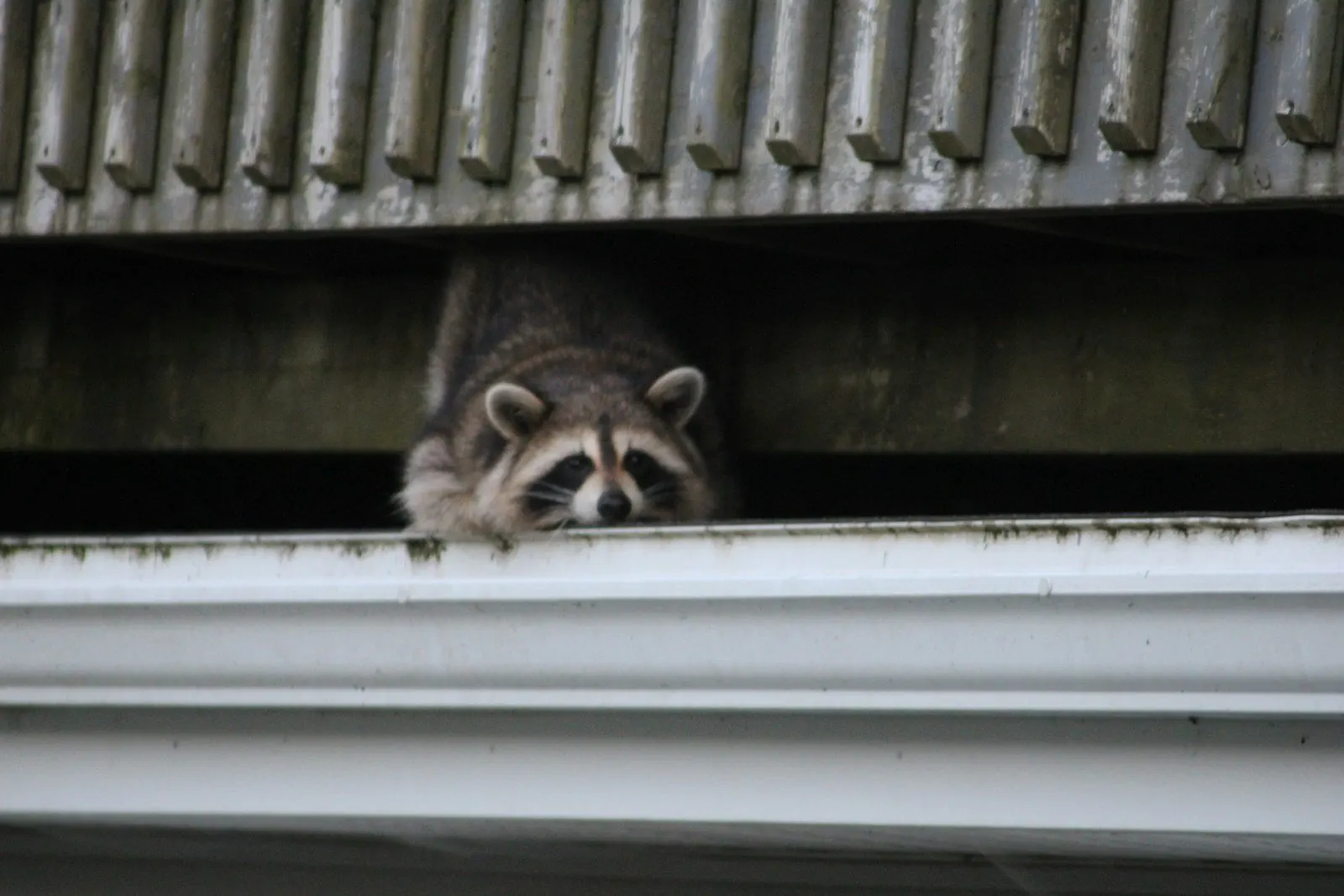
By mid-summer, raccoon kits born in Lakeland and Polk County attics back in spring are big enough to move around on their own — and that’s usually when homeowners finally notice. One quiet female slipping in and out at night in March becomes a family of four or five thumping across the ceiling by July. Here’s how to confirm what’s actually up there, why it doesn’t get better if you wait for fall, and how removal is supposed to work.
Dealing with a pest problem right now?
📞 Call now — get matched with a licensed local exterminator: (888) 295-0220When you call, stay on the line for a few seconds while we match you with the licensed local exterminator for your area. Have your address and a quick description of the problem ready.
Licensed local pros · Fast response, subject to availability · No obligation

Raccoon, Squirrel, or Rat? The Sound Test
Attic noises get misdiagnosed constantly, and the fix for each animal is completely different. Raccoons are heavy: slow, deliberate thumping and walking you can track across the ceiling, dragging sounds, and in summer, chittering or mewing from kits that people sometimes mistake for birds. Activity clusters at dusk and just before dawn. Squirrels keep business hours — rolling, scampering sounds in early morning and daytime, much lighter than a raccoon’s footfall, as covered in our guide to squirrel removal from Lakeland attics. Rats are light and fast — scurrying, scratching in bursts, gnawing sounds — and easy to rule out once you’ve heard a genuine raccoon’s slow, heavy tread.
What to Check From Outside
Walk the exterior with binoculars. Raccoons need a grapefruit-sized opening or larger, and on Polk County homes they typically make or enlarge one at soffit returns where the eave meets the roof, gable vents with light louvers, torn shingle edges at the fascia, or flashing around a chimney. Look for a hole with smudged, greasy edges and pulled-away material — raccoons rip rather than gnaw, a different signature from the smaller entry gaps rodents use. Inside, flattened insulation “trails,” a concentrated latrine corner, torn duct insulation, and paw prints in dust all confirm it.
Why Waiting for Fall Backfires
Three reasons this doesn’t improve with time. Damage compounds: raccoons crush and soil attic insulation right when Central Florida’s summer heat makes AC efficiency matter most, tear ductwork, and occasionally strip wire insulation, which is a genuine fire risk. Raccoon latrines can carry Baylisascaris roundworm eggs, hazardous to people and pets, which is why cleanup is a protective-equipment job rather than a household one. And a female denned in an attic once tends to return, along with her offspring in later years, so the problem compounds across seasons rather than resolving on its own.
What Not to Do
Don’t seal the entry hole the night you find it. A mother locked out while kits are inside will tear a new hole through roofing material to get back to them, or the kits will die in a wall or ceiling void, turning a wildlife problem into a much worse one. Don’t attempt a DIY cage trap and relocate the animal yourself — Florida regulates the trapping and relocation of nuisance wildlife, and orphaned kits left behind in the insulation become their own emergency. Ultrasonic plug-ins, mothballs, and predator-urine granules have no track record against an attic raccoon that has already committed to denning there.
How Proper Removal Actually Works
A licensed wildlife professional confirms whether kits are present before deciding on a method, since the approach changes based on the answer — a one-way door once kits are mobile enough to travel with the mother, or hands-on removal when they aren’t. After the animals are out, entry points get sealed with animal-proof materials, the latrine gets safely remediated, and damaged insulation gets assessed. That full sequence — removal, exclusion, cleanup — is what separates a solved problem from a repeat next spring; our wildlife removal guide for Lakeland covers the full process for raccoons and other nuisance species.
One call reaches a licensed, local exterminator who covers your address — and a real person answers, 24/7.
Note: this line is for raccoon-in-the-attic wildlife issues specifically. If your issue is ants, roaches, termites, rodents indoors, or other general household pests, use our main pest match instead.
Frequently Asked Questions
What does a raccoon in the attic sound like? Slow, heavy walking or thumping you can track across the ceiling, mostly at dusk and before dawn, plus dragging sounds and, in summer, chittering or mewing from kits. Light, fast scratching points to rats instead.
Will a raccoon leave the attic on its own? A female with kits won’t leave until they’re mobile enough to travel, typically several months after birth, and an attic that has housed one raccoon family tends to attract the next one too.
Can I just seal the hole at night while it’s out? No. If kits are inside, the mother will tear her way back in, and kits sealed inside die in the structure. Professional protocols confirm the family situation before any exclusion work begins.
Is raccoon poop in the attic dangerous? It can be. Raccoon latrines may contain roundworm eggs hazardous to people and pets, which is why remediation involves protective equipment rather than a household vacuum.
Why are raccoons in my attic in summer? Spring-born kits become mobile in early-to-mid summer, which is when families get loud enough for homeowners to notice. Central Florida heat also drives more evening activity around the den.
Does homeowners insurance cover raccoon damage? Policies vary — many treat wild-animal damage differently from rodent damage, with some covering structural repairs while excluding cleanup. Document everything and confirm specifics with your carrier.
LakelandExterminators.com is a dispatch service. We connect callers with licensed Florida exterminators. We are not a licensed pest control company. The disclaimer in our site footer and our 24/7 dispatch caveat apply to this page.