Termite swarms in Polk County don’t always give much warning — a warm, humid evening after rain, and suddenly there are dozens of winged insects around a porch light or rising out of a spot in the yard. If that’s happening at your place right now, here’s how to read what you’re looking at and what to do in the next few hours, not just eventually.
What a Termite Swarm Actually Looks Like
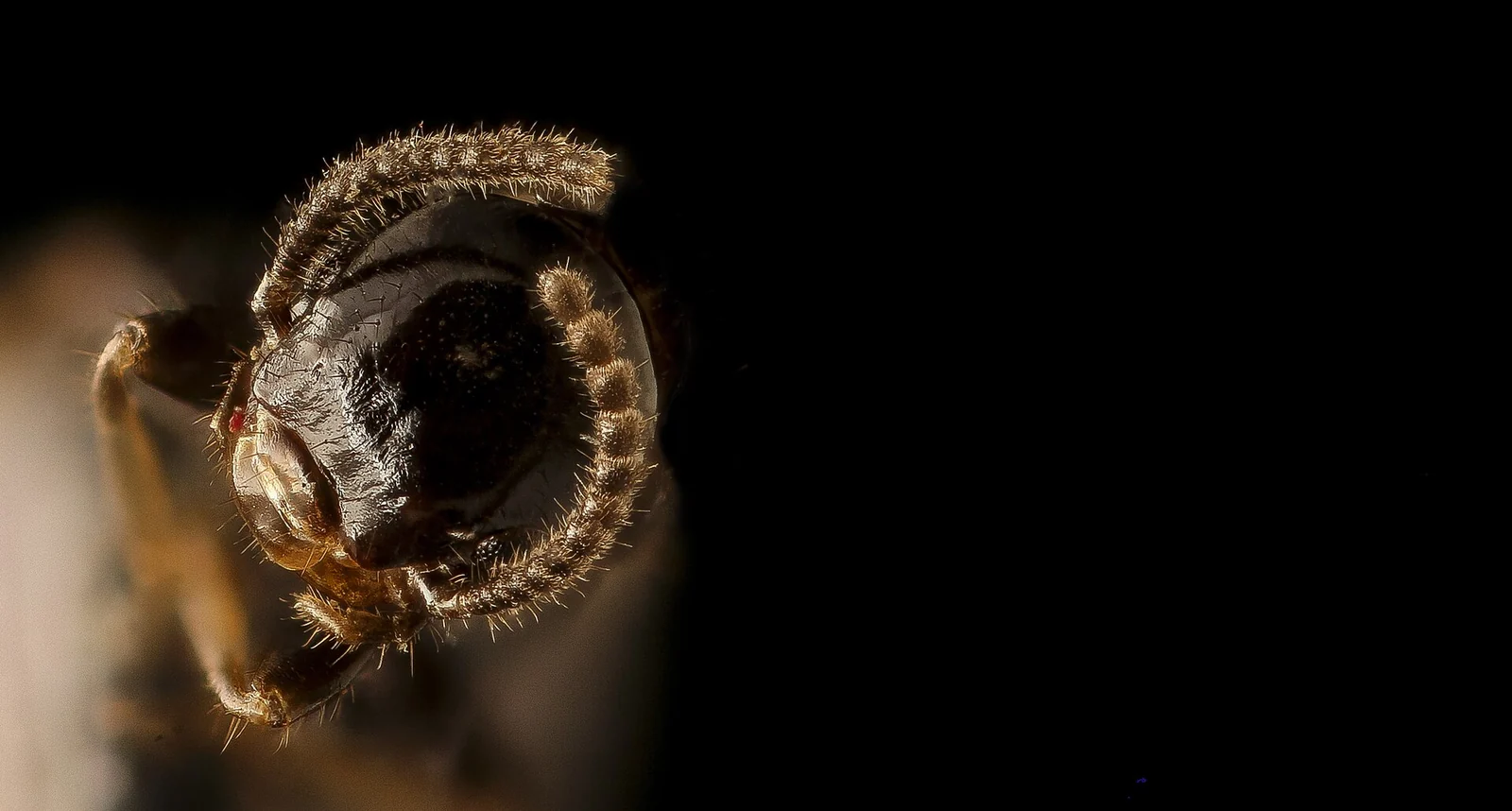
Termite swarmers (alates) are winged reproductives leaving an established colony to start new ones. A few identifying details, though a licensed pest professional is the one who can confirm species and severity:
- Two pairs of wings, roughly equal in length — noticeably longer than the body itself.
- A straight, thick waist without the pinched, narrow waist you’d see on a flying ant.
- Shed wings piling up near windowsills, light fixtures, or on the ground shortly after a swarm, since swarmers drop their wings once they land.
- Straight, not elbowed, antennae, another point of difference from flying ants at close range.
Indoor Swarm vs. Outdoor Swarm — Why It Changes the Urgency
Where the swarm is happening matters. A swarm emerging from inside the house — near a baseboard, a window frame, a light fixture — is generally a stronger signal of an active colony inside the structure and worth addressing promptly. A swarm outdoors, especially near a stump, mulch bed, or woodpile, is more likely tied to a colony in the yard rather than the house itself, though it’s still worth a look, particularly if it’s close to the foundation. Either way, a licensed termite treatment provider in Lakeland can inspect and confirm what’s actually going on before it becomes a bigger job.
Get connected to a licensed termite treatment provider
One call reaches a licensed, local exterminator who covers your address — and a real person answers, 24/7.
Licensed & vetted operators only · free to get connected · no obligation
What to Do in the Next Few Hours
- Don’t spray the swarmers with general household bug spray. It can scatter them and destroy information a licensed inspector would otherwise use to help locate the colony.
- Collect a few swarmers if you can — a small jar or sealed bag works — so a professional can identify the species without waiting for a second swarm.
- Note exactly where you saw them — which room, which window, which spot in the yard — and whether you found shed wings anywhere else in the house.
- Check nearby windowsills and light fixtures for shed wings even if you didn’t see the swarm itself; it’s a sign a swarm happened recently, even if you missed the main event.
Which Termite Is Swarming? The Polk County Calendar
Species matters more than most homeowners expect, because it changes the inspection, the treatment, and how fast you need to move. Four wood-destroying insects swarm in Polk County, and the date, time of day, and location of the flight narrow it down considerably before anyone opens a jar:
- Eastern subterranean termite (Reticulitermes flavipes) — the most common structural termite in Central Florida. Swarms run roughly February through May, on warm days shortly after rain, and they fly during daylight. Dark-bodied, small, and usually emerging from the ground, a slab crack, an expansion joint, or a mud tube.
- Formosan subterranean termite (Coptotermes formosanus) — present in Polk County though less common than in coastal counties. Swarms roughly April through June, and critically it flies at dusk and after dark, strongly attracted to lights. Larger and more yellowish-tan than the Eastern. Colonies are far bigger and damage accumulates faster, so a correct Formosan ID changes the urgency.
- Florida drywood termite (Incisitermes snyderi and relatives) — swarms in the warm months, generally May through September, usually in the evening. These come out of the wood itself — a windowsill, a fascia board, an attic rafter, a door frame — not out of the ground, and they leave the characteristic six-sided fecal pellets that look like coarse sand or pepper.
- Florida carpenter ants (Camponotus floridanus) — not a termite at all, but they swarm mid-May into July in the same yards and get mistaken for termites constantly.
So: a daytime flight out of the ground in March is almost certainly Eastern subterranean. A flight around the porch light in May is a candidate for Formosan or drywood, and telling those apart matters a great deal. Pellets on a windowsill with no ground connection points at drywood. Our subterranean vs. drywood comparison for Polk County walks through the treatment differences.
Where the Swarm Came Out Tells You Almost Everything
Before you clean anything up, find the exit point. It is the single most valuable piece of information you can hand a licensed inspector, and it disappears within a day:
- A crack in the slab, an expansion joint, a bath trap, or the base of a wall — subterranean colony with a connection into or under the structure. This is the highest-urgency finding on the list.
- A mud tube on the foundation, a pier, or the inside of the garage wall — same, and the tube itself is physical evidence worth photographing before anything disturbs it.
- Directly out of a wooden member — a sill, jamb, sash, rafter, or fascia, usually with a small round exit hole and pellets below it — drywood colony living inside that wood.
- From a stump, railroad tie, landscape timber, fence post, buried form board, or old mulch bed in the yard — a yard colony. Still worth attention, particularly within about fifteen feet of the slab, but not the same emergency as an indoor exit point.
- Around exterior lights with no obvious exit — may be a Formosan or drywood flight that originated off the property and was drawn in by the light. This is the one case where a swarm at your house may not mean an infestation at your house.
The Evidence to Preserve — and How
Swarmers are short-lived and the physical record vanishes fast. What you keep in the next hour determines how much guessing an inspector has to do:
- Collect a dozen or more intact specimens in a sealed bag or a small jar. A few crushed bodies are much harder to identify to species than several intact ones with wings attached.
- Save the shed wings separately. Wing piles on a sill are proof a flight happened at that location even after the bodies are gone. Four wings of near-equal length means termite; a longer front pair means ant.
- Photograph the exit point before cleanup, with something for scale, plus a wider shot showing where in the room or on the wall it is.
- Note the time of day and the weather. “Two in the afternoon, an hour after a thunderstorm” and “nine at night around the porch light” point at different species.
- Do not vacuum the area until you have collected samples, and do not disturb a mud tube. An intact, actively repaired tube tells an inspector the colony is live right now.
What a WDO Inspection Will Actually Cover
In Florida, wood-destroying-organism work is regulated separately from general pest control under Chapter 482 of the Florida Statutes, administered by FDACS. A formal WDO inspection is documented on the state’s DACS-13645 form and covers termites, wood-decay fungi, and wood-boring beetles. A licensed inspector will typically:
- Sound accessible wood members with a probe and a mallet, looking for hollow response and soft spots
- Inspect the full accessible perimeter of the foundation for mud tubes, including behind shrubs and under the deck or porch
- Enter the attic and any accessible crawl space, and check the garage, the water heater closet, and under sinks — the wet, seldom-viewed spots where activity shows first
- Check the bath trap, plumbing penetrations, and slab expansion joints, which are the classic subterranean entry routes in Florida slab construction
- Look for conducive conditions: wood-to-soil contact, mulch against stucco, downspouts discharging at the slab, chronic irrigation overspray, and leaking hose bibs
- Record findings, including whether damage observed is active or from a previous, treated infestation
Anyone performing that inspection should hold a current FDACS license, and that license is publicly verifiable — our page on FDACS pest control licensing in Florida explains how to check it and what the license categories mean. If you are mid-transaction, the WDO report is a separate document from a general home inspection; see WDO inspections in Lakeland.
What Treatment Looks Like, By Species
Nothing below is something a homeowner performs; it is what to expect an operator to propose, so you can tell whether a proposal fits the finding:
- Subterranean, liquid approach — a continuous non-repellent termiticide barrier applied by trenching and rodding around the foundation, with drilling through slab or patio where the soil is not otherwise accessible. Works by transfer through the colony.
- Subterranean, baiting approach — in-ground stations placed around the structure on a monitoring interval, using a growth regulator that suppresses the colony over time. Slower to act, less invasive, and paired with ongoing inspections.
- Drywood, localized — drill-and-inject or foam treatment of the specific infested member, appropriate when the infestation is confined and accessible.
- Drywood, whole-structure — tent fumigation when colonies are widespread or inaccessible. This requires vacating the structure; our tenting preparation guide covers what that involves.
- Conducive-condition correction — in every case, fixing the moisture, wood-to-soil contact, and grading issues that made the structure attractive. Skipping this is the most common reason a treated house has a repeat problem.
A follow-on question worth asking at the same time is whether a bond or warranty is included and what it actually covers; see whether an annual termite bond is worth it in Lakeland.
What Not to Do
- Do not treat it yourself. Hardware-store products do not reach a subterranean colony, and a repellent applied around a foundation can push foraging activity to a different entry point while leaving the colony intact — making later professional work harder and the damage record more confusing.
- Do not assume a past treatment covers you. Liquid barriers degrade, and a barrier installed years ago on a house that has since had a patio poured, a bed re-graded, or plumbing trenched may have a gap in it.
- Do not wait for the next swarm to confirm it. Swarming is seasonal; a colony that flew in March will not necessarily fly again for a year, and it feeds continuously in the meantime.
- Do not clean up before you photograph. Ten seconds of phone video of an active flight is worth more than a description.
Quick Answers
How do I tell termite swarmers from flying ants without catching one?
From a distance, look at the wings: termite swarmers have four wings of roughly equal length, while flying ants have a longer front pair and a shorter back pair. It’s still easy to mix up at a glance, so when in doubt, treat it as a termite swarm until a licensed pro tells you otherwise.
How fast should I call after seeing a swarm?
Sooner is better, especially for an indoor swarm. Swarmers themselves don’t damage wood, but a swarm is a sign of an established colony somewhere nearby, and getting a licensed inspection scheduled promptly gives you a clearer picture before the situation has more time to develop.
Which termite species swarm in Polk County, and when?
Eastern subterranean termites swarm roughly February through May during daylight, usually after rain. Formosan subterranean termites swarm about April through June at dusk and are strongly drawn to lights. Florida drywood termites swarm through the warm months, roughly May into September, usually in the evening and out of the wood itself rather than the ground.
Do swarmers indoors always mean the house is infested?
An indoor flight with a visible exit point at a slab crack, expansion joint, baseboard or wooden member is strong evidence of a colony in or under the structure. Swarmers that appear around exterior lights, or a handful found inside after a window was open during an outdoor flight, can come from off the property. The exit point is what separates the two cases, which is why finding it before cleanup matters.
What is a WDO inspection and how is it different from a regular pest inspection?
A wood-destroying-organism inspection is a separately regulated report in Florida, documented on the state DACS-13645 form, covering termites, wood-decay fungi and wood-boring beetles. It is performed by an FDACS-licensed inspector and is a different document from a general pest service or a general home inspection.
Should I spray the swarmers or vacuum them up?
Vacuuming loose swarmers off a floor after you have collected samples and photographed the exit point is fine. Spraying is not helpful — it kills short-lived reproductives that were going to die anyway, does nothing to the colony, and can scatter evidence an inspector would have used to locate the source.
How quickly does termite damage actually accumulate?
It varies with species and colony size, and no honest answer puts a fixed timeline on it. Formosan colonies are far larger than Eastern subterranean colonies and cause damage correspondingly faster, which is one of the main practical reasons species identification is worth doing rather than treating every flight the same way.
Does seeing swarmers outside mean my house has termites?
Not necessarily. An outdoor swarm can be coming from a stump, old mulch bed, or woodpile with no connection to the house. That said, it’s worth having it checked, especially if the swarm site is close to the foundation.
Related Polk County reading
- Termite treatment — Lakeland, FL
- Signs of termites — Lakeland
- Termite swarming season in Florida
- Eastern subterranean termite — Polk County
- Formosan subterranean termite — Polk County
- Florida drywood termite — Polk County
- WDO inspection — Lakeland
- How to identify termite damage — Lakeland
- Sentricon vs. Termidor — Lakeland
- Is an annual termite bond worth it in Lakeland?
Lakeland Exterminators is a 24/7 dispatch line that connects Polk County homeowners with licensed local pest control operators. We don’t send our own technicians — we get you on the phone with one fast so someone qualified can find out what’s actually swarming and where it’s coming from.