Most Lakeland homeowners never see the moth — they see the damage. A sweater pulled out of storage in fall with irregular holes near the collar, or a wool rug with a bare patch that wasn’t there last season. By the time the damage is obvious, a clothes moth infestation has usually been quietly building for months in exactly the humid, undisturbed spaces Polk County homes have plenty of: back closets, attic storage boxes, and cedar chests that haven’t been opened all summer.
Dealing with a pest problem right now?
📞 Call now — get matched with a licensed local exterminator: (888) 295-0220When you call, stay on the line for a few seconds while we match you with the licensed local exterminator for your area. Have your address and a quick description of the problem ready.
Licensed local pros · Fast response, subject to availability · No obligation
It’s the Larvae, Not the Moths, Doing the Damage
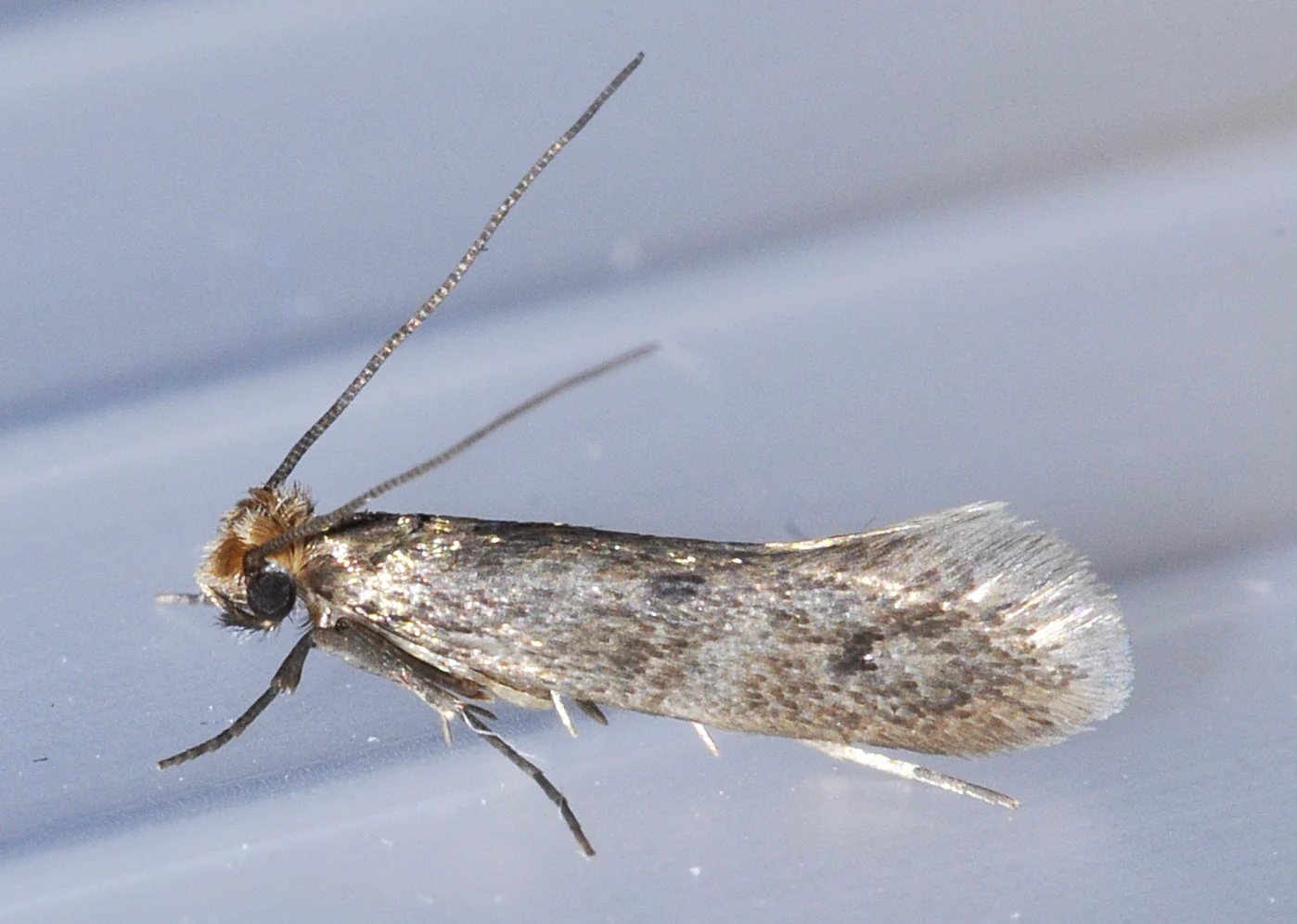
Adult clothes moths (small, buff-colored, weak fliers that avoid light) don’t eat fabric at all — they lay eggs and move on. The damage comes entirely from the larvae, tiny cream-colored caterpillars that feed on keratin, the protein found in wool, fur, feathers, silk, and felt. That’s why clothes moth damage clusters on natural-fiber items — wool sweaters, wool rugs, down pillows, felt hat linings — while cotton and synthetic fabrics are rarely touched unless heavily soiled with food or sweat, which the larvae will also feed on.
Why Lakeland’s Humidity Makes This Worse
Clothes moth larvae thrive in warm, humid, undisturbed conditions, and Central Florida’s year-round humidity gives them a much longer active season than drier climates ever would. Closets and attic storage areas in Lakeland homes routinely sit at higher humidity than the rest of the conditioned living space, especially in older homes without a dedicated dehumidification system, and that moisture is exactly what lets an infestation establish and keep breeding rather than dying out after one generation. It’s the same underlying moisture dynamic covered in our guide to silverfish and booklice as humidity pests in Lakeland homes.
Where to Actually Look
Clothes moths favor dark, undisturbed spots, so the highest-risk areas are stored winter clothing that hasn’t been touched all summer, wool rugs under furniture that rarely gets moved, upholstered furniture with natural-fiber stuffing, felt piano hammers and pads, and any taxidermy or wool decorative items in storage. Check for irregular holes (not the neat holes of a hard-bodied beetle), silky webbing or tubes in fabric folds and seams, and small case-like larval shelters that can look like grains of sand stuck to fabric.
Early Signs Before the Holes Show Up
Small, pale moths fluttering weakly out of a closet when it’s opened — especially moths that seem to prefer staying in the dark rather than flying toward a window — are the first sign worth acting on, well before any fabric damage is visible. Fine silken threads or small debris that looks like sand grains in the folds of stored wool items is the next tier. Waiting for actual holes means the infestation has already had at least one full breeding cycle to spread to nearby items.
Getting Ahead of It
Wash or dry-clean natural-fiber items before long-term storage — food and sweat residue is what pulls an infestation toward “clean” items too, and heat from washing or dry cleaning kills any eggs already present. Store vulnerable items in sealed plastic bins rather than cardboard boxes, which moths and larvae can chew through, and vacuum closets, rugs, and upholstery regularly, since vacuuming physically removes eggs and larvae before they mature. Running a dehumidifier in chronically humid closets and attic storage spaces removes the moisture that lets an infestation establish in the first place, and periodic inspection of stored wool items — even items that seem untouched for a season — catches a problem while it’s still one item instead of a dozen.
One call reaches a licensed, local exterminator who covers your address — and a real person answers, 24/7.
Frequently Asked Questions
Do clothes moths eat cotton or synthetic fabric? Rarely, and usually only when heavily soiled with food or body oils. Clothes moth larvae feed on keratin, found in wool, fur, feathers, silk, and felt, which is why natural-fiber items take the damage.
Why do I see moths but no obvious holes yet? Adult moths lay eggs but don’t feed on fabric themselves, and damage from the larvae can take weeks to become visible. Seeing adult moths in a closet is an early warning worth acting on before holes appear.
Why does Lakeland seem to have more of a clothes moth problem than drier climates? Central Florida’s year-round humidity extends the larvae’s active breeding season, letting an infestation establish and continue in humid closets and attic storage rather than dying out after one generation.
Does mothballs or cedar actually stop an infestation? Cedar oil and mothball vapors can help deter moths in a sealed, airtight container, but they have limited effect in an open closet with normal air exchange and don’t kill an active infestation on their own.
How do I know if stored clothing already has an infestation? Look for irregular holes, silky webbing or threads in fabric folds, and small case-like larval shelters resembling sand grains stuck to the fabric surface.
Can vacuuming really prevent clothes moth damage? Yes, regular vacuuming of closets, rugs, and upholstery physically removes eggs and young larvae before they mature enough to cause visible damage, making it one of the most effective preventive habits available.
LakelandExterminators.com is a dispatch service. We connect callers with licensed Florida exterminators. We are not a licensed pest control company. The disclaimer in our site footer and our 24/7 dispatch caveat apply to this page.