If you’ve lived in Lakeland for more than a year, you already know the drill — sometime in May and again around September, lovebugs show up in numbers thick enough to coat a windshield on the I-4 corridor and swarm around porches and yards for a few weeks straight. They’re mostly a nuisance rather than a health risk, but heavy lovebug activity around a house can point to conditions that other, less harmless pests are also taking advantage of.
Why Lovebugs Swarm When They Do
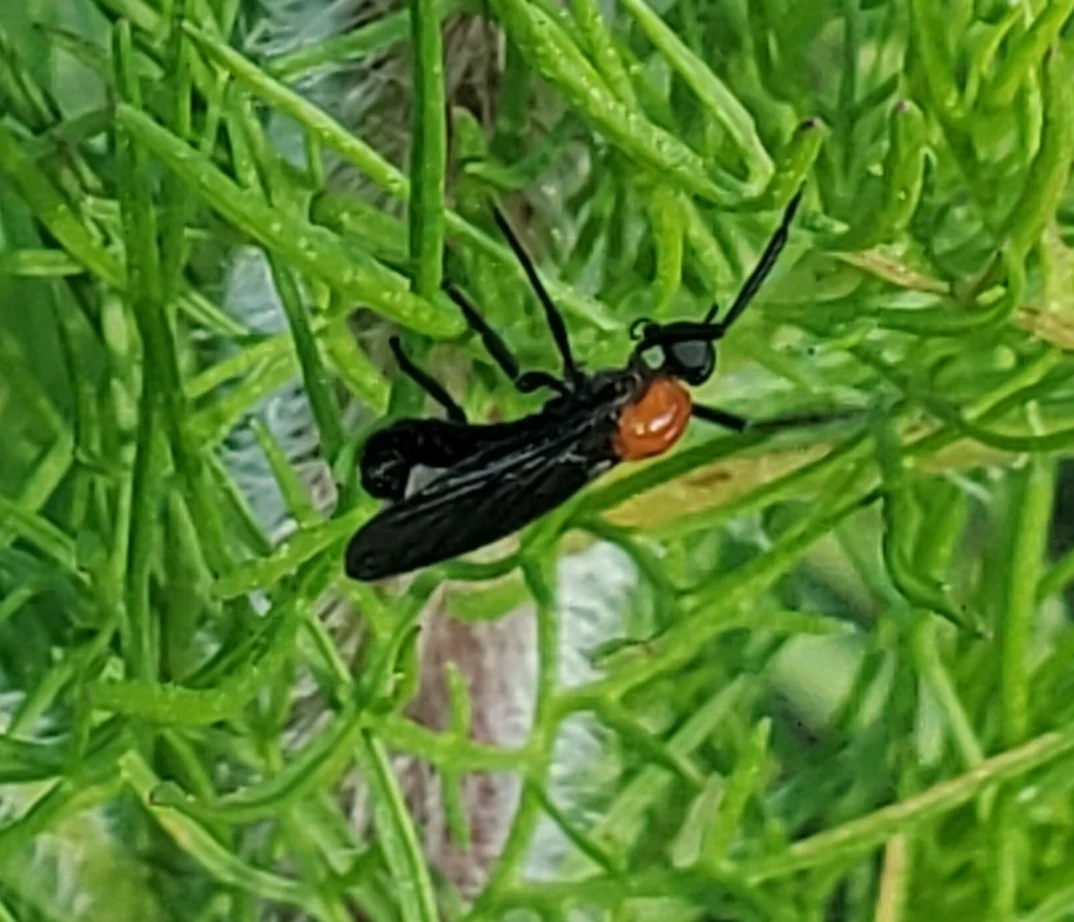
Lovebugs (Plecia nearctica) have a life cycle timed to Central Florida’s wet and dry seasons. Larvae develop in damp organic matter — leaf litter, thatch, mulch beds — over several weeks, and adults tend to emerge in synchronized waves, which is why the swarms feel like they start almost overnight and last two to four weeks before tapering off. Polk County’s mix of warm temperatures and heavy organic ground cover in landscaped yards makes it a reliable spot for both the spring and late-summer emergence.
What Heavy Lovebug Activity Attracts Around a Lakeland Home
Lovebugs themselves don’t bite or invade structures, but a heavy swarm season leaves behind a lot of dead lovebug bodies — in gutters, window tracks, porch corners, and landscaping beds. As that organic material breaks down, it can attract other pests that are drawn to decomposing debris and the moisture it holds, including ants and certain roach species already common across Lakeland and Polk County yards. In other words, lovebug season on its own usually isn’t a reason to call a pest control professional, but the conditions it leaves behind can make an existing ant or roach problem worse if debris sits too long.
Get connected to a licensed Lakeland exterminator
One call reaches a licensed, local exterminator who covers your address — and a real person answers, 24/7.
Licensed & vetted operators only · free to get connected · no obligation
Two flights a year, and why the dates are so consistent
Lovebug emergence in Central Florida is not weather-random the way a mosquito surge is. Plecia nearctica runs two synchronized adult flights a year: a spring flight that generally peaks from late April into May, and a late-summer flight that peaks from late August into September. Polk County sits squarely in the band where both are heavy.
The synchrony comes from the larval stage. Larvae feed on decaying organic matter — grass thatch, leaf litter, decomposing mulch, pasture clippings — for roughly three to four months, then pupate and emerge together when soil temperature and moisture line up. Adults live only a few days to about a week. That short adult life is the whole reason a flight seems to arrive overnight, saturate everything for two to four weeks, and then vanish completely: you are watching one cohort emerge, mate, lay, and die on schedule.
The mating pairs that give the insect its name stay coupled for most of the male’s remaining life, which is why they are almost always seen attached and why they fly so poorly — a coupled pair cannot maneuver, which is exactly why so many end up on a windshield.
Why the I-4 corridor is worse than the neighborhood
Lovebugs are drawn to a combination of ultraviolet light and the aldehydes in warm engine exhaust, which chemically resemble the decaying organic matter the females are looking for as a place to lay. Add heat radiating off asphalt, and a highway becomes an enormous artificial attractant. That is why the drive between Lakeland and Tampa or Orlando during a flight can be dramatically worse than standing in your own backyard.
The same logic explains why some Lakeland neighborhoods get hit harder than others. Large mowed medians, retention-pond banks, pasture edges, and heavily thatched St. Augustine lawns all produce larvae. Older, densely canopied neighborhoods with less open grass generally see lighter flights than newer subdivisions bordering mowed common areas and open ground.
Flight activity is also time-of-day specific: it concentrates roughly from mid-morning through late afternoon, in temperatures above the mid-sixties, and it stops at dusk. Running errands early or after sunset during a peak week genuinely cuts what you have to wash off the car.
The paint problem, and the actual chemistry
The most expensive part of lovebug season is not a pest problem at all. Crushed lovebug remains are slightly acidic on their own, and the acidity increases as the bodies decompose in Florida heat. Left on a hot clear coat for a day or two in direct sun, they can etch the finish permanently.
- Rinse or wash within about 24 hours during a heavy flight — the timeline matters more than the technique
- Soak first, then wipe. Scrubbing dried remains drags the hard chitinous parts across the clear coat and puts in fine scratches.
- A well-maintained wax or sealant layer gives the acid something to attack before it reaches the paint
- Check the radiator and condenser fins as well as the paint. A packed grille reduces airflow through the condenser, and reduced condenser airflow shows up as an air conditioner that does not cool well in traffic — a common late-summer complaint in Polk County that gets misdiagnosed as a refrigerant problem.
What lovebug season leaves behind around the house
The pest-relevant part comes after the flight ends. A heavy emergence deposits a large volume of dead insect biomass in gutters, window tracks, screen enclosure channels, porch corners, lanai screens and landscape beds. As it decomposes it becomes exactly the kind of damp, protein-rich organic debris that a number of Polk County pests key on:
- Ants — ghost, white-footed and Argentine ants forage readily on dead insects, and a gutter line full of decomposing lovebugs is a concentrated food source running the entire perimeter of the roof
- American cockroaches — general scavengers already living in the mulch and gutter debris around most Florida homes
- Spiders — not a pest of the debris itself, but web-builders concentrate wherever prey volume spikes, which is why lanai screens collect noticeably more webbing right after a flight
- Ground beetles and other incidental invaders that follow the same organic material toward the wall line
Clogged gutters are the compounding problem: decomposing lovebugs plus leaf litter holds water at the fascia, which is a moisture condition rather than just a food one, and chronic wet fascia is how carpenter ants and wood-decay problems start. Clearing the gutters after a flight is doing double duty.
What lovebugs are not
Because the volume is alarming, lovebugs get blamed for things they do not do. To be clear about it:
- They do not bite, sting, or carry disease to people or pets
- They do not damage structures, wood, or stored food
- They do not feed on living plants — adults take nectar, and larvae eat only dead organic matter
- They are not an invasive species introduced by a laboratory, despite a persistent Florida rumor to that effect. They expanded into Florida naturally from the Gulf Coast decades ago.
- The larvae are actually beneficial, breaking down thatch and returning nutrients to soil
So the honest answer to “can I get rid of them” is that treating for lovebugs is not a service worth buying. What is worth acting on is the ant, roach or spider pressure that sometimes follows a heavy flight if the debris sits.
A short post-flight cleanup pass
- Flush gutters and downspouts once the flight has clearly ended
- Rinse lanai screens and screen-enclosure track channels, where remains collect and hold moisture
- Sweep porch corners, window sills and the door threshold rather than letting debris compost in place
- Rake and turn any mulch bed that collected a visible layer, and check that mulch is still pulled back from the foundation
- Watch for the follow-on signs for two to three weeks: new ant trails at the wall line, roach sightings after dark, or a jump in webbing on the lanai. Those, not the lovebugs, are the trigger to bring in a licensed operator.
What You Can Do Around the House During Swarm Season
- Clear gutters, window sills, and porch corners of dead lovebugs regularly rather than letting them accumulate.
- Keep mulch beds a few inches back from the foundation, since lovebug larvae and other moisture-loving pests both favor thick, damp mulch pressed right up against the house.
- Rinse lovebug residue off cars and exterior paint promptly — their body chemistry is mildly acidic and can etch clear coat if left too long in Florida heat, which is more of a maintenance issue than a pest one but worth knowing.
- If you notice ant trails, roach activity, or other pest pressure increasing alongside a heavy lovebug season, that’s the signal worth acting on — not the lovebugs themselves.
Quick Answers
Were lovebugs created in a University of Florida lab?
No. This is the most persistent lovebug myth in the state. Plecia nearctica expanded into Florida naturally from the Gulf Coast region in the mid-twentieth century and was not engineered or released to control any other insect.
Why are lovebugs all over my car but not really in my yard?
Adults are attracted to ultraviolet light and to aldehydes in warm engine exhaust, which chemically resemble the decaying organic matter females seek for egg-laying. Heat radiating off asphalt adds to it, so highways and busy roads concentrate them far more than a residential yard does.
How long does a lovebug flight last?
Usually two to four weeks per flight, twice a year — generally peaking late April into May and again late August into September. Individual adults live only a few days to about a week, so the flight ends when the emerged cohort dies off.
Will treating my lawn stop lovebugs?
Not meaningfully. Larvae develop in decaying organic matter across a very wide area, including roadsides, pastures and common ground you do not control, and adults fly in from outside the property. Reducing heavy thatch is reasonable lawn practice, but no residential treatment stops a regional emergence.
Do lovebugs damage plants or my house?
No. Adults feed on nectar and larvae feed only on dead organic matter, so they damage neither living plants nor structures. The one real material risk is to vehicle paint, since decomposing remains are acidic enough to etch clear coat if left in the sun.
Do lovebugs bite or sting?
No. Lovebugs don’t bite, sting, or carry disease. Their main impact is nuisance volume and the mess they leave on cars, windows, and porches during peak swarm weeks.
Why are lovebugs worse in some Lakeland neighborhoods than others?
Areas with more open grassy medians, retention ponds, and heavily landscaped common areas tend to provide more larval habitat, which is part of why some neighborhoods and stretches of road see noticeably heavier swarms than others.
Can pest control actually stop lovebug swarms?
Not really — lovebug emergence is a broad regional event tied to weather and season, not something a single property treatment controls. What a licensed pest professional can help with is the secondary pest pressure — ants, roaches, and other debris-loving pests — that sometimes follows a heavy lovebug season if organic matter isn’t cleared.
Related Polk County reading
- Pest control in Lakeland — complete guide
- Ant control — Lakeland, FL
- Ghost ant control — Lakeland
- White-footed ant — Polk County profile
- Palmetto bugs — Lakeland
- Spider control — Lakeland
- September pest control — Polk County
- Polk County pest prevention guide
Lakeland Exterminators is a 24/7 dispatch line that connects Polk County homeowners with licensed local pest control operators. We don’t send our own technicians — we get you on the phone with one fast if swarm-season debris turns into an actual pest problem around the house.