Pest problem in Miami? This is the one city where three termite species overlap — and the ants never stop.
Miami-Dade is Florida’s hardest pest map. Drywood termites own the older housing from Coral Way to Miami Shores, Formosan subterranean termites — the aggressive imported species — have been expanding through the urban core for decades, and even conehead termites have a South Florida foothold. Between the termites: white-footed and ghost ants running every stucco seam, roof rats working fruit trees and utility lines, German roaches cycling through the densest kitchen economy in the state, and Aedes mosquitoes that Miami-Dade fights at the public-health level. The 24/7 dispatch line matches you by ZIP with an FDACS-licensed exterminator who works your corner of the county.
Talk to a live dispatch coordinator now
Pellet piles in a Shenandoah bungalow, mud on a Westchester slab, ants over a Kendall kitchen counter, rats in a Little Havana ceiling — describe it and get routed to an independent, licensed and insured operator covering your Miami ZIP.
(863) 445-9190Tap to call — 24/7 dispatch
Free to call. Free to get matched. The licensed operator you’re matched with gives the quote.
24/7 line · A real person answers · Availability of same-day and emergency service depends on the provider.
Need pest control in Miami, FL? Call (863) 445-9190 and a dispatch coordinator matches you with an FDACS-licensed exterminator serving Miami and Miami-Dade — termite, ant, roach, rodent, fire ant and mosquito work from Coral Way and the Roads to Kendall, Westchester and Miami Shores. Lakeland Exterminators is a dispatch service: the licensed local operator you’re matched with inspects, quotes and treats.
Why is Miami the toughest termite market in Florida?
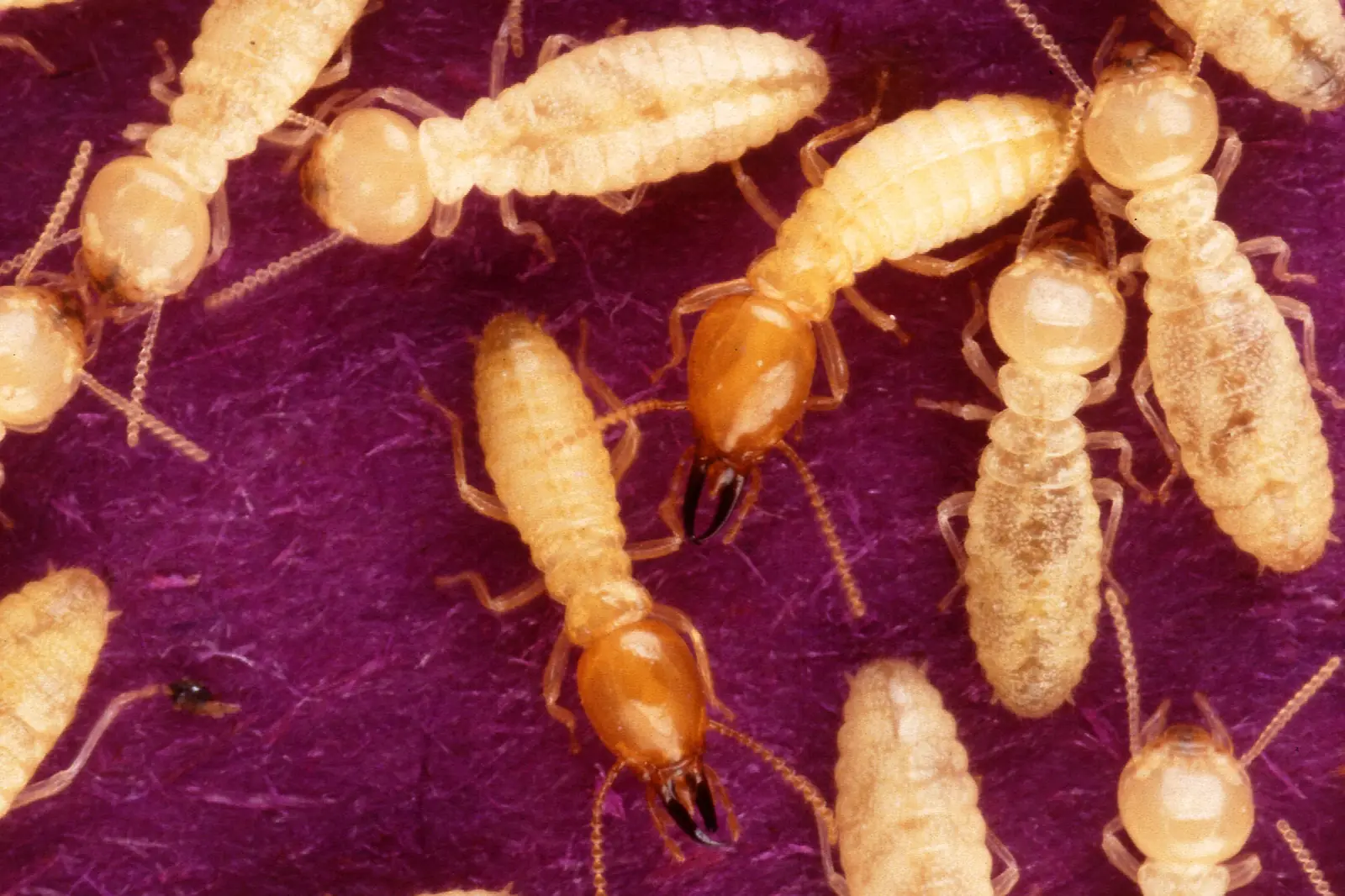
Because the species stack here doesn’t exist anywhere else at this intensity. The pre-war and mid-century neighborhoods — Shenandoah’s bungalows, Morningside and Miami Shores’ Mediterranean revivals, Coral Way’s coral-rock and frame homes — are saturated drywood termite territory, where colonies live inside window framing and roof structures and betray themselves only with pepper-grain pellet piles. Layered on top, the Formosan subterranean termite — the imported species entomologists call the most destructive termite in the world — has spent decades expanding through Miami-Dade, building carton nests that can survive inside walls without soil contact and fielding colonies large enough to do structural damage in a single season. That combination changes the inspection stakes: pellet evidence, mud evidence and moisture patterns each point to a different species with a different treatment path, and misreading one for another is how expensive mistakes happen. An honest Miami termite inspection names the species with evidence before it names any method — and when fumigation enters the conversation, the findings map should justify it room by room.
The ants are the daily war. White-footed ants — a South Florida specialty — build massive colonies in attics, wall voids and landscaping and shrug off contact sprays because their colonies rarely take shared baits the way others do; ghost ants and big-headed ants thread every stucco expansion joint and sidewalk seam into Kendall and Westchester kitchens. Getting the species right decides whether baiting works or backfires. Meanwhile roof rats run Miami’s mango, avocado and palm canopy along with the utility lines, German cockroaches cycle through the county’s enormous restaurant and multifamily stock where one untreated unit re-seeds a building, and Aedes aegypti mosquitoes breed in five-gallon buckets, bromeliads and drain saucers — the container species behind Miami-Dade’s public-health spraying, and the one a disciplined yard program plus weekly water-dumping genuinely suppresses. Dense housing, tropical climate, three termite species: Miami pest work rewards operators who specialize, which is exactly what the dispatch match is for.
Where does pest pressure concentrate around Miami?
- Shenandoah, the Roads & Coral Way (33129, 33133, 33145): pre-war bungalow drywood heartland — pellet inspections at window framing and roof structures are due diligence.
- Miami Shores & Morningside (33138, 33150): Mediterranean-revival wood plus Formosan expansion — species-ID stakes at their highest.
- Little Havana & Allapattah (33125, 33127, 33135): dense older multifamily — building-wide German roach programs, rat exclusion along utility runs.
- Westchester & Kendall (33155, 33165, 33173, 33176): mid-century slabs with expired barriers — subterranean checks, white-footed and ghost ant sieges, fruit-tree roof rats.
- The Upper Eastside & Biscayne corridor (33137, 33138): renovation-era termite discoveries, hospitality-kitchen roach pressure.
- Coconut Grove edge & the canopy streets (33133): hardwood canopy roof rat highways, landscape-bed palmetto bugs, shaded mosquito resting sites.
What kind of help can the line dispatch in Miami?
Termite control
Species-first inspections across drywood, Formosan and native subterranean evidence — the method follows the map.
Ant control
White-footed, ghost and big-headed ant programs — ID first, because the wrong bait or spray makes Miami ants worse.
Rodent control
Roof rat exclusion for canopy streets and utility-line corridors; trap-outs with sealed entry points.
Roach extermination
German roach cleanouts for kitchens and multifamily buildings — unit-adjacent strategy, not one-door spraying.
Fire ant treatment
Broadcast baiting for parks, swales and sunny turf from Westchester to the suburbs.
Commercial & emergency
Restaurants, condo associations and property managers routed to commercial-capable operators, after-hours included.
How does the Miami dispatch actually work?
You call the line
Tap (863) 445-9190 any hour. A coordinator answers — describe the pest, the property and your ZIP.
The problem gets matched
A Shenandoah pellet pile routes to a drywood-fluent inspector; suspected Formosan evidence routes to an operator equipped for it; a white-footed ant siege routes to an ant specialist. Matching runs on species and neighborhood.
A licensed operator takes over
An independent, FDACS-licensed and insured Miami-Dade exterminator contacts you, inspects, and quotes directly.
You decide
No obligation. If their plan works for you, they treat. The dispatch call costs nothing either way.
Pellets under the window? Mud where mud shouldn’t be? Ants that laugh at spray?
The line answers 24/7 and matches you with a licensed Miami-Dade operator.
One tap. One call. Matched.
(863) 445-9190Tap to call — 24/7 dispatch
Free to call. The licensed operator gives the quote.
Miami pest questions, answered straight
How do I know if my termites are drywood or Formosan? Does it change anything?
The ants come back a day after every spray. What are we doing wrong?
Rats on the power lines every evening — is that a “my house” problem?
What does pest control cost in Miami?
Disclosure
Lakeland Exterminators is a pest control dispatch and referral service, not a licensed pest control operator. All inspections, quotes and treatments in Miami are performed by independent pest control operators licensed by the Florida Department of Agriculture and Consumer Services (FDACS) and insured in their own name. Calling the dispatch line is free and creates no obligation; the licensed local exterminator you’re matched with sets their own pricing and terms.
Nearby: Homestead, Fort Lauderdale, Boca Raton · All Florida service areas
Miami service guides: Termite treatment, Ant control, Roach control, Mosquito control, Rodent control, Bed bug treatment · Neighborhoods: Kendall · All services